Sitting with the Scoffers or the Wise?

“How blessed is the man who does not walk in the counsel of the wicked, Nor stand in the way of sinners, Nor sit in the seat of scoffers! But his delight is in the law of Yahweh, And in His law he meditates day and night. And he will be like a tree firmly planted by streams of water, Which yields its fruit in its season And its leaf does not wither; And in whatever he does, he prospers.” Ps 1:1–3 (LSB)

I believe that Psalm 1 sits at the beginning of the sacred psalter because it lays before its readers (and singers) a theme that is apparent throughout—that there are two significant influences upon the hearts of man, the influence of the wicked and the godly.

The blessed man or woman has discriminating tastes in what comes into his or her mind and heart. Discernment means that the godly do not give space to the counsels of those who hate God and His word. They don’t travel with them, nor stand and converse, nor will they sit and take counsel together. The blessings of the righteous are not simply that they receive the Word (His law) and meditate upon them. Yes, this is true. But the blessings also include the omission of the poisonous influences of the wicked as well.

This is essential for many modern Christians to consider because we often like to “have our cake and eat it too,” as the saying goes. In an outmoded time and place, Christians used to speak and write about the need for Christians to be “consecrated.” By this, they meant that followers of Christ were to be set apart and declared holy. As unattainable as it might be, perfect purity was still longed for and sought after. I don’t remember when I last heard a sermon on consecration, nor did I hear another Christian reference this seemingly antiquated idea.

Has “consecration” been rightly relegated to the dustbin of concepts we have “grown out of” as modern Christians who fear being called “fundamentalists” more than being called “worldly?” Have we matured to the point when we can have a heaping dose of wicked counsel alongside a large scoop of sound doctrine and be unharmed?

This type of thinking reminds me of a video I recently saw of two boys bailing water out of a sinking boat. One was bailing the water out of the boat, while the other was unintentionally adding water to another part of the little boat. No matter how hard they tried, they couldn’t get the boat to stay afloat.

Let’s be honest. I have heard Christians claim that they can watch filthy things at the movies and on TV and that it doesn’t affect them spiritually. Maybe they are somehow stronger spiritually than most. But Psalm 1 seems to say that the blessed one won’t do that. They won’t sit down with the ones who will mock Christ and learn from them. They won’t walk with the ones who justify sin. And they won’t stand as if one of the unregenerate and converse as if our worlds and eternal destinies are the same—because they aren’t.

I’m not advocating for a legalistic set of rules and acceptable practices for Christians. That’s been done and has failed miserably. But I am saying that some of us need to consider what we permit to influence our thinking and lifestyles. We can’t hope to be totally separated, as the Amish have tried and failed, because that isn’t what Christ has called us to do. We can’t escape the world by isolationism. Instead, we need to be set apart as holy, preferring the company of God and His people and the Word to the company and wisdom of this world. By this, I don’t mean we physically separate or stay apart from interacting with our unbelieving neighbor. We dare not do that for the sake of the gospel and for the influence of this world. However, there is a big difference between engaging with people as Jesus did and engaging in their sinful activities, which Jesus did not do.

I think as we do this, we will see our lives, our families, and our churches grow more spiritually healthy and vibrant, like trees planted by streams of water. And as we grow in spiritual health, the taste of the world’s wisdom will begin to fade away and lose its allure.

Finding Hope in Chaos: Isaiah 6:1 Reflection

In the year of King Uzziah’s death I saw the Lord sitting on a throne, high and lifted up, with the train of His robe filling the temple.” (Isaiah 6:1, LSB)

Over the last couple of days, I have watched as the world ponders what could have been, and what might be.

  • A former US President and current candidate for the United States Presidency was almost assassinated.
  • Today, the headlines are swirling around a major tech upheaval as computer systems all over the world are causing problems for airlines, 911 emergency systems, banking, and a host of other issues related to our hyper-networked world.
  • And if that wasn’t enough, the calls for the current President of the United States to step out of the race due to growing concerns within the Democratic party over his ability to win his race against Donald Trump.

If I may, I want to jump back to the days that the words of Isaiah were written to connect some dots for my Christian readers. King Uzziah’s fall is described in 2 Chronicles 26:16-23. Although this king of Judah had started off well, his latter days were lived in the hous of a leper because he forgot who he was before God. This is a point we all need to watch for in our own lives. Our success is a matter of God’s grace upon us, and we need to watch our own hearts lest we well up with pride, the downfall of so many.

However, a more significant point touched my heart this morning as I meditated on the current events in our world, particularly in the US. The downfall and death of Uzziah must have been a shocking blow to the kingdom. This king, who was undoubtedly loved because of his faithfulness and care for his people, reigned over his kingdom for 52 years, taking the throne at the tender age of 16 (2Chron 26:3). America has never had a president reign in office for anywhere close to that time. The news of how he was stricken by God with leprosy in judgment must have been a severe blow to the nation, and then his eventual death must have brought the whole kingdom into a deep sense of mourning.

But Isaiah 6:1 is a passage that we need to ponder for our days. We could insert our own national calamities…

  • “In the year that Donald Trump was almost assassinated…”
  • “In the year that computer systems crashed and left our nation paralyzed…”
  • “In the year that two planes were flown into the twin towers in New York city…”
  • “In the year that…”

Who knows what will come tomorrow or next week? It seems like so much is coming quickly that we hardly have any time to breathe. How does the Christian faith deal with such chaotic times? Let’s read the rest of Isaiah 6:1: “I saw the Lord sitting on a throne, high and lifted up, with the train of His robe filling the temple.

While the kingdom of Judah was reeling in national grief and possibly confusion and fear for what would happen next, we read that the Lord God was sitting upon His throne, exalted. How does the Christian faith deal with an assassination attempt, a tech meltdown, a coup, war, a terrorist attack, or any other tragedy and upheaval that might come? We look to the heavens and recognize that our God is still in control and that He never lost it.

I am praying for America–for our current President, Vice President, and every other elected official. I am also praying for the many candidates who are running for office, including former President Donald Trump. I’m not simply praying for healing and protection for Donald Trump, but I recognize that all men will die one day in some manner. I am praying that America will look beyond the red, white, and blue into the heavens above and see that there is a Throne and He who is sitting on it is still in control. No matter what happens here in America or elsewhere on this planet–He knows, and He rules over it all. I pray that our president–whoever he is, bows his head in humble submission, recognizing that his every breath is given to him as a gift from God, and He alone sustains and removes it.

So, dear Christian friend, don’t fret. God is firmly seated upon His throne. No matter what comes, place your trust–not in men, nations, money, political parties, or any other idol–no, put your trust in Jesus Christ because He alone holds all power and authority.

Prayer and Fasting (part 1)

In his book on fasting entitled A Hunger for God, John Piper wrote, “What we hunger for most, we worship.” I once put that quote up on Facebook, and some friends wrote comments about how it made them think of food! You hunger most for food. We laugh, but that is too true, isn’t it? “What we hunger for most, we worship.”

Some hunger for sexual desires, like Amnon in 2 Samuel 13 who longed so much for his beautiful half-sister Tamar that he became physically ill until he fulfilled his lustful desire and raped her.

Some hunger for possessions, like King Ahab in 1 Kings 21, who longed for Naboth’s vineyard, but who wouldn’t sell it to him and so the king sulked like a child. To give him what he wanted, his wicked wife Jezebel had Naboth murdered and Ahab’s lust for this property was finally fulfilled.

Some hunger for marriage, like King Solomon who according to 1 Kings 11:3, gathered for himself 700 wives and 300 concubines not caring about the fact that many were pagan women who eventually led his heart astray from the Lord.

So Piper is describing what the Bible so clearly teaches: What we hunger for most, we worship. But we need to be careful here, don’t we? Paul tells us in 1 Corinthians 8:8, “Food will not commend us to God. We are no worse off if we do not eat, and no better off if we do.” So the issue is never what we eat or what we do not eat or whether we fast or whether we do not fast. The issue for Jesus always is our heart, is it not?

So then, why should we consider fasting? Why have Christians for centuries decided to set aside eating a meal (or several days of eating) to dedicate themselves to prayer instead of satisfying their hunger? It is because fasting moves our attention off of the gift of food and on to the Giver.

Again, John Piper states for us the danger of forgetting this distinction and the danger for our souls if we do not stop and examine ourselves and our hunger:

“The greatest enemy of hunger for God is not poison but apple pie. It is not the banquet of the wicked that dulls our appetite for heaven, but endless nibbling at the table of the world. It is not the X-rated video, but the prime-time dribble of triviality we drink in every night. For all the ill that Satan can do, when God describes what keeps us from the banquet table of his love, it is a piece of land, a yoke of oxen, and a wife (Luke 14:18–20). The greatest adversary of love to God is not his enemies but his gifts. And the most deadly appetites are not for the poison of evil, but for the simple pleasures of earth. For when these replace an appetite for God himself, the idolatry is scarcely recognizable, and almost incurable. Jesus said some people hear the word of God, and a desire for God is awakened in their hearts. But then, “as they go on their way they are choked with worries and riches and pleasures of this life” (Luke 8:14). In another place he said, “The desires for other things enter in and choke the word, and it becomes unfruitful” (Mark 4:19). “The pleasures of this life” and “the desires for other things”—these are not evil in themselves. These are not vices. These are gifts of God. They are your basic meat and potatoes and coffee and gardening and reading and decorating and traveling and investing and TV-watching and Internet-surfing and shopping and exercising and collecting and talking. And all of them can become deadly substitutes for God.”

John Piper, A Hunger for God, 14-15

You see, fasting doesn’t commend us to God. But it is a tool for us to test our heart attitudes about God. It does test our love and our hunger for God to see if we love Him more than these other things. Tomorrow I will look at Matthew 6 and describe what biblical fasting is, why people in the Bible fasted, and how we as Christians today should approach fasting and prayer.

God’s Power and Prayer

“For Thine is the kingdom, and the power and the glory forever. Amen.”

-Jesus

The sinfulness of man requires the power of God to overcome our nature, bringing us to Christ and setting us free from our sins, removing us from the kingdom of darkness and placing us into the kingdom of God, adopting us as sons of God and joint heirs with Christ, establishing both our ability to stand before the righteous throne of Almighty God as well as establishing our right to do so by virtue of Christ’s perfect righteousness imputed to our account.

Therefore, our prayers are heard and answered upon this basis, seeing that God has opened up the doors of heaven, and by virtue of the cross of Jesus has welcomed us in.

In this post I’d like to briefly focus upon three prayer types: 1) Adoration and worship, Thanksgiving; 2) Confession; and 3) Supplication and Petition.

1. Adoration/Worship and Thanksgiving

The first prayer type (grouping three similar types together) is prayer of response. When we pray with thanksgiving and adoration, we are responding to the acts of God which reflect his power to redeem, provide, create and sustain. Some examples of these in the Scriptures are:

Adoration and Worship – Exodus 15, “Then Moses and the sons of Israel sang this song to the Lord, and said,“I will sing to the Lord, for He is highly exalted;The horse and its rider He has hurled into the sea.“The Lord is my strength and song,And He has become my salvation;This is my God, and I will praise Him;My father’s God, and I will extol Him.“The Lord is a warrior;The Lord is His name.“Pharaoh’s chariots and his army He has cast into the sea;And the choicest of his officers are drowned in the Red Sea.“The deeps cover them;They went down into the depths like a stone.“Your right hand, O Lord, is majestic in power,Your right hand, O Lord, shatters the enemy.” (Exodus 15:1–6, NASB95)

Thanksgiving – Psalm 138, “I will give You thanks with all my heart;I will sing praises to You before the gods.I will bow down toward Your holy templeAnd give thanks to Your name for Your lovingkindness and Your truth;For You have magnified Your word according to all Your name.On the day I called, You answered me;You made me bold with strength in my soul.All the kings of the earth will give thanks to You, O Lord,When they have heard the words of Your mouth.And they will sing of the ways of the Lord,For great is the glory of the Lord.” (Psalm 138:1–5, NASB95)

In your life God has shown you his mighty power, whether it has been through salvation, provision, guidance, providential care, healing or some other way. Does your prayer life reflect this?

2. Confession

Confession is made with the belief that:

  1. We have an omniscient God who knows our sin and we agree with him that we have transgressed his law. Prov. 5:21; Ps 51:3.
  2. We have sinned against our holy God who cannot look upon sin and is just in punishing our iniquity. Ps 51:4, 11.
  3. We have a merciful God who can remove the dark stain of sin through the blood of Christ’s substitutionary death upon the cross. Ps 51:7-10.

Some people, even Christians, live with the awful burden of past sins that they believe are unforgiven and unforgivable, even by God. 

First Corinthians 6:9-11 is the hope of Christ and the power of God demonstrated to the worst of sinners. It says:

Or do you not know that the unrighteous will not inherit the kingdom of God? Do not be deceived: neither the sexually immoral, nor idolaters, nor adulterers, nor men who practice homosexuality,nor thieves, nor the greedy, nor drunkards, nor revilers, nor swindlers will inherit the kingdom of God. And such were some of you. But you were washed, you were sanctified, you were justified in the name of the Lord Jesus Christ and by the Spirit of our God.” Take your eyes off of your sin and put them on Christ! 

3. Supplication and Petition

Supplications and petitions can be placed roughly into two categories:

First, Personal prayer needs (for self and others). Biblical examples of such prayers include:

  1. For food (Matt 6:11)
  2. For healing/trials (2Cor 12:7)
  3. For persecution relief (Acts 12:6-19)
  4. For pain and suffering (Psalms of David, Job)
  5. For wisdom (James 1:5)

Second, Prayer for the Work of the Kingdom, including:

  1. For open doors of opportunity (Col 4:3)
  2. For strength in times of persecution (Acts 4:29)
  3. For boldness in the face of opposition (Acts 4:29)

In the area of supplications and petitions we can become reluctant to pray as we should. We need to answer the questions: Can he answer? and Will he answer? Consider the words of Jesus himself:

“And Jesus answered them, “Have faith in God. Truly, I say to you, whoever says to this mountain, ‘Be taken up and thrown into the sea,’ and does not doubt in his heart, but believes that what he says will come to pass, it will be done for him.Therefore I tell you, whatever you ask in prayer, believe that you have received it, and it will be yours.” (Mk 11:22-24)

“And Jesus said to him, “ ‘If you can’! All things are possible for one who believes.”” (Mk 9:23)

Do we use, “If the Lord wills” as an excuse for our lack of faith? Many things the Lord wills, but we often fail to ask (James 4:2).

Consider these verses:

“And without faith it is impossible to please him, for whoever would draw near to God must believe that he exists and that he rewards those who seek him.” (Heb 11:6)

“And whatever you ask in prayer, you will receive, if you have faith.” (Matt 21:22)

“Elijah was a man with a nature like ours, and he prayed fervently that it might not rain, and for three years and six months it did not rain on the earth. Then he prayed again, and heaven gave rain, and the earth bore its fruit.” (James 5:17-18) 

Do these verses cause you to imagine what God could do? Do they set your heart racing? Or do you find yourself doubting, and adding exceptions? The ability for your prayers to be answered is not so much about who you are, as much as it is about who God is! Pray dear friend!

How to Become a Doer and Not Just a Hearer of the Word

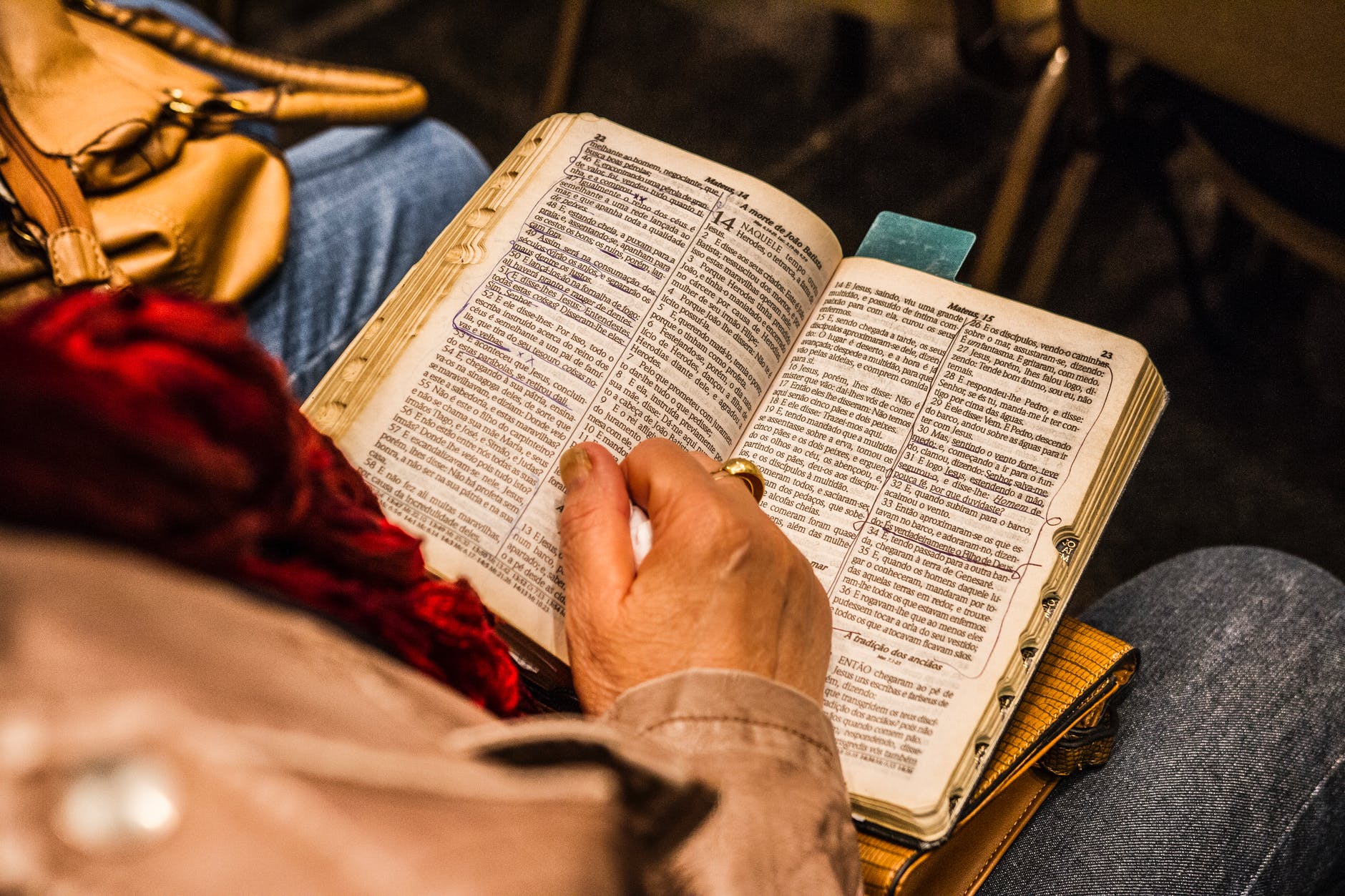
This past Sunday I spoke to our church about Jesus’ command to his disciples and those in the crowd to “do and observe” what the Pharisees and Scribes who sat in Moses’ seat taught, so long as it was accurately reflected in the Bible. We are also called by Scriptures to do and observe all that the Bible teaches. So, as a people who desire to be not merely hearers, but doers, I gave these five applicational thoughts about how to “use” the Bible more effectively. If you want to hear the sermon that this is taken from, you can download or stream it here, entitled “The Authority of the Word of God.”

  1. Notate. Take note of application given in sermons you hear. Literally take notes! Look for what God would have you DO with his Word. Don’t just collect biblical information. Then, go back and review your notes, praying for help to obey what you have seen that he wants you to do.


  2. Saturate. On your own, read your Bible with an eye for application. This means that you need to know how to find universal principles in the Bible. These are truths that are good in every time and every culture. They are also consistent with the whole Bible.


  3. Categorize. Take those universal truths and begin categorizing them into useful headings. Begin by setting up categories for your roles in life–Bible verses for you as a Father/Mother, as a husband/wife, as a son/daughter, as a Christian, as an employee, as a neighbor.


  4. Organize. Put Scriptures (and the principles that they speak of) in categories that will lend themselves to your use–such as pride, humility, gossiping, the tongue, hope, fear of man, decision making, forgiveness, etc. Some of these will be more useful to you than others, so be sure to put them on a list that you can tuck into your Bible, or even write into the end papers of your Bible so they are handy whenever you need them.


  5. Apply. Now, when you are, for example, having a bad day with your mouth–you keep hurting others, or maybe you’ve lost your temper–you can turn in your Bible and meditate on what God’s Word says about that issue and what you need to do. As you do this over and over, you will not only begin to remember where to go without having to look at the list, but you will slowly memorize those verses.


It’s not brain surgery or rocket science, but it does take discipline and effort. Jesus said for you and I to “do and observe” His Word. If you claim that the Bible is truly your authority, then you need to know it so you can obey it. If not, then you are merely a hearer of the Word and not a doer–fooling yourself. May we never find ourselves there.