The Lord’s Provision for Ministry (part 4)

I remember once getting a missionary newsletter in the mail from a pastor in a foreign country that clearly was stretching the truth. In baptist circles, they might say he was speaking “evangelastically.” This missionary wrote glowingly of the tens of thousands that had come to salvation, and about the thousands that he had baptized as a result. Then, a little harder to find, he mentioned that his church had added new members–but only a tiny handful. His whole congregation was about two dozen people.

Now I don’t begrudge the hard work of evangelism. The spiritual soil in some places is harder than others. My issue is when a person claims that thousands of souls are saved but the church has only two dozen people. Where did the rest go? Something isn’t right. In the decision-driven mindset, this may work, but when I read my Bible I don’t see these things. But I guess when you are writing home to supporters, the fear of man drives you to report big numbers to show you are doing your job. It’s a shame because God doesn’t expect men to convert souls. That’s His prerogative.

In my previous posts in this series, I have laid out the many ways that God provides for his ministers. You can read those posts here: The Lord’s Provision for Ministry (part 1) and The Lord’s Provision for Ministry (part 2) and Part 3: https://always-reforming.com/?p=1834. In these posts, I am showing that the Lord provides in six ways. Here is the fifth way:

He Gives Us Souls Converted

“Then he left there and went to the house of a man named Titius Justus, a worshiper of God, whose house was next to the synagogue. Crispus, the leader of the synagogue, believed in the Lord with all his household, and many of the Corinthians when they heard were believing and being baptized.” (Acts 18:7-8, NASB95)

Outside of the synagogue the Lord brought the gospel of salvation to some important people that would affect the ministry in Corinth. Verse 7 mentions Titius Justus, a man with a Roman name, but who had become a convert to Judaism. God had saved him through the gospel that Paul preached. Since Paul had anathematized the synagogue, a meeting place would be needed. How blessed that the Lord saved the guy who lived right next door!

Furthermore, verse 8 tells us of the salvation of a man named Crispus who was saved along with his whole family. This man was a ruler of the synagogue, meaning that he had responsibilities in the synagogue and would have been thought of as important and highly regarded by all Jews in the city. His salvation would have been a huge blow to the Jews in Corinth. And then the end of verse 8 mentions that many others were saved and baptized in the city. The church had begun!

Growing up my mom had a vegetable garden in our backyard. I remember one year she let me and my brother plant watermelon seeds. We were responsible for weeding, watering and doing all the yardwork, a job we did nearly every weekend. It wasn’t normally very fun. But harvesting the fruit of our labors was always a joy! It made the hard work worth it all. Farmers know this truth well, and Paul used this image for those who serve God.

In 1 Corinthians 3:6-9, Paul wrote this to the church he planted there some years later: “I planted, Apollos watered, but God was causing the growth. So then neither the one who plants nor the one who waters is anything, but God who causes the growth. Now he who plants and he who waters are one; but each will receive his own reward according to his own labor. For we are God’s fellow workers; you are God’s field, God’s building.” (1 Corinthians 3:6-9, NASB95) 

Just like God makes watermelon seeds grow into watermelons, it is God alone who brings people to salvation. But like the farmer, we labor with him. Have you ever had the privilege of leading a sinner to God’s throne of grace, resulting in their salvation? There is nothing better! God provides this blessing to those who are faithful to share his gospel message faithfully. 

Fearing God the Father

“Praise the Lord!
Blessed is the man who fears the Lord,
who greatly delights in his commandments!”
(Psalm 112:1, ESV)

There used to be a time when people would speak in reverential tones of certain men and women as “God fearing.” This person was known for living a life that was pleasing to God, and was utterly trustworthy and faithful. You would not find a God-fearing man or woman in the company of certain people, or involved in sinful activities and conversation.

God-fearing people were thought of this way because society in general knew what the Bible said. They knew what God expected of men, but they knew that most people only paid lip-service to what the Bible said. But a God-fearing man or woman was different.

Easton’s Bible Dictionary defines the fear of the Lord like this: “It is a fear conjoined with love and hope, and is therefore not slavish dread, but rather filial [fatherly] reverence.”

We notice here a mixture of fear and love, and it is connected to a fatherly love which is co-mingled with respect. Charles Bridges defined fear of the Lord in a similar manner. He wrote, “[The fear of the Lord is] that affectionate reverence, by which the child of God bends himself humbly and carefully to his Father’s law.”[1]

Bridges, like Easton’s definition, uses the Father and child imagery to help define the fear of the Lord, writing of the child of God and his heavenly Father. This image of God as Father is replete throughout the Bible.

Fear the Father as Creator

In Deut. 32:6 it says, “Do you thus repay the Lord, you foolish and senseless people? Is not he your father, who created you, who made you and established you?” (ESV). Just as a father provides, protects, and leads his family, so too the Lord had done the same for Israel. But shockingly, Moses’ words reveal that Israel was acting like an ungrateful and rebellious child that has no fear of breaking his rules nor of disrespecting him before the watching world.

The prophet Isaiah also testified against this lack of the fear of the Lord in Israel at a much later time. In Isaiah 1:2 the prophet brought the Word of the Lord saying, “Hear, O heavens, and give ear, O earth; for the Lord has spoken: “Children have I reared and brought up, but they have rebelled against me.” (ESV). Notice what the Lord says here—he has reared and brought them up. This reality should have brought him that fear we are looking at. They should have loved and respected him, but they did not.

In Isaiah 64:8,the prophet used the father metaphor alongside another picture of God as a Potter. In this passage, it says, “But now, O Lord, you are our Father; we are the clay, and you are our potter; we are all the work of your hand.” (ESV). This text looks forward to the coming Millennial Kingdom when the heart’s of God’s people shall turn and embrace the Messiah that they have rejected.

We see in these words the recognition that the Lord has made them and he is free to do with them as he sees fit. One day Israel will humble itself before the Lord in national contrition and joyful submission. God can do what he wants because he is not only Father, but he is Potter, who has made the clay into whatever he sees fit.

Fearing the Father as Wisdom

Probably most familiar to us is this aspect of the fear of the Lord as the beginning of wisdom. Proverbs 1:7 says, “The fear of the Lord is the beginning of knowledge; fools despise wisdom and instruction” (ESV). When we consider the fear of the Lord as Father and Creator, we can better see why to reject the Lord and His commands is foolish. A child, who has little strength, wisdom, experience, power, and influence is foolish to put off the care and counsel of a father who gives these to his children.

When the Lord spoke to Job and began prodding him to answer his questions, like a child who quickly has learned that he is over his head, he simply put his hand over his mouth. This is wisdom, knowing that the Father knows best and that our finite minds cannot begin to grasp his infinite plans for us.

Fearing the Lord as Judge

This is very different from the idea of fearing the Lord as Father and Creator. It is the fear that comes when a wayward child has been disobedient and has turned aside from the father’s ways. It is also the fear that does not come from a child of God, but from the fool that despises the Lord and his commands. It is not a true and pure reverential fear mixed with love, for there is no such love in the rebellious creature. This fear is a craven, slavish fear that the disobedient slave has when he fears his master will discover that he has been stealing from him secretly. Except our Lord is not blind to those that have offended him.

An example of the wayward who fear the Lord is found in Ezra 10, where the people have come to understand their disobedience in intermarrying with the pagan nations around them, something God had expressly forbidden Israel from doing. In verses 1-4 we read that the fear of the Lord (“trembling” in v. 3) has led to repentance and obedience. But the wicked fear the Lord in a different way, a way which is fearful of judgment to a point, but will not lead to any true changes in their lives.

Belshazzar did not repent when he saw the hand of God writing on the wall. He trembled in fear, but did not turn from his sin (Dan 5:9). When Paul preached the gospel before Felix, the Acts 24:25 says he was “alarmed” about the coming judgment, but he did not repent. And when James speaks about the demons believing and shuddering, we do not say that they have repented of their wickedness (James 2:19)!

Proverbs 28:1 says, “The wicked flee when no one pursues, but the righteous are bold as a lion” (ESV). The wicked flee from a judgment that will one day overcome them. They cannot escape the Lord’s righteous judgment. But the righteous do not flee the Lord even though we fear him. He fears him with reverence as our Father and Creator.

Fear and love meet in the fear of the Lord. He is our Father, Creator, and God. These should endear him to us and motivate our hearts toward worship. If they don’t, if we need manipulation, fear of judgment or punishment, we are not children, but slaves. Children don’t have that sort of fear of a righteous Father. They love him, respect him and desire to please him.

[1] Quoted by Bruce Waltke in NICOT, Proverbs 1-15, p. 101.

Moralism is a False Gospel (weekend repost)

Is salvation merely a message of “do better?” Is Christianity simply a moralistic religion that teaches that all we need to do is obey God? That is what the self-righteous Pharisees thought, and it is what many people in churches think. To them, Christianity is a list of rules that can be kept–albeit with a lot of sacrifice. Don’t think so? How many times have you heard someone say their wayward son or daughter “just needs to get back to church?” Is that all they need? Is that what Jesus taught?

Read the complete post here: Moralism is a False Gospel

Moralism is a False Gospel

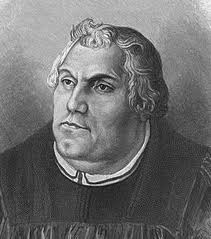
Martin Luther.jpg

Is salvation merely a message of “do better?” Is Christianity simply a moralistic religion that teaches that all we need to do is obey God? That is what the self-righteous Pharisees thought, and it is what many people in churches think. To them, Christianity is a list of rules that can be kept–albeit with a lot of sacrifice. Don’t think so? How many times have you heard someone say their wayward son or daughter “just needs to get back to church?” Is that all they need? Is that what Jesus taught?

In Romans 1:17, the Apostle Paul wrote, “For in it the righteousness of God is revealed from faith for faith, as it is written, “The righteous shall live by faith.”” (Romans 1:17, ESV). This text traumatized Martin Luther before his conversion to Christ. Here was a man that sincerely wanted salvation. He had dedicated his life to holy living in a monastic community where he sacrificed on a daily basis. Yet his soul was tortured. Here are Luther’s own words, written a year before his death on March 5, 1545 following a long life of joyful blessing in true salvation through Jesus Christ.

I had indeed been captivated with an extraordinary ardor for understanding Paul in the Epistle to the Romans. But up till then it was … a single word in Chapter 1 [:17], “In it the righteousness of God is revealed,” that had stood in my way. For I hated that word “righteousness of God,” which according to the use and custom of all the teachers, I had been taught to understand philosophically regarding the formal or active righteousness, as they called it, with which God is righteous and punishes the unrighteous sinner.

Though I lived as a monk without reproach, I felt that I was a sinner before God with an extremely disturbed conscience. I could not believe that he was placated by my satisfaction. I did not love, yes, I hated the righteous God who punishes sinners, and secretly, if not blasphemously, certainly murmuring greatly, I was angry with God, and said, “As if, indeed, it is not enough, that miserable sinners, eternally lost through original sin, are crushed by every kind of calamity by the law of the decalogue, without having God add pain to pain by the gospel and also by the gospel threatening us with his righteous wrath!” Thus I raged with a fierce and troubled conscience. Nevertheless, I beat importunately upon Paul at that place, most ardently desiring to know what St. Paul wanted.

At last, by the mercy of God, meditating day and night, I gave heed to the context of the words, namely, “In it the righteousness of God is revealed, as it is written, ‘He who through faith is righteous shall live.’ ” There I began to understand [that] the righteousness of God is that by which the righteous lives by a gift of God, namely by faith. And this is the meaning: the righteousness of God is revealed by the gospel, namely, the passive righteousness with which [the] merciful God justifies us by faith, as it is written, “He who through faith is righteous shall live.” Here I felt that I was altogether born again and had entered paradise itself through open gates. Here a totally other face of the entire Scripture showed itself to me.… And I extolled my sweetest word with a love as great as the hatred with which I had before hated the word “righteousness of God.” Thus that place in Paul was for me truly the gate to paradise. [Emphasis added]

The “gates of paradise” were opened up to Luther because he no longer depended upon his own law-keeping to satisfy the perfect demands of God. He saw salvation as a gracious act of God alone. Christ was perfectly righteous, fulfilling the whole law in our place. He died in our place and we are justified because of his perfect life and substitutionary death.

The hamster wheel of self-righteous deeds done in order to save ourselves is endless and endlessly disappointing. But the worst thing is that it does not end in heaven, but hell. The one who rejects the perfect finished work of Christ on the cross in favor of his or her imperfect works should expect nothing more, and will get nothing less.

Don’t point people to hell with “do better” sermons. Don’t say that your lost neighbor needs to be invited to church when you need they need to be regenerated by Christ. Don’t confuse fruits of righteousness with earning points with God so he will somehow love and favor you more.

Christ alone is enough. Faith in him alone saves. This is all “marvelous, infinite, matchless grace.”

Christ’s Intense Love in the Storms of Life

Jesus Lover of My Soul— Charles Wesley (1740)

Jesus, lover of my soul, let me to Thy bosom fly,

While the nearer waters roll, while the tempest still is high.

Hide me, O my Savior, hide, till the storm of life is past;

Safe into the haven guide; O receive my soul at last.


Other refuge have I none, hangs my helpless soul on Thee;

Leave, ah! leave me not alone, still support and comfort me.

All my trust on Thee is stayed, all my help from Thee I bring;

Cover my defenseless head with the shadow of Thy wing.


Wilt Thou not regard my call? Wilt Thou not accept my prayer?

Lo! I sink, I faint, I fall—Lo! on Thee I cast my care;

Reach me out Thy gracious hand! While I of Thy strength receive,

Hoping against hope I stand, dying, and behold, I live.


Thou, O Christ, art all I want, more than all in Thee I find;

Raise the fallen, cheer the faint, heal the sick, and lead the blind.

Just and holy is Thy Name, I am all unrighteousness;

False and full of sin I am; Thou art full of truth and grace.


Plenteous grace with Thee is found, grace to cover all my sin;

Let the healing streams abound; make and keep me pure within.

Thou of life the fountain art, freely let me take of Thee;

Spring Thou up within my heart; rise to all eternity.