It’s not hard for me to think about multiple examples of personal failure over my 51 years of life. I can recall so many bad decisions–dumb ones, sinful ones, immature ones, naive ones, rash ones, prideful ones. Like I said, I remember too many. The problem is, leaders have to make multiple decisions all day, every day. The more decisions we need to make, the greater potential there is to make another bonehead decision. So what do we do?
“And when they brought those kings out to Joshua, Joshua summoned all the men of Israel and said to the chiefs of the men of war who had gone with him, “Come near; put your feet on the necks of these kings.” Then they came near and put their feet on their necks. And Joshua said to them, “Do not be afraid or dismayed; be strong and courageous. For thus the Lord will do to all your enemies against whom you fight.”” (Joshua 10:24–25)
When you begin reading the book of Joshua, you can almost sense the fear and intimidation that Joshua was feeling. It starts with the announcement that Moses is dead. And then over and over again Joshua and the people of Israel are told to be strong and courageous.
After gaining some victories, assurance, and even a few tough lessons, Joshua has grown quite a bit as a leader by chapter 10. As five kings band together to try and stop the advancement of Israel into the Canaanite territory, it quickly becomes obvious that God is fighting for his people and they are unstoppable. The five kings in fear and desperation hide out in a cave, where they are discovered and sealed into the cave to await their fate.
After destroying the five kingdoms, Joshua returned to the sealed cave to deal with the kings. What he did next is worthy of note for leaders in the church today.
1. Joshua summoned all the men of Israel. The men were the leaders of the families and clans, as well as those who fought the battles. By Joshua summoning all the men so that they could be built up in courage, he was strengthening and stabilizing the whole nation. Similarly, when the pastoral leadership of the church strengthens and gives courage to the men in the church as a whole, they strengthen the whole church.
2. Joshua encouraged the chiefs of the men of war…[to] come near; put your feet on the necks of these kings.” Joshua then turned to the leaders of the warriors—the commanders, and gave them the honor of this courageous symbolic act of victory. Not only did this act allow them to taste the victory for themselves, but it also strengthened their courage as the people saw not just Joshua as a mighty man whom God could use, but many mighty men God was using. Again, the local church should not be a place of pastor worship, but a place where the pastors are “equipping the saints for the work of the ministry.” This means that we should be producing multiple warriors for Christ, and among them many will rise to the place of “chiefs of the men of war.” How encouraging to know that your local church is a fertile growing place for mighty men of God!
3. Joshua finally spoke God’s Word to them to both focus and humble them: “And Joshua said to them, “Do not be afraid or dismayed; be strong and courageous. For thus the Lord will do to all your enemies against whom you fight”” (Joshua 10:25). These are very similar words to those that the Lord said to Joshua when he failed at Ai (Joshua 8:1). Joshua had absorbed those words and was now living by them. He knew that the Word of God is a powerful two-edged sword, and he wanted to equip his men with the same weapon that he had received. Those words were more than simply true—they contained reminders of humility and focus—don’t be afraid or discouraged, be strong and courageous. But don’t forget that the Lord will be fighting for you. It is not you who has won these victories.
Locker room pep talks are strongly associated with sports, and so many men are familiar with them. But that isn’t what Joshua gave them, and its not what our churches need. Leave the pop psychology to Oprah Winfrey and Joel Osteen. Real leaders need en-couragement, meaning they need courage from God himself. Hype only lasts so long. Courageous leaders need to point up and coming leaders beyond themselves to God himself. Preach the Word and let the lion out!
Joining a denomination or going at it alone are not the only options for churches, pastors, leaders, and ministries.
Maintaining doctrinal fidelity and alignment is critical when seeking to work with others to accomplish Great Commission objectives.
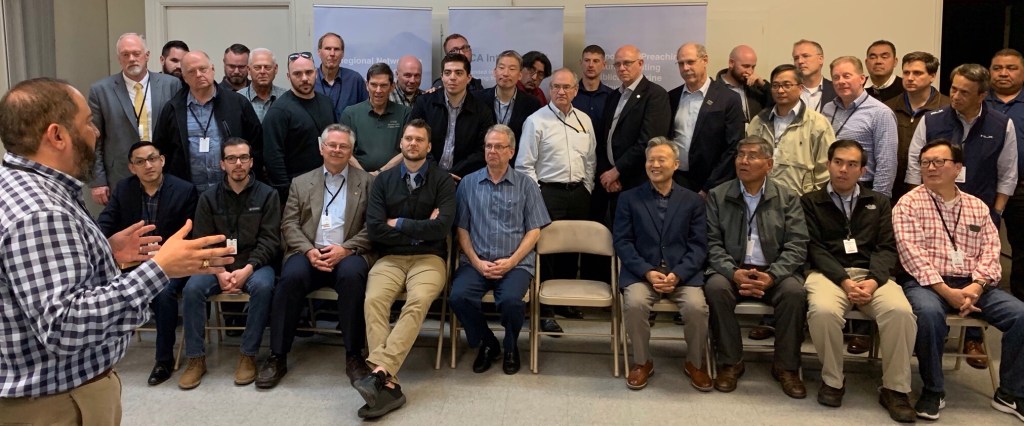
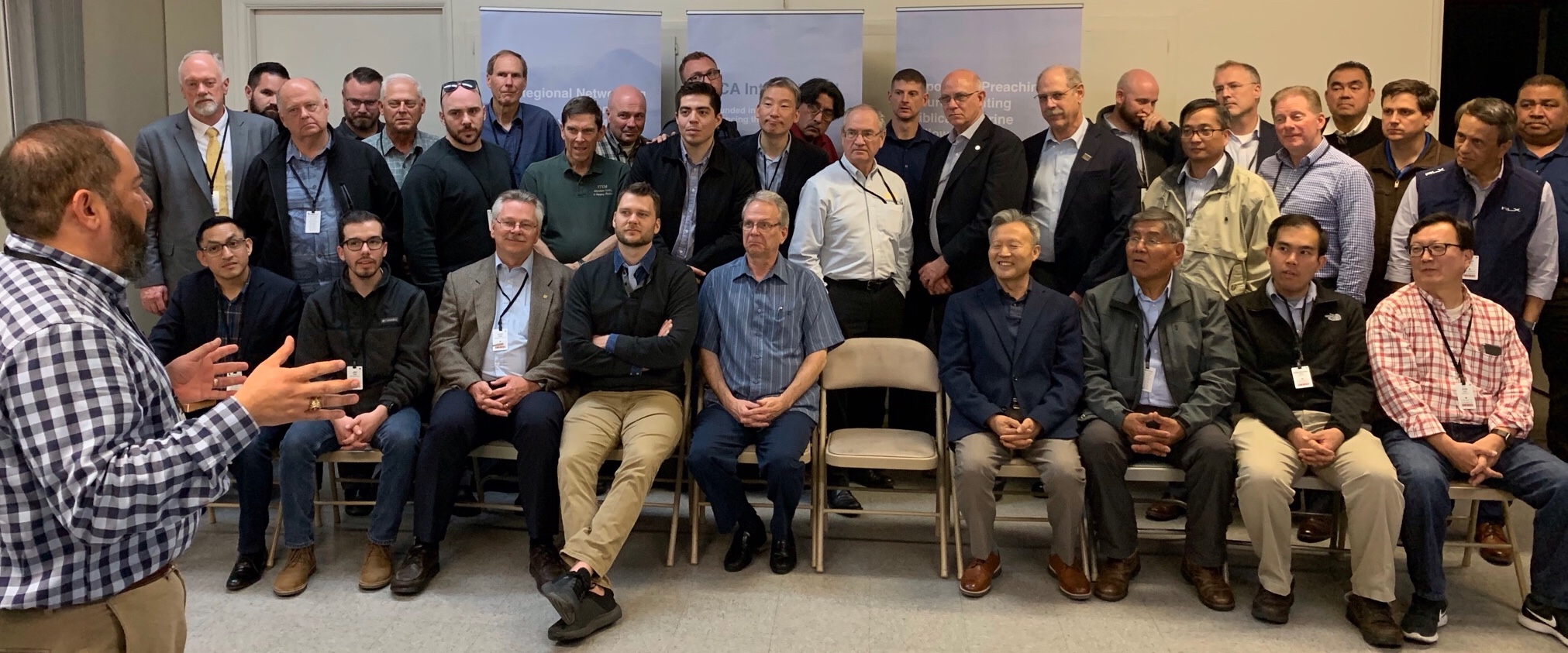
IFCA International was founded in 1930 to fight against the onslaught of theological liberalism growing in denominational churches, mission agencies, and seminaries.
Listen to a podcast I was invited to record with some fellow pastors a few months ago as they ask me more about IFCA International. To find out more, go to http://www.IFCA.org.
Joining a denomination or going at it alone are not the only options for churches, pastors, leaders, and ministries.
Maintaining doctrinal fidelity and alignment is critical when seeking to work with others to accomplish Great Commission objectives.
IFCA International was founded in 1930 to fight against the onslaught of theological liberalism growing in denominational churches, mission agencies, and seminaries.
Listen to a podcast I was invited to record with some fellow pastors a few months ago as they ask me more about IFCA International. To find out more, go to http://www.IFCA.org.
Biblical Christian leadership has always been in short supply. For some prominent leaders, sometimes the cracks in the facade begin to show that below the surface, there exists a double standard for life–“What is good for thee is not for me.” For Christians, our final authority is Scripture, but it seems that for some, biblical authority is placed below popularity, past success, and unquestioned loyalty. Every person will answer to the Lord and no one is above biblical scrutiny. “But he gives more grace. Therefore it says, “God opposes the proud but gives grace to the humble.”” (James 4:6, ESV). How can we be assured that we don’t fall or become dis-integrated? King David’s Psalm 101:1-4 gives us great encouragement and direction for becoming leaders with integrity.
“I will sing of steadfast love and justice; to you, O Lord, I will make music. I will ponder the way that is blameless. Oh when will you come to me? I will walk with integrity of heart within my house; I will not set before my eyes anything that is worthless. I hate the work of those who fall away; it shall not cling to me. A perverse heart shall be far from me; I will know nothing of evil.” (Psalm 101:1–4, ESV)
Leading with Integrity:
1. Requires a Resolute Determination (vv. 1-3). David sings over and over again, “I will…” with a resolute determination that he will worship with song and life. He will live in such a way that he pleased the Lord and not the flesh. There are basically three things we commonly call “resolutions.” The first is what some people do each New Year–promises they don’t intend to keep. Then there are official statements made by governments and groups which really have little to no power to change anything. It is simply a public declaration. The third type of resolution happens deep in the heart and soul. It is the opposite of the other two. It is a strong and determined statement of the will that says that you will do everything in your power to fulfill this promise. The leader of integrity determines that with God’s help he will accomplish the will of God.
2. Requires a Balance of Love and Justice (v. 1). David is wise, declaring his love and desire for both loving mercy and justice. James Montgomery Boice wrote, “Mercy and justice operate as checks on one another. Justice checks love that might otherwise be wrongly indulgent and therefore harmful. Love checks judgment that might otherwise be unduly harsh and therefore also harmful. David wanted his rule to be marked by both of these.”(James Montgomery Boice, Psalms 42–106: An Expositional Commentary (Grand Rapids, MI: Baker Books, 2005), 819). We should strive to be leaders who are both merciful and just. Whether in our home, work, church, or other group, we should strive to be balanced in love and justice. That can be hard, but that is what we see in our Lord Jesus, don’t we?
3. Requires a Biblically Thoughtful Direction (v. 2a). Pondering is not a glance at something, a simple passing over or a peek at it. Pondering means to look long and hard at something while meditating on it. What is the object of David’s pondering? It is the “way that is blameless” or “the perfect way,” which for the Christian is the Word of God. And the child of God who desires to lead with integrity needs to take this Book and use it to gain biblically thought ful direction and guidance. Your Bible should be like an old path–familiar and worn out. David said he would “ponder” the way that is blameless. Do you meditate on the Word. I know we ponder on our failures, our struggles, our temptations, our hurts, our needs, and our disappointments. But do you ponder God’s answers? Do you sit and think? Do you take God’s Word into your thoughts like a hard candy in your mouth. Rolling it over and over, savoring it?
4. Requires Beginning in the Heart and Extending to Every Realm of Our Lives (v. 2b). To walk with integrity of heart is a way of speaking of growing in holiness, what we call the process of sanctification. In his book, Living for God’s Glory, Joel Beeke writes, “Holi- ness that resembles God and is patterned after Christ saves us from hypocrisy and resorting to a “Sunday only” Christianity. It gives vitality, purpose, meaning, direction, and contentment to daily living” ( ) The word “integrity” is a math term, from the word “integer.” And integer is a whole number, it is not a fraction. Put theologically, it means a whole person, not a partially committed person, a half believer or an “almost Christian.” Leading with integrity requires that we must begin in our heart first. Before you look to your spouse for change, or your children or other family members, or your boss or friends or so- ciety or the church, where do you need to begin? With yourself.
5. Requires an Awareness of the Company that We Keep (v. 3). This word “worthless” in v. 3 is the Hebrew word belial, and it means “worthless,” but not in the way we think of trash or junk. The KJV uses the word “wicked” and the HCSB uses “vile.” These two translations show us that “worthless” is a ref- erence to its deep moral depravity. David says that he will not place before his eyes anything that is wicked or worthless. To see the proper understanding of this for ourselves, it is helpful to see this in a spectrum:
Absolutely abstain from the outright wicked–Gal 5:19-21
Situationally discern the marginally wicked–Prov 25:16, 17
Strategically refrain from useless pursuits–2Tim 2:1-6
In Psalm 101:3, David makes a commitment that he won’t look at wicked things, and that he won’t allow wicked people into his life. As the King, this would have meant in his realm. Do you al- low wicked things into your life? What about into your home? If you’re walking in the counsel of the wicked you might not even recognize them. You might even tell someone who points it out that they are being too legalistic. Imagine that, a Christian brother or sister counsels you to move toward holiness, but you would rather walk with the wicked! May this never be said of any of us. May we be men and women of integrity who lead our homes and work place with a heart moved to holiness.
6. Requires Removing Wicked Influences from Our Lives (v. 4). The “perverse heart” is not the danger from within, but the dan- ger from without. Remember, we are talking about leading with integrity here. We must guard our own hearts from wickedness lest we become a wicked leader. But we just as much guard ourselves from wicked counselors who would lead us away from godly leadership as well. Brothers and sisters, we must have discretion in our choices of those who are influential in our lives. You see, the danger is not merely in making poor choices in leadership. The danger is far greater than that. The greater threat is that we shall become like the wicked. We shall join their ranks.



 Always Reforming