Sometimes Faith Seems Too Simple

“And Elisha sent a messenger to him, saying, “Go and wash in the Jordan seven times, and your flesh will be restored to you and you will be clean. But Naaman was furious and went away and said, “Behold, I said to myself, ‘He will surely come out to me and stand and call on the name of Yahweh his God, and wave his hand over the place and cure the leper. Are not Abanah and Pharpar, the rivers of Damascus, better than all the waters of Israel? Could I not wash in them and be clean?” So he turned and went away in wrath. Then his servants approached and spoke to him and said, “My father, had the prophet spoken with you to do some great thing, would you not have done it? How much more then, when he says to you, ‘Wash, and be clean’?” So he went down and dipped himself seven times in the Jordan, according to the word of the man of God; and his flesh was restored like the flesh of a young boy and he was clean.  (2 Kings 5:10–14, LSB)

O how we love our religious rituals. The more complex and complicated, the better.

The scene was simple. Naaman wanted to be healed of his leprosy and he had heard that there was a man of God in Israel who could do what no one else could do. So, piling up all the things you think you need, a letter of introduction, lavish gifts to help grease the wheels of the prophet and to motivate a positive response, and a long, arduous trek through arid lands to show that he was serious about being healed. When Namaan finally arrived, he must have been filled with expectation and hope.

But when the man of God didn’t even come out of his house, instead sending his servant with a message, the sick man was disappointed. Then there was the instructions—go and bathe in the Jordan river, washing seven times. In case you don’t know it, the Jordan is brown, not crystal clear. Now, Namaan grew angry. After all, he was an important man back home. Couldn’t the prophet at least come out and speak to him? And bathe in a dirty river? What about the rituals, the odd dances, potions, sparks, incantations, beads, smoke, chants…but nothing? Just take a bath in this muddy river?

Namaan almost left in disgust. We do love our rituals.

But rituals don’t heal. Neither do clear or muddy rivers. And for that matter, neither do prophets or servants of prophets. Only God has the power to heal. And God works on faith.

When his servants saw his anger and frustration, they knew they would soon be heading back home, and Namaan would still be leprous. So, they tried to reason with their master. “If the prophet had come out and made you swing a chicken over your head and then drink water upside down while you sang “Ave Maria,” would you have done it?” “Well, yes of course,” reasoned the soldier. Now that would be a proper ritual!

“Then, since we have come all this way, why wouldn’t you do the simple thing, trust the man of God, and simply wash as he asked in the Jordan river.”

You know, for some people, faith is too simple. Just trusting that Jesus died in your place for the forgiveness of sins is too easy. We need to do something. Self-flagellation or penance of some sort must be necessary. One hundred “Hail Mary’s” or skip chocolate for a month. I mean, I’ve been bad, but not as bad as that guy, we reason. But just believe? Just trust? It’s too easy! Just place my faith in the finished death, burial, resurrection and ascension of Jesus? There’s got to be more. After all, there’s no such thing as a free lunch!

It’s true. The forgiveness of all our sins, which is more complicated than cleansing from leprosy, did cost more. It cost the life of the Son of God, who willingly gave it because of love, by dying on the cross. There’s nothing more you can do other than receiving this free gift.

When Namaan went into the muddy waters of the Jordan, he came out with skin as soft as a baby’s bottom. And when we come to Christ by faith alone in what he has done, trusting in Him, not our own works, our heart will emerge white as snow. It’s that simple.


Serving the Gospel Through Proper Research

Inasmuch as many have undertaken to compile an account of the things that have been fulfilled among us, just as those, who from the beginning were eyewitnesses and servants of the word, handed them down to us, it seemed fitting for me as well, having investigated everything carefully from the beginning, to write it out for you in orderly sequence, most excellent Theophilus, so that you may know the certainty about the things you have been taught.” (Luke 1:1–4, LSB)

In the era in which we live today, clicks and reactions are treasured much more highly than research and truth. This is somewhat understandable for news media outlets that have simply become another moneymaking commodity that is trying hard to overcome the seismic changes that have occurred over the last few decades in how people consume news and media. Although this shift has brought troubling results, my concerns for the Christian Church are in mind.

Whether it is the latest conspiracy theory regarding eschatological predictions, the backstory of a fallen pastor’s sordid sinful life, the latest tell-all blog post or book that reveals the dirty underbelly of evangelicalism, or the bashing of theological beliefs we disagree with using long disproven claims that only garner support from our tribe; all of these have the same root of using half-truths, distortion, innuendos, and sometimes outright lies and deception in the supposed pursuit of what is true, good, and beautiful.

This reality we face as Christians stands in stark contrast to the opening words of Luke’s Gospel. Luke begins his two-volume work by clearly stating that the words that follow were thoroughlyvetted to strengthen the faith of Theophilus and the Church and researched and combat the antagonism and unbelief of those who did not accept their testimony.

The research standards and resources that were present at the time that Luke compiled his account have changed, but ironically, with our expanded ability to do research and our vaunted claims to be more “scientific,” we often fail miserably to meet not only our own modern standards but the ancient standards as well.

Isn’t it interesting that the “throwaway” culture we live in has promoted a throwaway mentality about what we write and what we read/view? We scroll through news articles, comments, posts, and tweets, giving little attention to them because those who wrote them often gave little thought to writing them. And yet, we have all learned that the internet is “forever.” What we wrote on MySpace circa 2005 or on Facebook in 2015 (10 years ago, now!) can be resurrected and returned to haunt us! Those “hot takes” regarding whatever flitted across our minds can be embarrassing and maybe even condemning.

As we enter a new year, I pray that we all think more about what we post, tweet, blog, and record—especially if you claim to be a Christian. And let us always remember that we don’t need to speak to every event or controversy that occurs this year. May our focus on Christ be stronger and our commitment to Him be firmer this year, knowing that it is to Christ alone that we must all one day give an account—including for every word we have written, spoken, and posted.

Happy New Year!

The Fool’s Dilemma

“The fool says in his heart, “There is no God.” They are corrupt, doing abominable iniquity; there is none who does good. God looks down from heaven on the children of man to see if there are any who understand, who seek after God. They have all fallen away; together they have become corrupt; there is none who does good, not even one.” (Psalm 53:1–3, ESV)

These words, quoted by the Apostle Paul in the third chapter of his letter to the Romans, are a stark reminder that the spirituality of this age that we live in is not a genuine seeking for the One true God, but rather is a seeking after another idol that can alleviate the void that is felt outside of God.

Even though the fool says in is heart that there is no God, his claim is contrary not only to the facts, but his raging against the God that he says does not exist shows that he does not believe his own words.

From God’s perspective, as he looks not only down on humanity, but looks into the darkened hearts of men, he does not see anyone who truly desires a relationship with him. Truth be told, humankind would be completely satisfied in pushing their Creator out of the picture totally—filling the void of their soul with anything else that they can find or create. In our futility and desperation, we have grown in our corruption. We even claim to be morally good, while God’s own estimation is much different.

Without the saving grace of Jesus Christ, we are living in a mass delusion. We are living as if there is no God, as if there was no moral standard except for the one that we have made, and that we are good according to our arbitrary standards. No wonder God calls us fools.

Jesus Christ is our only hope. He is the answer to our greatest need. He is our Creator, our Savior and Justifier. He takes out the hardened heart in men that is like stone, and he gives us a new heart that is tender toward him. He puts his Spirit in us so that we can grieve once again over our foolishness, and rejoice over the forgiveness that we have received. He gives us eyes to see his beauty and the beauty around us and ears to hear his voice as he calls and leads us.

Do you know this Jesus? He is God. He is Savior and Lord. He is calling to sinners and fools to depart from your sin and folly and call out to him for mercy. He will surely give it.

Moralism is a False Gospel (weekend repost)

Is salvation merely a message of “do better?” Is Christianity simply a moralistic religion that teaches that all we need to do is obey God? That is what the self-righteous Pharisees thought, and it is what many people in churches think. To them, Christianity is a list of rules that can be kept–albeit with a lot of sacrifice. Don’t think so? How many times have you heard someone say their wayward son or daughter “just needs to get back to church?” Is that all they need? Is that what Jesus taught?

Read the complete post here: Moralism is a False Gospel

Moralism is a False Gospel

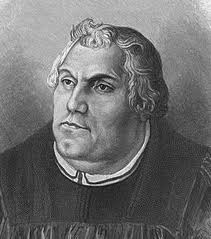
Martin Luther.jpg

Is salvation merely a message of “do better?” Is Christianity simply a moralistic religion that teaches that all we need to do is obey God? That is what the self-righteous Pharisees thought, and it is what many people in churches think. To them, Christianity is a list of rules that can be kept–albeit with a lot of sacrifice. Don’t think so? How many times have you heard someone say their wayward son or daughter “just needs to get back to church?” Is that all they need? Is that what Jesus taught?

In Romans 1:17, the Apostle Paul wrote, “For in it the righteousness of God is revealed from faith for faith, as it is written, “The righteous shall live by faith.”” (Romans 1:17, ESV). This text traumatized Martin Luther before his conversion to Christ. Here was a man that sincerely wanted salvation. He had dedicated his life to holy living in a monastic community where he sacrificed on a daily basis. Yet his soul was tortured. Here are Luther’s own words, written a year before his death on March 5, 1545 following a long life of joyful blessing in true salvation through Jesus Christ.

I had indeed been captivated with an extraordinary ardor for understanding Paul in the Epistle to the Romans. But up till then it was … a single word in Chapter 1 [:17], “In it the righteousness of God is revealed,” that had stood in my way. For I hated that word “righteousness of God,” which according to the use and custom of all the teachers, I had been taught to understand philosophically regarding the formal or active righteousness, as they called it, with which God is righteous and punishes the unrighteous sinner.

Though I lived as a monk without reproach, I felt that I was a sinner before God with an extremely disturbed conscience. I could not believe that he was placated by my satisfaction. I did not love, yes, I hated the righteous God who punishes sinners, and secretly, if not blasphemously, certainly murmuring greatly, I was angry with God, and said, “As if, indeed, it is not enough, that miserable sinners, eternally lost through original sin, are crushed by every kind of calamity by the law of the decalogue, without having God add pain to pain by the gospel and also by the gospel threatening us with his righteous wrath!” Thus I raged with a fierce and troubled conscience. Nevertheless, I beat importunately upon Paul at that place, most ardently desiring to know what St. Paul wanted.

At last, by the mercy of God, meditating day and night, I gave heed to the context of the words, namely, “In it the righteousness of God is revealed, as it is written, ‘He who through faith is righteous shall live.’ ” There I began to understand [that] the righteousness of God is that by which the righteous lives by a gift of God, namely by faith. And this is the meaning: the righteousness of God is revealed by the gospel, namely, the passive righteousness with which [the] merciful God justifies us by faith, as it is written, “He who through faith is righteous shall live.” Here I felt that I was altogether born again and had entered paradise itself through open gates. Here a totally other face of the entire Scripture showed itself to me.… And I extolled my sweetest word with a love as great as the hatred with which I had before hated the word “righteousness of God.” Thus that place in Paul was for me truly the gate to paradise. [Emphasis added]

The “gates of paradise” were opened up to Luther because he no longer depended upon his own law-keeping to satisfy the perfect demands of God. He saw salvation as a gracious act of God alone. Christ was perfectly righteous, fulfilling the whole law in our place. He died in our place and we are justified because of his perfect life and substitutionary death.

The hamster wheel of self-righteous deeds done in order to save ourselves is endless and endlessly disappointing. But the worst thing is that it does not end in heaven, but hell. The one who rejects the perfect finished work of Christ on the cross in favor of his or her imperfect works should expect nothing more, and will get nothing less.

Don’t point people to hell with “do better” sermons. Don’t say that your lost neighbor needs to be invited to church when you need they need to be regenerated by Christ. Don’t confuse fruits of righteousness with earning points with God so he will somehow love and favor you more.

Christ alone is enough. Faith in him alone saves. This is all “marvelous, infinite, matchless grace.”