The Glory of God: Lessons from Lazarus’ Resurrection

Jesus said, ‘Remove the stone.” Martha, the sister of the deceased, said to Him, “Lord, by this time he smells, for he has been dead four days.’ Jesus said to her, ‘Did I not say to you that if you believe, you will see the glory of God?’” (John 11:39–40, LSB) 

Mary and her sister Martha must have sat together, grieving in their home as they waited for Jesus. Why was He delayed? They knew He loved them and had informed Him of Lazarus’s sickness in time for Jesus to rush in and heal their brother. What happened?

The fact that both sisters told Jesus the same thing, almost verbatim, leads me to believe they had discussed this very truth: if Jesus had been there, Lazarus would not have died (see vv. 21, 32). In fact, it seems the gathered mourners may have overheard their conversation and reached the same conclusion, but they used it as proof that Jesus was a sham (v. 37) or not powerful enough to prevent Lazarus’ sickness from leading to death.

However, instead of stopping the sickness, Jesus allowed the illness to take His friend’s life. Not only did Jesus wait long enough for the disease to do its damage, but he also missed the funeral and burial. Lazarus had been dead for four days, and in the Middle East, decomposition of bodies begins quickly. 

The question of whether Jesus could heal a sick friend was settled in the minds of Mary and Martha but remained uncertain for the watching crowd. However, Jesus didn’t want to just heal a sick man; He aimed to demonstrate that His power surpassed that of an ordinary doctor. The crowd was intrigued by a man who could supposedly heal the blind (a more complicated healing) but seemed unable to heal a sick man (a simpler task typically handled by doctors and basic medical remedies).

Christ saw and knew all of this. If He healed Lazarus, people would likely dismiss the healing. If He raised him immediately from the dead, some might argue that Lazarus hadn’t truly died. However, after four days in the tomb and being already decomposed, there could be no doubt that this was a case beyond the ability of anyone but God. A miracle was necessary.

I enjoy watches and clocks, especially the beautiful mechanical clockworks that demonstrate precision and craftsmanship. I have a few clocks on which I have performed some minor repairs, creating the wonderful “tick-tock” sound in my study that I enjoy. I’m not sure if there will be clocks in the eternal state, but I do know that God won’t be constrained by them as we are now. God’s timing doesn’t align with ours.

Mary and Martha wanted Jesus to stop death. The crowd doubted He could do it. Jesus delayed. All of these aspects often puzzle us because we tend to believe that God wants things to happen our way and in our time. But in this account, Jesus shattered that notion.

God does things in mysterious ways that I don’t understand, and probably never will. He lets disaster happen and then causes the circumstances to work out perfectly. He makes our manure work out to be fertilizer for the flowers to grow. I’d avoid the mess, but our infinitely wise God knows better.

But even more important than how everything turns out for you and me is what it teaches us about God. In verse 40, Jesus pulls back the curtain and shows us why everything needed to happen this way. He said, “Did I not say to you that if you believe, you will see the glory of God?” Why wait and let Lazarus die, causing such grief for these two sisters He loved? Why wait and endure all the suffering and expense of a funeral? Because God wanted to teach His children something. The lesson? “If you believe, you will see the glory of God.”

I don’t think Jesus was speaking only about the glory He would receive in that moment from bringing Lazarus back to life. I believe He was referring to the greater glory when He speaks and the dead in Christ will rise, bringing about the resurrection of all the dead (Jn 5:25-32). The brief glimpse of what He did before all those people that day was merely a sample of what is to come. On that day, all who believe will witness the glory of God in a way this world has never seen.

So, dear reader, what are you facing today? Be careful not to grumble and complain against God for leading you through it. I know you might believe you had a better plan for your day, but trust me, you don’t. God has a perfect purpose for why you are experiencing whatever you are going through. Trust Him; He knows what He’s doing. 
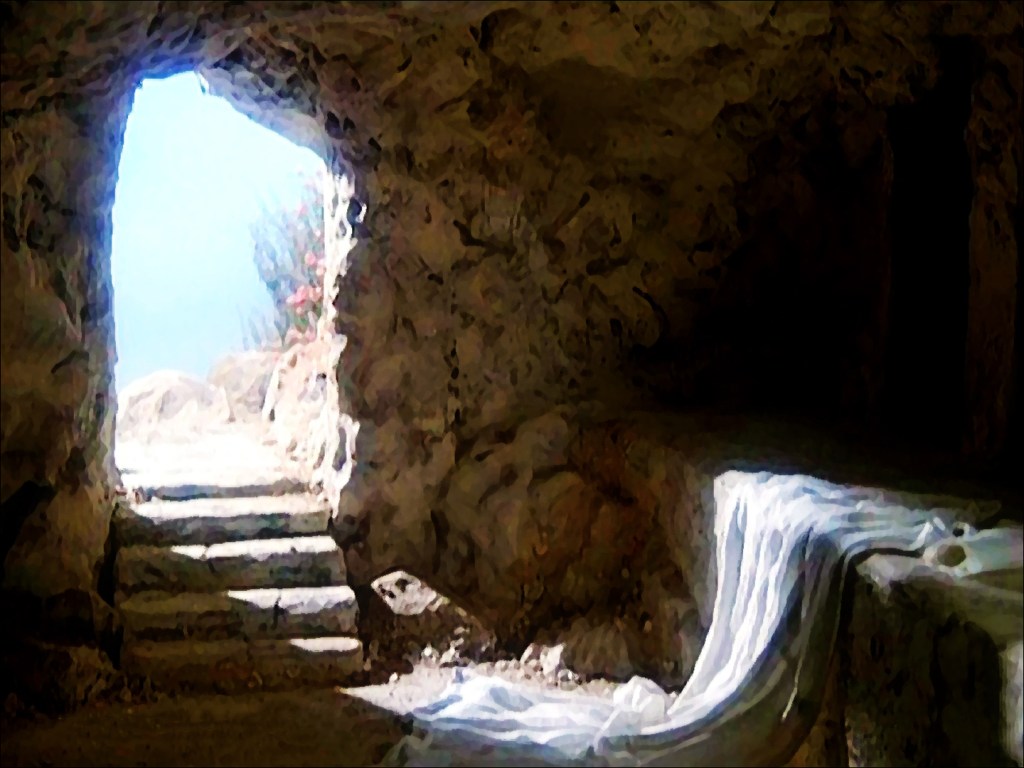
The Glory of God in a Season of Pain

“So when Martha heard that Jesus was coming, she went and met him, but Mary remained seated in the house. Martha said to Jesus, “Lord, if you had been here, my brother would not have died. But even now I know that whatever you ask from God, God will give you.” Jesus said to her, “Your brother will rise again.” Martha said to him, “I know that he will rise again in the resurrection on the last day.” Jesus said to her, “I am the resurrection and the life. Whoever believes in me, though he die, yet shall he live, and everyone who lives and believes in me shall never die. Do you believe this?” She said to him, “Yes, Lord; I believe that you are the Christ, the Son of God, who is coming into the world.” John 11:20–27

The glory of God and the love of God are not in conflict with one another. Some theologians try to pit one against the other saying that the sovereignty of God (intimately tied to His glory) cannot override His love for humanity., and therefore the love of God willingly overrides His sovereignty so that God actually submits to the will of His creatures.

John 11 is an interesting test of this idea. In verses 4-6 it says, “But when Jesus heard it he said, “This illness does not lead to death. It is for the glory of God, so that the Son of God may be glorified through it.” Now Jesus loved Martha and her sister and Lazarus. So, when he heard that Lazarus was ill, he stayed two days longer in the place where he was.”]

In these verses we have the glory of God shown in His sovereign decision to allow the life of Lazarus to be overcome by death, with the divine purpose of God being glorified through His resurrection of Lazarus. To some Christians and many unbelievers, this is unthinkable—even monstrous. But this is because the unregenerate mind and the immature Christian mind attribute all discomfort, pain, trial, and even death, as only evil and that the only good that comes is from the avoidance of these things.

But the pain and suffering that occurs in this world is only a small part of the much bigger picture. And not only this, but the pain and suffering as well as the joy unspeakable that are available to humanity either through grace or denial of the offer of salvation are infinite. The present world and its pains and joys are only a small sampling of a greater reality that all of humanity shall experience personally one day.

Jesus, looking beyond the suffering and eventual death of His friend Lazarus knows that a greater lesson needs to be grasped and through the truth He will bring glory to His Father.

So, instead of rushing to the scene to be at His friend’s side, Jesus stayed two days longer to assure His disciples that Lazarus was dead and buried by the time they reached Bethany.

This means that when we are tempted to cry out “Why?” In our trials, we must not push aside the glory of God and begin to question the love of God. The Lord’s mind is vast and His plans are more infinitely complex that we can know or imagine; therefore we must never doubt His love.

Mary and Martha were correct in placing all of their hope in Jesus’ power to heal their brother. The issue was simply timing. Jesus could have healed Lazarus while he was sick (Jn 11:21-27, 32); or immediately after he had died; or long after he died in the future Day of resurrection (v. 24).

The sisters had hoped that the healing would be before his death, but after he had died, they found some comfort in the future resurrection when he would be raised from the dead.

But Jesus gave them immediate resurrection while also pointing them to the reality of the greater day of resurrection that they would still need to look forward to and hope in. We too must cling to this very same hope even without our own personal experience with an immediate healing or resurrection. Jesus proved to Mary and Martha, and by extension to us as well, that He is able to raise the dead—because He raised Lazarus from the dead, and He rose from the grave by His own power.

So the next time you find yourself doubting God’s love or not understanding how such pain could bring God glory, remember Lazarus. You might never understand God’s reasoning, but you must know this—God desires to be glorified and His love for us is infinite. Both are true and both are never super versed by His perfect plans.

Our Great Resurrection Hope (part 4)

He is risen! On this beautiful Resurrection Sunday morning, there is eternal hope for every believer in Christ Jesus. Although they are fun, the easter egg hunts, baskets, pretty Spring dresses, and bunnies cannot compare to the joy that rises in the heart of those who have placed their trust in Christ. In this final post of our great resurrection hope, we will look at the crushing of the enemy and the final victory that we are assured. Our hope is not a wishful thinking but an assured confidence.

In Part 1, we learned that Christ’s Resurrection Guarantees the Christian’s Resurrection, and in Part 2, we saw that Christ’s Resurrection Reverses the Curse of Humanity, and in Part 3, we saw that Christ’s Resurrection Gives Hope for the Future. Let us look at Paul’s words in 1Corinthians 15:24-26 as we consider the fourth reason this day is one of such great hope.

Then comes the end, when he delivers the kingdom to God the Father after destroying every rule and every authority and power. For he must reign until he has put all his enemies under his feet. The last enemy to be destroyed is death.

(1 Corinthians 15:24–26, ESV)

Christ’s Resurrection Guarantees the Defeat of Every Enemy of Christ (vv. 24-26)

When Jesus Christ died upon the cross, he set into motion the assured and final victory over every enemy of God. This includes Satan and the demons and every human being that have rebelled against God. (v. 24)

Jesus Christ will destroy every rule, and every authority and power that will not submit to him. Not a single enemy of God will remain. His reign will last until every enemy is conquered and put under his feet (v. 25)

The final enemy shall be death (v. 26). Until the resurrection of Jesus Christ, death was the undefeated champion of every fight fought. Nobody faces death and walks away. Some might escape for a few more days or even years, but death always wins. But in Jesus Christ, death has met its match. Jesus Christ is stronger than death.

The great enemy of mankind that began in the Garden will finally be stopped. All the dead who have trusted in Christ will have been raised from the dead and transformed into glorified bodies, just like Jesus has been. There will be no more death at all.

The death of death will have come because of the death of Christ. All things will be made right.

This is the hope we have in Christ. This is what the resurrection means to Christians. It directly affects each of of us.

Charles Haddon Spurgeon said, “Death in its substance has been removed, and only the shadow of it remains.… Nobody is afraid of a shadow, for a shadow cannot block a man’s pathway for even a moment. The shadow of a dog can’t bite; the shadow of a sword can’t kill.” Christ Himself took the full force of death’s destroying power by dying and paying for our sin, then rising from the grave. Trusting Jesus may not remove death’s shadow, but remember, shadows can’t hurt us.”[1]

The resurrection reminds us of this truth. We are more than conquerors in Christ Jesus. We have nothing to fear, even death itself. We shall be raised from the dead, because Christ lives!

And all the enemies of God shall be dealt with as well.

That leads me to ask a question of you this morning. Do you have this hope in the resurrection of Jesus Christ? That would depend upon whether you have placed your faith and trust in him.

Jesus’ resurrection guarantees the resurrection of his followers. But it does something else. It points to the fact that he always keeps his promises. Jesus promised that he would rise from the dead. And he promised that he would come back. Not just to raise his disciples from the dead, but also to judge the unrighteous.

So, this Easter, what have you placed your hope in? Is it in the salvation in Jesus Christ or is it in yourself? Only salvation in Christ offers the great hope that we have this morning. Everything else is like a hollow chocolate bunny.


[1] https://bible.org/illustration/nobody-afraid-shadow

Our Great Resurrection Hope (part 3)

In the events of Passion week, today is a silent day of mourning. The disciples went home with the horrible reality that Jesus was dead and his body was in a tomb. Now what? But the resurrection gives us hope! In Part 1, we learned that Christ’s Resurrection Guarantees the Christian’s Resurrection, and in Part 2, we saw that Christ’s Resurrection Reverses the Curse of Humanity. But the Apostle Paul gives at least two more reasons for us to draw hope, even on this day of grief as we await Resurrection morning. The third reason is…

Christ’s Resurrection Gives Hope for the Future (v. 23)

But each in his own order: Christ the firstfruits, then at his coming those who belong to Christ.” (1 Corinthians 15:23, ESV)

Right now, we all see the effects of sin all around us. We feel it in our bodies. Sickness, disease and death are constant reminders of our fallenness.

Sin has a corrosive effect in society that has plunged us into spiritual darkness that it seems we will never recover from. Crime, war, famine, hatred, and all sorts of human suffering is never far away. We see it in our news feeds every day. We can’t ever seem to get a day of relief from the bad news.

We are desperate for some good news. The resurrection of Christ is the best news. It tells us not only that Jesus is alive, but that he is coming back to judge the world and he will raise us up from the dead and glorify our bodies to never die again.

Verses 50-57 describe this even in the future that we as Christians look forward to when we will be made imperishable and immortal. These verses say:

I tell you this, brothers: flesh and blood cannot inherit the kingdom of God, nor does the perishable inherit the imperishable. Behold! I tell you a mystery. We shall not all sleep, but we shall all be changed, in a moment, in the twinkling of an eye, at the last trumpet. For the trumpet will sound, and the dead will be raised imperishable, and we shall be changed. For this perishable body must put on the imperishable, and this mortal body must put on immortality. When the perishable puts on the imperishable, and the mortal puts on immortality, then shall come to pass the saying that is written: “Death is swallowed up in victory.” “O death, where is your victory? O death, where is your sting?” The sting of death is sin, and the power of sin is the law. But thanks be to God, who gives us the victory through our Lord Jesus Christ.

(1 Corinthians 15:50–57, ESV)

In 2015 the UC Berkeley Alumni magazine California ran an article about cryonics. Not sure what that is? Let me quote a small portion and you’ll understand,

Before launching the first cryonaut, they had sandwiches and coffee. It was a Thursday afternoon in January 1967, in the Los Angeles suburb of Glendale. The ad hoc medical team—a physician, a chemist, and Bob Nelson, a voluble TV repairman and president of the newly minted Cryonics Society of California—huddled around the dead man’s bedside. In front of them lay the body of James Bedford, who earned his master’s degree from UC Berkeley in 1928. A retired psychology professor and vocational guidance expert, the 73-year-old had died of liver cancer an hour earlier. All of them, living and dead, were about to make history.

The team went to work. Adapting techniques from the field of cryogenics, which studies materials at low temperatures, they injected medical-grade antifreeze into his neck, diluting his blood. To minimize damage to his brain, they kept oxygen pumping through his system with a machine called an iron heart. Then they slipped the professor into a coffin-shaped capsule filled with dry ice. (Later, the capsule would be placed in a cylinder cooled by liquid nitrogen for permanent storage at -196°C.)

Four hours later the task was completed: They had frozen the first man.

At a triumphal news conference a few days later, Nelson, the TV repairman, explained the purpose of the professor’s “cryopreservation.” Bedford, he told the assembled reporters, “will be kept frozen indefinitely until such time as medical science may be able to cure cancer, any freezing damage that may have occurred, and perhaps old age as well.”[1]

Here we are, over 50 years later, and that Berkeley professor’s body still awaits the cure for cancer, and the science to be able to bring him back to life and heal him of his cancer. If it had been done before, then maybe there would be more hope in cryonics. But this has never been done before. Not even once. Not even close. We don’t have that sort of hope as Christians.

The hope we have is assured. It isn’t a shot in the dark. It’s not a gamble or a pipe-dream. Church, Jesus Christ is alive today! Jesus Christ went through death for us, and he rose again before us. He will come again and we shall be raised from the dead just as he was!

Christ’s Resurrection Gives Hope for the Future to those who follow Jesus Christ as Lord. But what about those who do not believe in Christ and do not follow him? What about death itself?


[1] https://alumni.berkeley.edu/california-magazine/summer-2015-confronting-future/deep-freeze-what-kind-person-chooses-get

Our Great Resurrection Hope (part 2)

On this Good Friday, we have a wonderful opportunity to meditate not only upon the death of Christ, but upon the hope of his resurrection. Yesterday I posted the first of Four Assurances that Jesus’ Resurrection Gives Those Who are Followers of Jesus Christ: Christ’s Resurrection Guarantees the Christian’s Resurrection. You can read that post here: https://always-reforming.com/?p=1859

Christ’s Resurrection Reverses the Curse of Humanity (1 Corinthians 15:21-22)

For as by a man came death, by a man has come also the resurrection of the dead. For as in Adam all die, so also in Christ shall all be made alive.” (1 Corinthians 15:21–22, ESV)

In these next two verses, Paul reviews for the church what they already knew, but needed to connect to the resurrection of Jesus. Paul addressed the reality that all people die, and that is why there is a need for resurrection.

Paul lays down two parallel ideas—first, that death came to all of humanity through a single man, Adam, in the Garden of Eden, when he disobeyed God.

Then, secondly, resurrection of the dead has come to humanity through another single person, Jesus Christ, who on the cross obeyed God by dying in the sinner’s place.

Verse 21 gives a profound truth that the world we live in simply cannot grasp as it should. We find that people in general think that they are good people, maybe a little flawed, but good at heart. Nothing serious. Of course, there are a few bad apples that mess things up for the world. But most people are good.

But in the Garden, there was one law given by God. Don’t eat the fruit. That was it. One law. And Adam and Eve broke it. One law. And what was the penalty? Death. A broken relationship with God and death.

Now look at verse 22. It gives more detail regarding verse 21. It uses names here. “As in Adam all die.” Paul is assuming we all know this. Why did my grandparents die, even though they were super sweet people? Because Adam sinned, and all his children sin and the penalty of sin is death.

So, what does that say about my sweet grandparents? They were sinners. And no matter how good you think you are, you will show that you are a sinner in God’s eyes because all sinners die. Death isn’t natural. God didn’t make men to die. He made them to be immortal. Sin brought death. All sinners die.

We all associate with the first man, Adam, who represents us as the human race. He is our head, or leader.

But the second part is true as well. Verse 22 says, “so also in Christ shall all be made alive!”

Here, Christ is described as being a representative just like Adam is. Adam represents the human race. Jesus represents his followers, those who forsake everything and follow Christ. Those who place their every hope and trust in him. Those who are truly children of God and have attached themselves to Christ. Is that you? If it is, then this speaks to you!

Paul is speaking here of the reversal of the curse of sin and death that was brought upon the human race by Adam’s disobedience.

In Romans 5:12 Paul wrote, “Therefore, just as sin came into the world through one man, and death through sin, and so death spread to all men because all sinned—” (Romans 5:12, ESV) 

And in 1Corinthians 1:18, Paul wrote, “For the word of the cross is folly to those who are perishing, but to us who are being saved it is the power of God.

Those who don’t trust in Jesus Christ for salvation see the death of Christ as foolish, and we as Christians are foolish too. But these are the ones that are perishing in their sins. 

Have you ever gotten yourself in a jam that you simply couldn’t fix? That’s what the human race did when Adam disobeyed God and sinned. It reminds me of when we have gone fishing when my girls were much younger. Sometimes they would get their fishing line all tangled up and the reel looked like a bird’s nest of fishing line. Sometimes they tried to fix it, but soon realized it was too tangled, so they’d give it to me or my wife. Sometimes it was so bad all we could do was cut the line and start over.

Some people approach their tangled up sin-filled lives like that. They pridefully say its not that bad, and they try too “fix” it themselves. Sometimes they take it to others who claim to be experts for help. But these “experts” have a mess in their own sin. Some take their sin-filled lives to Jesus Christ. He alone can fix it. 

On the outside it looks like we are all the same. We are all heading toward death—both Christian and unbeliever. But there is a difference. The Christians identifies himself with Christ, and in doing so he joins Christ in the resurrection that will come one day.

But the unbeliever is still identified with Adam. In Adam all die. We are all in Adam and so we all feel the effects of the curse of death. But in Christ those who identify with Christ in faith shall be made alive because Christ’s Resurrection Reverses the Curse of Humanity.