
How God’s Sovereignty Affects Our Attitude in the Present Circumstances (part 1)

In his famous hymn “This is My Father’s World”, Maltbie Babcock wrote these comforting words:

This is my Father’s world, O let me ne’er forget/ That though the wrong seems oft so strong, God is the ruler yet. This is my Father’s world: The battle is not done; Jesus who died shall be satisfied, And earth and heav’n be one.

This stanza pulls together two truths that confront us in this world—“the wrong seems oft so strong” and “God is the ruler yet.” In the next three post I want to address this from the biblical perspective of Psalm 75. Over each of the next three posts I will lay out a total of Nine Ways in Which the Sovereignty of God in Dealing with the Wicked Affects Our Attitude Toward our Present Circumstances. Let’s begin…

1. It Makes us Aware That God is Always Near Us (v. 1A)

Psalm 75:1a “We give thanks to you, O God; we give thanks, for your name is near.

The reason for the psalmist’s thankfulness was that the “name” of God was near. The “name” of course, points to the presence of God himself.
David wrote about this nearness in Psalm 139:1-12 when he spoke of the Lord intimately knowing mankind from when he knit us in our mother’s womb as well as every other aspect of our lives. There is nowhere that we can hide or be hidden from his presence.

This is a comforting reality in times of need and pain. God really is right here with us. He hears your prayers. He sees your enemies as they attack. He sees it all.

2. It Gives us a Thankful Heart (v.1b)

Psalm 75:1b “We recount your wondrous deeds.

Along with his nearness was a legacy of remembering that brought forth a thankful heart.

Remembering and reciting aids in developing a thankful heart. We are forgetful people, aren’t we? The Lord knew this, and so he constantly calls his people throughout the Scriptures to remember, even instructing them to set up memory aids, special dates, rites, and festivals. In the Church Age, Christ instituted the Lord’s Supper to be done “in remembrance of him.” Why? Because as monumental as the cross of Christ is for our eternity, we still forget about it if left to ourselves.

Psalm 78:4 speaks about the need for parents to recite these memories to their children. It says, “We will not hide them from their children, but tell to the coming generation the glorious deeds of the Lord, and his might, and the wonders that he has done.

We can grow anxious and weary when we forget that God is in control. We can begin to see ourselves as helpless, awash in the chaos of the world, victims of chance. But if you sit down and read through the pages of Scripture, you will quickly begin to see that God has always been in control. Reminding yourself of this fact will change your outlook radically.

3. It Teaches Us Patience (v. 2)

Psalm 75:2 “At the set time that I appoint, I will judge with equity.

Here we have a change of speakers—the song has moved from Asaph speaking (or the priest who led the singing) to God himself speaking. The Lord says that “at the set time that I appoint…” This language in Hebrew refers to seasonal time, not clock time. Clock time spins fast. Seasons don’t work by a clock. Fruit doesn’t ripen according to your watch. God doesn’t punch-in to work.

Let there be no mistake, God will judge—he says so. But he will judge at the set time that he appoints. We can’t say “Amen” to God’s sovereignty and then be impatient when he doesn’t act on our schedule, can we? We can’t be like Martha, Lazarus’ sister, who got so upset that Mary wasn’t helping her prepare the food in the kitchen that she stomped right into the middle of Jesus’ teaching time and demanded that the LORD command her sister to help her! It appears Martha thought Jesus needed a little help leading the world. He doesn’t.

When you become impatient and wonder when God will judge, remember that God is in control as he has always been. Be still and know that he is God.

Our Great Resurrection Hope (part 2)

On this Good Friday, we have a wonderful opportunity to meditate not only upon the death of Christ, but upon the hope of his resurrection. Yesterday I posted the first of Four Assurances that Jesus’ Resurrection Gives Those Who are Followers of Jesus Christ: Christ’s Resurrection Guarantees the Christian’s Resurrection. You can read that post here: https://always-reforming.com/?p=1859

Christ’s Resurrection Reverses the Curse of Humanity (1 Corinthians 15:21-22)

For as by a man came death, by a man has come also the resurrection of the dead. For as in Adam all die, so also in Christ shall all be made alive.” (1 Corinthians 15:21–22, ESV)

In these next two verses, Paul reviews for the church what they already knew, but needed to connect to the resurrection of Jesus. Paul addressed the reality that all people die, and that is why there is a need for resurrection.

Paul lays down two parallel ideas—first, that death came to all of humanity through a single man, Adam, in the Garden of Eden, when he disobeyed God.

Then, secondly, resurrection of the dead has come to humanity through another single person, Jesus Christ, who on the cross obeyed God by dying in the sinner’s place.

Verse 21 gives a profound truth that the world we live in simply cannot grasp as it should. We find that people in general think that they are good people, maybe a little flawed, but good at heart. Nothing serious. Of course, there are a few bad apples that mess things up for the world. But most people are good.

But in the Garden, there was one law given by God. Don’t eat the fruit. That was it. One law. And Adam and Eve broke it. One law. And what was the penalty? Death. A broken relationship with God and death.

Now look at verse 22. It gives more detail regarding verse 21. It uses names here. “As in Adam all die.” Paul is assuming we all know this. Why did my grandparents die, even though they were super sweet people? Because Adam sinned, and all his children sin and the penalty of sin is death.

So, what does that say about my sweet grandparents? They were sinners. And no matter how good you think you are, you will show that you are a sinner in God’s eyes because all sinners die. Death isn’t natural. God didn’t make men to die. He made them to be immortal. Sin brought death. All sinners die.

We all associate with the first man, Adam, who represents us as the human race. He is our head, or leader.

But the second part is true as well. Verse 22 says, “so also in Christ shall all be made alive!”

Here, Christ is described as being a representative just like Adam is. Adam represents the human race. Jesus represents his followers, those who forsake everything and follow Christ. Those who place their every hope and trust in him. Those who are truly children of God and have attached themselves to Christ. Is that you? If it is, then this speaks to you!

Paul is speaking here of the reversal of the curse of sin and death that was brought upon the human race by Adam’s disobedience.

In Romans 5:12 Paul wrote, “Therefore, just as sin came into the world through one man, and death through sin, and so death spread to all men because all sinned—” (Romans 5:12, ESV) 

And in 1Corinthians 1:18, Paul wrote, “For the word of the cross is folly to those who are perishing, but to us who are being saved it is the power of God.

Those who don’t trust in Jesus Christ for salvation see the death of Christ as foolish, and we as Christians are foolish too. But these are the ones that are perishing in their sins. 

Have you ever gotten yourself in a jam that you simply couldn’t fix? That’s what the human race did when Adam disobeyed God and sinned. It reminds me of when we have gone fishing when my girls were much younger. Sometimes they would get their fishing line all tangled up and the reel looked like a bird’s nest of fishing line. Sometimes they tried to fix it, but soon realized it was too tangled, so they’d give it to me or my wife. Sometimes it was so bad all we could do was cut the line and start over.

Some people approach their tangled up sin-filled lives like that. They pridefully say its not that bad, and they try too “fix” it themselves. Sometimes they take it to others who claim to be experts for help. But these “experts” have a mess in their own sin. Some take their sin-filled lives to Jesus Christ. He alone can fix it. 

On the outside it looks like we are all the same. We are all heading toward death—both Christian and unbeliever. But there is a difference. The Christians identifies himself with Christ, and in doing so he joins Christ in the resurrection that will come one day.

But the unbeliever is still identified with Adam. In Adam all die. We are all in Adam and so we all feel the effects of the curse of death. But in Christ those who identify with Christ in faith shall be made alive because Christ’s Resurrection Reverses the Curse of Humanity.

Moralism is a False Gospel

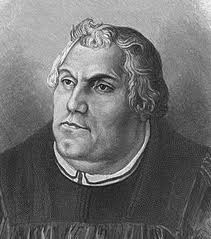
Martin Luther.jpg

Is salvation merely a message of “do better?” Is Christianity simply a moralistic religion that teaches that all we need to do is obey God? That is what the self-righteous Pharisees thought, and it is what many people in churches think. To them, Christianity is a list of rules that can be kept–albeit with a lot of sacrifice. Don’t think so? How many times have you heard someone say their wayward son or daughter “just needs to get back to church?” Is that all they need? Is that what Jesus taught?

In Romans 1:17, the Apostle Paul wrote, “For in it the righteousness of God is revealed from faith for faith, as it is written, “The righteous shall live by faith.”” (Romans 1:17, ESV). This text traumatized Martin Luther before his conversion to Christ. Here was a man that sincerely wanted salvation. He had dedicated his life to holy living in a monastic community where he sacrificed on a daily basis. Yet his soul was tortured. Here are Luther’s own words, written a year before his death on March 5, 1545 following a long life of joyful blessing in true salvation through Jesus Christ.

I had indeed been captivated with an extraordinary ardor for understanding Paul in the Epistle to the Romans. But up till then it was … a single word in Chapter 1 [:17], “In it the righteousness of God is revealed,” that had stood in my way. For I hated that word “righteousness of God,” which according to the use and custom of all the teachers, I had been taught to understand philosophically regarding the formal or active righteousness, as they called it, with which God is righteous and punishes the unrighteous sinner.

Though I lived as a monk without reproach, I felt that I was a sinner before God with an extremely disturbed conscience. I could not believe that he was placated by my satisfaction. I did not love, yes, I hated the righteous God who punishes sinners, and secretly, if not blasphemously, certainly murmuring greatly, I was angry with God, and said, “As if, indeed, it is not enough, that miserable sinners, eternally lost through original sin, are crushed by every kind of calamity by the law of the decalogue, without having God add pain to pain by the gospel and also by the gospel threatening us with his righteous wrath!” Thus I raged with a fierce and troubled conscience. Nevertheless, I beat importunately upon Paul at that place, most ardently desiring to know what St. Paul wanted.

At last, by the mercy of God, meditating day and night, I gave heed to the context of the words, namely, “In it the righteousness of God is revealed, as it is written, ‘He who through faith is righteous shall live.’ ” There I began to understand [that] the righteousness of God is that by which the righteous lives by a gift of God, namely by faith. And this is the meaning: the righteousness of God is revealed by the gospel, namely, the passive righteousness with which [the] merciful God justifies us by faith, as it is written, “He who through faith is righteous shall live.” Here I felt that I was altogether born again and had entered paradise itself through open gates. Here a totally other face of the entire Scripture showed itself to me.… And I extolled my sweetest word with a love as great as the hatred with which I had before hated the word “righteousness of God.” Thus that place in Paul was for me truly the gate to paradise. [Emphasis added]

The “gates of paradise” were opened up to Luther because he no longer depended upon his own law-keeping to satisfy the perfect demands of God. He saw salvation as a gracious act of God alone. Christ was perfectly righteous, fulfilling the whole law in our place. He died in our place and we are justified because of his perfect life and substitutionary death.

The hamster wheel of self-righteous deeds done in order to save ourselves is endless and endlessly disappointing. But the worst thing is that it does not end in heaven, but hell. The one who rejects the perfect finished work of Christ on the cross in favor of his or her imperfect works should expect nothing more, and will get nothing less.

Don’t point people to hell with “do better” sermons. Don’t say that your lost neighbor needs to be invited to church when you need they need to be regenerated by Christ. Don’t confuse fruits of righteousness with earning points with God so he will somehow love and favor you more.

Christ alone is enough. Faith in him alone saves. This is all “marvelous, infinite, matchless grace.”

Watch Your Life and Doctrine Closely (weekend repost)

Whether it was Zacharias, James McDonald, Mark Driscoll, Jack Schapp, Jim and Tammy Faye Bakker, Jimmy Swaggart, or any of the seemingly endless list of failures, there is a commonness to their ability to go so far in their sin before they crashed and burned. You don’t need to look far and you will see that each of these people were able to get so far in their sin because they built a structure around them of yes-men that they knew would not stand up to them and hold them accountable to biblical standards of holiness.

“Watch Your Life and Doctrine Closely”

This post was the most popular this past week. In case you missed it: Watch Your Life and Doctrine Closely

Watch Your Life and Doctrine Closely

With the most recent discovery of the moral failure of Ravi Zacharias, many have wondered how it is that such a thing could happen again. But there is a common denominator among many of these men that we must address because although our own fall may not be publicized to the same extent, there is no doubt that it will have similar destructive results.

Whether it was Zacharias, James McDonald, Mark Driscoll, Jack Schapp, Jim and Tammy Faye Bakker, Jimmy Swaggart, or any of the seemingly endless list of failures, there is a commonness to their ability to go so far in their sin before they crashed and burned. You don’t need to look far and you will see that each of these people were able to get so far in their sin because they built a structure around them of yes-men that they knew would not stand up to them and hold them accountable to biblical standards of holiness.

Whether it is gold, girls, glory, or a combination of these, each failure achieved such great heights because they had constructed a system that assured them that their lusts could grow unchecked. In essence they set a trap for themselves, as the Proverbs say:

For in vain is a net spread in the sight of any bird, but these men lie in wait for their own blood; they set an ambush for their own lives. Such are the ways of everyone who is greedy for unjust gain; it takes away the life of its possessors.” (Proverbs 1:17–19, ESV)

The threat is not only for the A-list celebrity Christian though. We may not be able to attain to the great heights from which they fall, but we shall fall nonetheless. The Apostle Paul warned Timothy of words that must be ever-present in our lives: “Keep a close watch on yourself and on the teaching. Persist in this, for by so doing you will save both yourself and your hearers.” (1 Timothy 4:16, ESV)

How can we avoid the same end?

  1. Make sure you are in the Word and in prayer daily. This doesn’t point to a legalistic requirement, but a need for the Spirit to continuously work in our hearts through the Sword of the Spirit.
  2. Make sure you have submitted yourself to a pastor or elder(s) to hold you accountable. This means that if you are a pastor, you are allowing another godly elder or elders to confront you and ask you the hard questions when necessary.
  3. Be aware of your own propensities and weaknesses, but do not put too much trust in your own judgment. Allow those closest to you to point out your blind spots and then you must listen to their wise counsel and correction.
  4. Allow trusted men of God access to you. Don’t cut yourself off from those who will be most honest with you because they love you.
  5. Be careful not to shut out those who disagree with you. “Yes men” might make your plans go smoother, but you need those who will look at things differently from you and might point out those things you (and your yes-men) might fail to see.
  6. When you are wrong, confess it, repent, and ask forgiveness. Don’t cover your sin or make excuses for it. We all mess up, but there is no excuse for prideful avoidance of guilt.
  7. Be willing to listen to criticism with a humble heart. Try to find truth and helpful counsel, even in those complaints that might be unfair and even mean-spirited.
  8. Be an open book to several trusted people in your life. You should be unafraid to open up any area of your life to a trusted friend who asks, especially in the areas where there may be a potential risk of failure.
  9. Don’t develop a form of church government that cordons you off from any form of biblical scrutiny. Special committees that don’t answer to or communicate with anyone but the pastor have great potential to be a hiding place for sin.

Satan loves to work in shadows and whispers. The more light that we allow to shine on our ministry, the less there is a possibility that sin can grow or remain hidden for long.