Exposing the False Prophets and Apostles of the New Apostolic Reformation (Links)

This past Sunday our church began diving into the book of Acts. In that message we began to look at the Apostolic foundation of Christ's church. By way of illustration and application I mentioned a troubling trend that is growing in “evangelicalism” in regard to this issue and the upswing of so-called modern apostles and fallible, errant prophets. To give you further background to some of the aberrations happening in churches today in this regard, I have gathered a few links that will hopefully be a starting point for better understanding and exposing the heretical teaching of the New Apostolic Reformation and their kin.


Solid Theological Studies Resources

20140203-084156.jpg
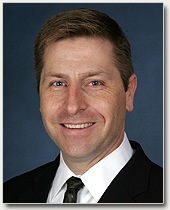
Mike Vlach, professor of Theology over at TMS is one of those guys that both is crazy smart and a good guy. His official bio over at TMS says:

Michael J. Vlach, Ph.D. is Professor of Theology at The Master’s Seminary in Sun Valley, California where he has been teaching full time since 2006.

Michael has a B.S. in Business Administration from the University of Nebraska and a Master of Divinity degree from The Master’s Seminary in Sun Valley, California. He also earned his Ph.D. in Systematic Theology from Southeastern Baptist Theological Seminary in Wake Forest, North Carolina.

Michael specializes in the areas of Systematic Theology, Historical Theology, Apologetics, and World Religions. His specific area of expertise concerns the nation Israel and issues related to refuting the doctrine of Replacement Theology. Dr. Vlach was awarded the “Franz-Delitzsch Prize 2008” for his dissertation, “The Church as a Replacement of Israel: An Analysis of Supersessionism.” He is also the author of five books:

Has the Church Replaced Israel?: A Theological Evaluation (B & H Academic, 2010)

20 Tips for Writing Seminary Papers (Theological Studies Press, 2010)

The Church as a Replacement of Israel: An Analysis of Supersessionism (Peter Lang, 2009)

Dispensationalism: Essential Beliefs and Common Myths (Theological Studies Press, 2008)

Philosophy 101: The Big Idea for the 101 Most Important People and Ideas in Philosophy (Theological Studies Press, 2007)

Dr. Vlach is also the Founder and President of TheologicalStudies.org, a cutting-edge website devoted to providing quality articles, news, and information related to Christian theology. Michael speaks regularly at churches and conferences and has appeared on several national radio and television broadcasts including The History Channel.

Michael is also a member of the Evangelical Theological Society and has taught various courses in Theology for Liberty University in Lynchburg, Virginia.

All that to say Mike knows his stuff. He’s blessed the Church with materials for study at his site www.theologicalstudies.org. Check it out.

How to Become a Doer and Not Just a Hearer of the Word

This past Sunday I spoke to our church about Jesus’ command to his disciples and those in the crowd to “do and observe” what the Pharisees and Scribes who sat in Moses’ seat taught, so long as it was accurately reflected in the Bible. We are also called by Scriptures to do and observe all that the Bible teaches. So, as a people who desire to be not merely hearers, but doers, I gave these five applicational thoughts about how to “use” the Bible more effectively. If you want to hear the sermon that this is taken from, you can download or stream it here, entitled “The Authority of the Word of God.”

  1. Notate. Take note of application given in sermons you hear. Literally take notes! Look for what God would have you DO with his Word. Don’t just collect biblical information. Then, go back and review your notes, praying for help to obey what you have seen that he wants you to do.


  2. Saturate. On your own, read your Bible with an eye for application. This means that you need to know how to find universal principles in the Bible. These are truths that are good in every time and every culture. They are also consistent with the whole Bible.


  3. Categorize. Take those universal truths and begin categorizing them into useful headings. Begin by setting up categories for your roles in life–Bible verses for you as a Father/Mother, as a husband/wife, as a son/daughter, as a Christian, as an employee, as a neighbor.


  4. Organize. Put Scriptures (and the principles that they speak of) in categories that will lend themselves to your use–such as pride, humility, gossiping, the tongue, hope, fear of man, decision making, forgiveness, etc. Some of these will be more useful to you than others, so be sure to put them on a list that you can tuck into your Bible, or even write into the end papers of your Bible so they are handy whenever you need them.


  5. Apply. Now, when you are, for example, having a bad day with your mouth–you keep hurting others, or maybe you’ve lost your temper–you can turn in your Bible and meditate on what God’s Word says about that issue and what you need to do. As you do this over and over, you will not only begin to remember where to go without having to look at the list, but you will slowly memorize those verses.


It’s not brain surgery or rocket science, but it does take discipline and effort. Jesus said for you and I to “do and observe” His Word. If you claim that the Bible is truly your authority, then you need to know it so you can obey it. If not, then you are merely a hearer of the Word and not a doer–fooling yourself. May we never find ourselves there.