The Place of Theology in Sermons

The recent State of Theology study by Ligonier ministries puts into quantifiable results the fact that the Evangelical Church is astoundingly ignorant and misinformed about the basic doctrines of the Christian faith. It isn’t hard to understand this when sermons continue to get shorter and substance grows thinner. Moralism, stories, pop psychology, and video clips fill up the time given for preaching and the results are predictable.

How can we beef up the theological content of our sermons while not overwhelming our congregations with long dissertations and dry lectures? As in many things in life, we must strike a balance. How can we do that?

  1. Preach the text. Expositional preaching is not the same as a theological diatribe. Every text contains theology, but not every theological message is expositional. Stick to the text and explain the passage by making the theology in it clear.
  2. Make sure you understand the depth and breadth of the theology in the text. As the one expounding the passage, you must know the greater concepts of theology inside and outside of the passage. Pull out that systematic theology and refresh yourself with the broader and more full ideas involved in the particular theological concept you are addressing. This will guard you from saying something contradicted elsewhere in Scripture.
  3. Be clear about the theological idea before you preach on it. Nothing makes a muddy sermon than not knowing what you are talking about. If you can explain the main idea of a theological concept to a 10 year old, you understand it well. Break it down into bite-sized ideas and use illustrations or similes in order to communicate to different levels of spiritual maturity.
  4. Don’t be afraid of using theological terms, but be sure to define them. Don’t avoid using words like justification, atonement, even hypostatic union, but make sure that you define the word and idea. But be careful that in defining a word, you don’t oversimplify a complicated concept for the sake of being clever.
  5. Connect the theology with living for Christ. God places theological concepts in his Word because they are important, but it is the job of the expositor to mine the riches and point out the practical application of each idea to life. Show them the riches of theology and make them thirst for more. The Puritans were masters at this!

As we add theology each Sunday we will serve up rich, meaty spiritual meals that will satisfy and strengthen the congregation. Your church doesn’t have to be near a seminary, highly educated, or even made up of mature believers to do this. Start at whatever level your church is at spiritually, and then move them toward greater maturity and theological precision with patience and love. Not only will they thank you for it, you will be inoculating the church against false doctrine and false teacher as well, making your job as a shepherd so much easier.
Moralism is a False Gospel (weekend repost)

Is salvation merely a message of “do better?” Is Christianity simply a moralistic religion that teaches that all we need to do is obey God? That is what the self-righteous Pharisees thought, and it is what many people in churches think. To them, Christianity is a list of rules that can be kept–albeit with a lot of sacrifice. Don’t think so? How many times have you heard someone say their wayward son or daughter “just needs to get back to church?” Is that all they need? Is that what Jesus taught?

Read the complete post here: Moralism is a False Gospel

Moralism is a False Gospel

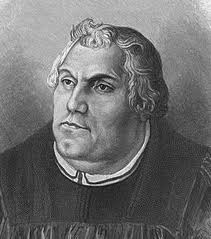
Martin Luther.jpg

Is salvation merely a message of “do better?” Is Christianity simply a moralistic religion that teaches that all we need to do is obey God? That is what the self-righteous Pharisees thought, and it is what many people in churches think. To them, Christianity is a list of rules that can be kept–albeit with a lot of sacrifice. Don’t think so? How many times have you heard someone say their wayward son or daughter “just needs to get back to church?” Is that all they need? Is that what Jesus taught?

In Romans 1:17, the Apostle Paul wrote, “For in it the righteousness of God is revealed from faith for faith, as it is written, “The righteous shall live by faith.”” (Romans 1:17, ESV). This text traumatized Martin Luther before his conversion to Christ. Here was a man that sincerely wanted salvation. He had dedicated his life to holy living in a monastic community where he sacrificed on a daily basis. Yet his soul was tortured. Here are Luther’s own words, written a year before his death on March 5, 1545 following a long life of joyful blessing in true salvation through Jesus Christ.

I had indeed been captivated with an extraordinary ardor for understanding Paul in the Epistle to the Romans. But up till then it was … a single word in Chapter 1 [:17], “In it the righteousness of God is revealed,” that had stood in my way. For I hated that word “righteousness of God,” which according to the use and custom of all the teachers, I had been taught to understand philosophically regarding the formal or active righteousness, as they called it, with which God is righteous and punishes the unrighteous sinner.

Though I lived as a monk without reproach, I felt that I was a sinner before God with an extremely disturbed conscience. I could not believe that he was placated by my satisfaction. I did not love, yes, I hated the righteous God who punishes sinners, and secretly, if not blasphemously, certainly murmuring greatly, I was angry with God, and said, “As if, indeed, it is not enough, that miserable sinners, eternally lost through original sin, are crushed by every kind of calamity by the law of the decalogue, without having God add pain to pain by the gospel and also by the gospel threatening us with his righteous wrath!” Thus I raged with a fierce and troubled conscience. Nevertheless, I beat importunately upon Paul at that place, most ardently desiring to know what St. Paul wanted.

At last, by the mercy of God, meditating day and night, I gave heed to the context of the words, namely, “In it the righteousness of God is revealed, as it is written, ‘He who through faith is righteous shall live.’ ” There I began to understand [that] the righteousness of God is that by which the righteous lives by a gift of God, namely by faith. And this is the meaning: the righteousness of God is revealed by the gospel, namely, the passive righteousness with which [the] merciful God justifies us by faith, as it is written, “He who through faith is righteous shall live.” Here I felt that I was altogether born again and had entered paradise itself through open gates. Here a totally other face of the entire Scripture showed itself to me.… And I extolled my sweetest word with a love as great as the hatred with which I had before hated the word “righteousness of God.” Thus that place in Paul was for me truly the gate to paradise. [Emphasis added]

The “gates of paradise” were opened up to Luther because he no longer depended upon his own law-keeping to satisfy the perfect demands of God. He saw salvation as a gracious act of God alone. Christ was perfectly righteous, fulfilling the whole law in our place. He died in our place and we are justified because of his perfect life and substitutionary death.

The hamster wheel of self-righteous deeds done in order to save ourselves is endless and endlessly disappointing. But the worst thing is that it does not end in heaven, but hell. The one who rejects the perfect finished work of Christ on the cross in favor of his or her imperfect works should expect nothing more, and will get nothing less.

Don’t point people to hell with “do better” sermons. Don’t say that your lost neighbor needs to be invited to church when you need they need to be regenerated by Christ. Don’t confuse fruits of righteousness with earning points with God so he will somehow love and favor you more.

Christ alone is enough. Faith in him alone saves. This is all “marvelous, infinite, matchless grace.”

Doctrine Worth Dying For (weekend repost)

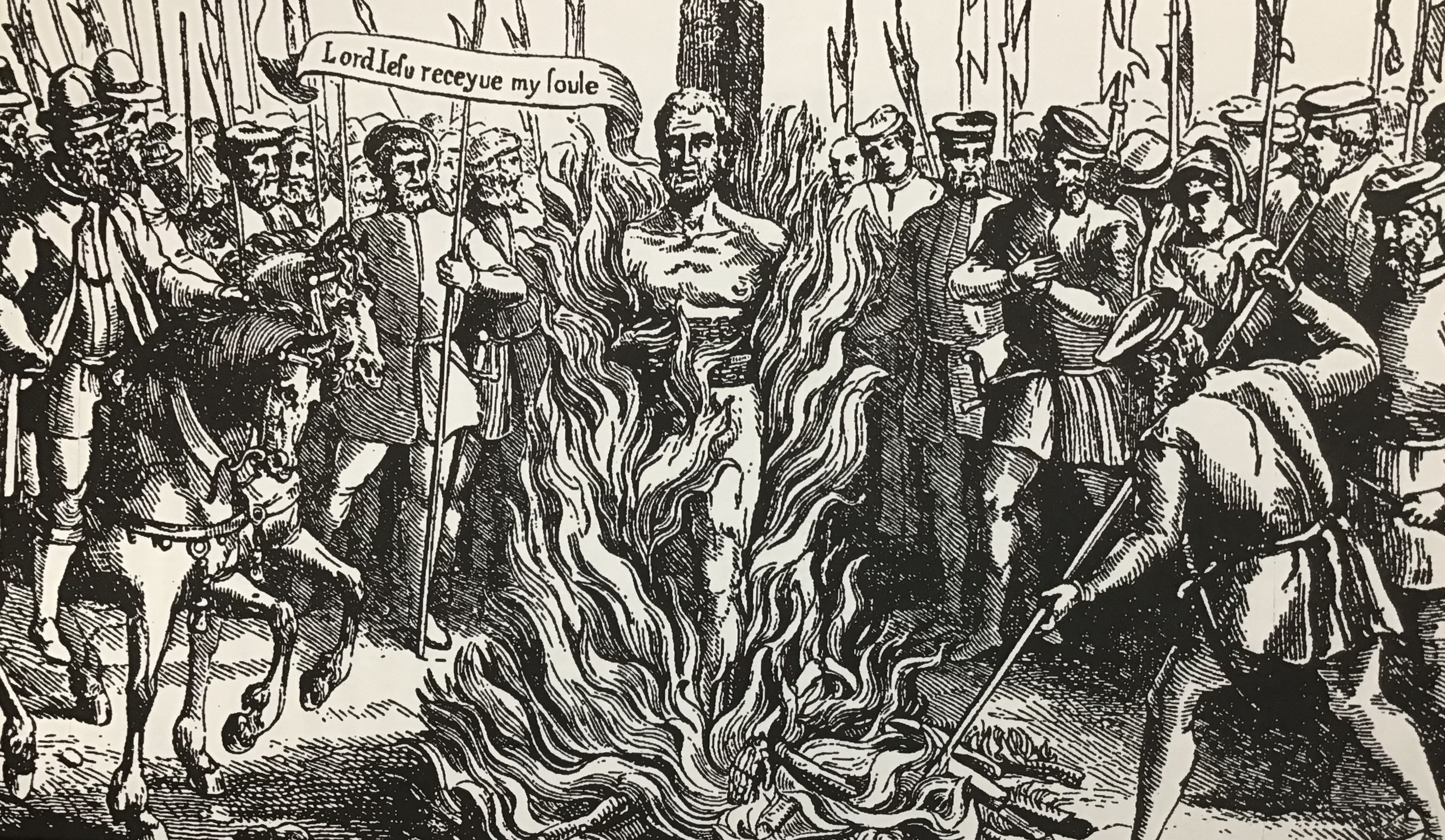
Bishop John Hooper burned at the stake by the order of Queen Mary Tudor

Some claim that since whether one is Amil, Premil, Postmil, is not an issue of salvation, and therefore should be left out of a church doctrinal statement. I think I addressed this in the last post, but I will say this: If we are only going to include universal truths that all Christians agree upon from every communion and tradition, we will indeed have a very small statement.

Read the full post here: Doctrine Worth Dying For

Doctrine Worth Dying For

Bishop John Hooper burned at the stake by the order of Queen Mary Tudor

In his soul-stirring book, Light From Old Times, J.C. Ryle puts before his reader reminders of the courageous men and women who gave their lives for the truth of the Word of God. Wycliffe, Cranmer, Latimer, Ridley, Bradford, Rogers, and Hooper, among many others, died for refusing to cast aside their conviction of what the Scriptures teach in order to spare their mortal bodies.

The other day I wrote a post in regard to some churches that have diminished views of eschatology as is evidenced in their doctrinal statement. Some claim that since whether one is Amil, Premil, Postmil, is not an issue of salvation, and therefore should be left out of a church doctrinal statement. I think I addressed this in the last post, but I will say this: If we are only going to include universal truths that all Christians agree upon from every communion and tradition, we will indeed have a very small statement.

But this view ignores two realities. First, it mixes the distinction between the universal church and the local expression of the church. Yes, to be included in the universal church we need to ascribe to the gospel as delivered once for all the saints. But the local church, with local pastors and elders will understand very important doctrines and practices very differently from many other local assemblies, that are also a part of the Church Universal.

This simplistic and even naive view wants to act as if anything that is not necessary and primary is not important to express and defend within the local church. Every church makes distinctions in what they believe and how they express their theology in practice. The only way to avoid doing so is to continually water down belief and practice to the lowest common denominator so that whatever you do, so long as you are under the banner of “Christian,” is acceptable. However, in practice, the church that doesn’t write down what they believe and practice does take a stand, but they don’t have it written down.

The second reality often ignored is the fact that not only are secondary and even tertiary issues important to delineate in a doctrinal statement, but their are even good reasons for division. In Ryle’s Light From Old Times, he points out the great division that existed during the Reformation in Europe and England over the issues of baptism and the Lord’s Supper. Again, those who would prefer unity over doctrine, would say that this is unfortunate. But history shows that the doctrinally astute understand that these issues matter immensely, and may even be worth dying for if we are convinced by Scripture and conscience.

For the one who would say that secondary and tertiary issues are not important enough to divide over, I would ask whether they have women pastors and elders in their churches, whether they practice infant baptism and believer’s baptism, and by what theological basis do they affirm their practices? Does this non-committal church worship on the Sabbath or on Sunday? Do they partake of the Lord’s Supper without any explanation of the significance? If they do explain, which view do they take? Is it “potluck” and everyone brings their view to the table? Does this sound like unity? Does it sound like nit-picking and division since none of the views would keep a person out of heaven? To me, it sounds like formalized chaos and would break down in actual practice.

We live in a wishy-washy age, but we don’t need anymore wishy-washy leaders in the Church. We need men with lion-hearts and backbone. We need men who will speak with grace, but never depart from truth. We need men who will stand on what they believe and not allow their churches to slink down to the lowest common denominator in its doctrine, and especially under the false guise of “unity.” Doctrine is worth defending. It is even worthy dying for. True, not every hill is worth dying on. But that doesn’t mean we can’t have firm commitments, nor that good men can’t disagree and still be brothers at arms in the fight for truth.

May the Lord restore us to a place where we can have distinction and unity. That we recognize the universal church as all those who subscribe to the basic tenants of the Christian faith, and yet the critical importance of the local church is never downplayed or discounted, but seen as the place where further doctrinal detail is hammered out in the everyday life of Christ’s disciples.