Faith is essentially dogmatic


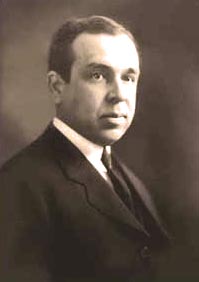
machen_photo

“…if any one fact is clear, on the basis of this evidence, it is that the Christian movement at its inception was not just a way of life in the modern sense, but a way of life founded upon a message. It was based, not upon mere feeling, not upon a mere program of work, but upon an account of facts. In other words it was based upon doctrine….Faith is essentially dogmatic. Despite all you can do, you cannot remove the element of intellectual assent from it.”

–Machen, J. Gresham. Christianity and Liberalism, Kindle ed. Loc. 289, 1949.

Mighty Men of God

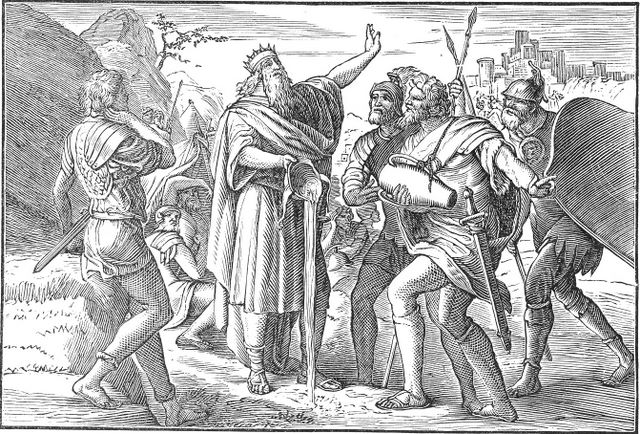
David's three mighty men

David’s Mighty Men

“And David became greater and greater, for the LORD of hosts was with him.” (1 Chronicles 11:9)

The vast majority of the first nine chapters of First Chronicles is a genealogy, and most people simply breeze over the names and relations listed there. And after a description of Saul’s and Jonathan’s deaths and David’s ascension to the throne, another list of names is given. Whereas the first lists were genealogies, this list is very different.

This coming weekend is Memorial Day in the United States, a holiday which is normally celebrated with picnics and barbecues, a long way from the true purpose this holiday. Memorial Day was originally set aside as a day to remember or memorialize the men and women who have fought to defend our country in the armed services. The Vietnam Veterans Memorial Wall in Washington D.C. currently has 58,272 names of those who died or remain missing in the Vietnam War.

So what’s my point? My point is that lists of names mean something. And not only to their family and loved ones. This becomes incredibly clear in 1Chronicles 11:10-12:40 where the names of King David’s mighty men are given along with some of their accomplishments. These were great men of war and courage. Some fought against unthinkable odds and everyone fought with great courage and faithfulness to the king.

Here are a few thoughts I had about these men:

  • Like David, the mighty men were only successful because the Lord had given them success and they knew it. The beginning of a great fall begins with pride!
  • Their faithfulness to King David was a faithfulness to the Lord who had placed David upon the throne. Mighty men recognize God’s leaders and do all they can to support him.
  • The mighty men had different ranks based upon their abilities, performance and successes. There is “the three,” “the thirty” and the those who were very great, but “did not attain to the three” or “the thirty.” Everyone isn’t equal. Performance, skill and effort matter. In a day when everyone gets a participation ribbon, this shows that mighty men strive and push themselves to be their best in the service of the Lord.
  •  The mighty men loved their king and were willing to go above and beyond to serve and please him, even risking their lives to give him water from his hometown well (1Chron 11:15-19). This devotion was matched by David unwillingness to indulge himself with this sort of sacrifice. There was mutual love, respect and loyalty between the king and his mighty men.
  • The mighty men had a great kinship and loving respect for one another built around their devotion to the Lord and his king. They were united in purpose and vision, each doing his own part for the common cause.

The virtues of honor, devotion, courage, selfless service and sacrifice are not exclusive to the military. These are the virtues that members of the Church should uphold as well. Our King is Jesus and our goal is clearly given in the Great Commission. May the Lord be pleased to raise up mighty men (and women!) from within our own churches to his glory and honor!
Spurgeon on Preaching with Emotion

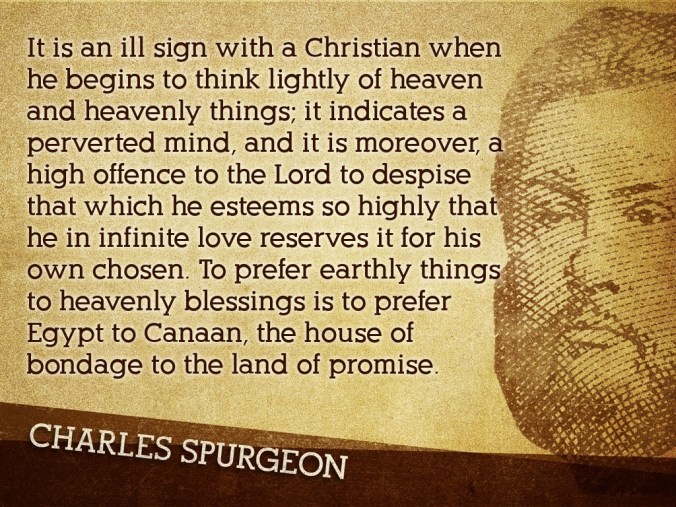
That is what you must do with your sermons, make them red-hot; never mind if men do say you are too enthusiastic, or even too fanatical, give them red-hot shot, there is nothing else half as good for the purpose you have in view. We do not go out snow-balling on Sundays, we go fire-balling; we ought to hurl grenades into the enemy’s ranks.—C.H. Spurgeon, The Soul Winner: How to Lead Sinners to the Saviour; Fleming H. Revel edition, 69.

Dealing with Sin-First Samuel 15

dealingwithsin
I recently read of a young executive that was constantly seen in the office restroom fiddling with his mouth. It turns out that he had a problem with his tooth that kept bothering him. To alleviate the pain, he used a numbing gel regularly to make the pain go away.
 
Finally, he couldn’t stand the pain any longer and he went in to see his dentist. Once the doctor had examined his tooth, he let the young man know that because of his delay, the gum surrounding the tooth had become severely infected and that in order to stop the damage, he would need to remove several teeth around the infected one and fit the executive with a set of partial dentures. All because he failed to deal with the problem when it was small!
 
In First Samuel 15 we see that sin is destructive and that if it isn’t dealt with right away, like a rotting tooth, it affects more people and becomes more painful. What is needed is a return to God and a spiritual heart check.
 
Saul was instructed by the Lord to destroy God’s enemies, the Amalekites, and to leave nothing. Saul instead chose to keep the king alive as a trophy, and to take the livestock as the spoils of war. In doing so, Saul rebelled against the direct orders of God and rejected His authority. When confronted with his sin by Samuel, first he lied, then he excused his behavior, then he passed blame to the people, then finally accepted blame but quickly moved on to save face before the people.
 
We can see from Saul’s rebelliousness against God that often times the effects and consequences of sin reach far beyond the sinner. It is like the consequence of a restaurant cook that does not wash his hands after using the restroom. The filth on his hands that once was personal effects all those who are around his and the innocent suffer from his sin.
The lesson that we can learn from this is that we need to deal with sin quickly and honestly. Sin is so destructive not only because the damage it does to the one wronged, but because it can spread like gangrene and hurt others as well. We need to be honest about our sins (confession) and repent of them, both before God and man.