How God’s Sovereignty Affects Our Attitude in the Present Circumstances (part 2)

When the earth totters, and all its inhabitants, it is I who keep steady its pillars. Selah I say to the boastful, ‘Do not boast,’ and to the wicked, ‘Do not lift up your horn; do not lift up your horn on high, or speak with haughty neck.’ ” For not from the east or from the west and not from the wilderness comes lifting up, but it is God who executes judgment, putting down one and lifting up another.

(Psalm 75:3–7, ESV)

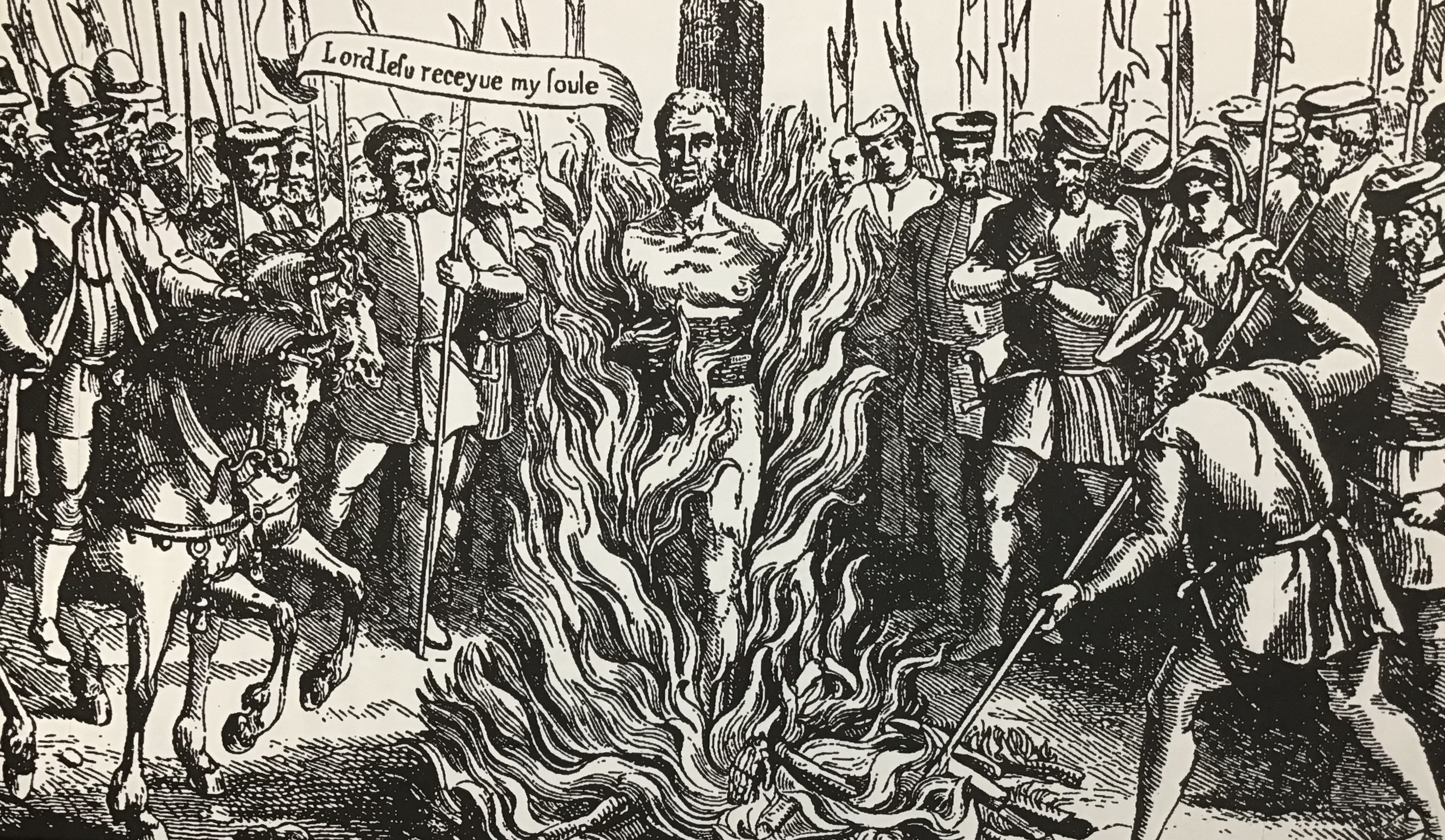
When I read passages like Hebrews 11, I can’t help but think that the Christians of yesterday were made of different stuff than today’s Christians. Do you sense that today’s churches are filled with Christians who say they’d die for Christ, but begin fidgeting in their seats when the sermon goes long? If my observations are correct, then how can we hope to endure true and sever trials? I think Pslam 75 goes a long way to helping us see the benefits of resting in the sovereignty of God.

Yesterday’s post demonstrated that trials and difficulties 1. Make us aware that God is always near us, 2. Give us a thankful heart, and 3. Teach us patience. You can read the full post here: How God’s Sovereignty Affects Our Attitude in the Present Circumstances (part 1)

4. IT ALLOWS US TO RELAX (v. 3)

When the earth totters, and all its inhabitants, it is I who keep steady its pillars. Selah” (Psalm 75:3, ESV)

Jesus warned us against the sin of anxiety in his Sermon on the Mount (Matt 6:25ff). When we become anxious over anything, we really put aside the fact that God is sovereign—he is in control.

Look at verse 3 above—that is not describing you!! But how many times do we feel like the world will stop and all the plates we are spinning will come crashing down if we don’t do it all?

Here’s a reality check. In Acts 17, Paul is describing our God who was unknown to the Greek philosophers in Athens. In verse 24-25 he said, “The God who made the world and everything in it, being Lord of heaven and earth, does not live in temples made by man, nor is he served by human hands, as though he needed anything, since he himself gives to all mankind life and breath and everything.

Did you make the world and everything in it?

Are you the Lord of the heaven and earth?

Do you need a place to sleep, food to eat, and water to drink?

Do you give to all mankind life and breath and everything?

No? Then you aren’t God, and you can relax. God is in control.

5. IT HUMBLES OUR PRIDE (vv. 4-5)

I say to the boastful, ‘Do not boast,’ and to the wicked, ‘Do not lift up your horn; do not lift up your horn on high, or speak with haughty neck.’ ”” (Psalm 75:4–5, ESV)

The sin of Satan that brought about his fall is also the sin that his children excel in. It is amazing that in the end days, the arrogance and pride of Satan, the Antichrist and the False Prophet will manifest itself in leading a proud and arrogant world to face the King of Kings, the Creator of All in battle! We wonder how such blind foolishness could exist, but pride blinds us from the truth!

In verses 4-5, it refers to “lifting up your horn” and this is a metaphor for stiff-necked rebellion. It pictures a beast of burden that refuses to allow the owner to place a harness or yoke upon his neck. He refuses to allow his master to control him in any way.

Speaking with a haughty neck is similar, except the picture is of a human who speaks with arrogant pride that seems to be oblivious to the existence of God who will take into account every word spoken (Matt 12:36).

As one Scottish Pastor wrote,

“Pharaoh reacted to God’s command to let his people go by saying, “Who is God that I should obey him?” Nebuchadnezzar endeavored to set his throne and kingdom above him whose throne and kingdom are forever and ever. Herod listened to the adulations of his degenerate admirers: “It is the voice of a god and not of a man.” Coming nearer to our own time, we have read of how Adolf Hitler gazed at a picture of himself riding proudly on a white horse, a picture which bore the blasphemous title, “In the beginning was the Word.” Then in a voice that deliberately mocked Christ, the eternal King, He exclaimed, “I am providence.”

But Pharaoh and his hosts are swept to destruction; Nebuchadnezzar becomes the companion of “the beasts of the field”; Herod is devoured by worms, and Hitler becomes a suicide. “Those that walk in pride God is able to abase.” “He shall cut off the spirit of princes; he is terrible to the kings of the earth.” “All the horns of the wicked will I cut off.”

-Murdoch Campbell as quoted in Boice, 628-29.

Although the Lord is clearly speaking to the wicked, we cannot allow the application of this truth pass us by as if we also do not struggle with pride at times as well. When we are going through deep waters and hard trials, we can begin to practice a sort of pride—similar to what Job exhibited. Job was a righteous man, but he was not perfect man. He was so convinced of his righteousness that he went too far. He began to call upon God to judge him! Look at Job 23:1-7 when you have some time.

When we come under severe trial, it is important to put aside your pride and see your need. Look to Jesus, not to your own righteousness. Only in Him will you find your help and relief. Pride seeks to “un-God” God. Humility in trials sees Him sitting upon His throne as He is.

6. IT PLACES OUR TRUST IN GOD (vv. 6-7)

For not from the east or from the west and not from the wilderness comes lifting up, but it is God who executes judgment, putting down one and lifting up another.” (Psalm 75:6–7, ESV)

In verse 5, the Lord has finished speaking. Now, the priest or Asaph is speaking. He begins with a reminder to put our trust in God.

The wicked thought that their promotion and help would come from the surrounding nations. In reading through the books of Kings and Chronicles you can see the testimony of how many nations, Israel included, depended upon political alliances and partnerships. Some of these were useful for defending against larger and stronger nations. Some were used to overcome nations in acts of war.

But the Lord is saying to Asaph and his readers that defense and war do not come by the number of alliances and the sizes of your armies. Your resources are no guarantee of your success. After all, Egypt was the largest and most powerful nation on earth, and they were defeated by their Israelite slaves without raising a single weapon! 

So, who can guarantee our successes and our failures? Verse 7 tells us clearly. God executes judgment—putting down his enemies, and God raises up those whom he chooses to.

Thus we, his people, should not depend upon our resources apart from God as if they can lift us up or guarantee our success. This is the lesson that Jesus was teaching in his parable of the rich fool (Lk 12:15-21). Right after this teaching, what did Jesus teach? About not being anxious, but to depend upon our good God—trusting him as our good heavenly Father.

When we are in need, which doesn’t necessarily mean financial need, we tend to depend upon God more. We should allow the trial to do this and cause us to grow in our trust in the Lord.

How God’s Sovereignty Affects Our Attitude in the Present Circumstances (part 1)

In his famous hymn “This is My Father’s World”, Maltbie Babcock wrote these comforting words:

This is my Father’s world, O let me ne’er forget/ That though the wrong seems oft so strong, God is the ruler yet. This is my Father’s world: The battle is not done; Jesus who died shall be satisfied, And earth and heav’n be one.

This stanza pulls together two truths that confront us in this world—“the wrong seems oft so strong” and “God is the ruler yet.” In the next three post I want to address this from the biblical perspective of Psalm 75. Over each of the next three posts I will lay out a total of Nine Ways in Which the Sovereignty of God in Dealing with the Wicked Affects Our Attitude Toward our Present Circumstances. Let’s begin…

1. It Makes us Aware That God is Always Near Us (v. 1A)

Psalm 75:1a “We give thanks to you, O God; we give thanks, for your name is near.

The reason for the psalmist’s thankfulness was that the “name” of God was near. The “name” of course, points to the presence of God himself.
David wrote about this nearness in Psalm 139:1-12 when he spoke of the Lord intimately knowing mankind from when he knit us in our mother’s womb as well as every other aspect of our lives. There is nowhere that we can hide or be hidden from his presence.

This is a comforting reality in times of need and pain. God really is right here with us. He hears your prayers. He sees your enemies as they attack. He sees it all.

2. It Gives us a Thankful Heart (v.1b)

Psalm 75:1b “We recount your wondrous deeds.

Along with his nearness was a legacy of remembering that brought forth a thankful heart.

Remembering and reciting aids in developing a thankful heart. We are forgetful people, aren’t we? The Lord knew this, and so he constantly calls his people throughout the Scriptures to remember, even instructing them to set up memory aids, special dates, rites, and festivals. In the Church Age, Christ instituted the Lord’s Supper to be done “in remembrance of him.” Why? Because as monumental as the cross of Christ is for our eternity, we still forget about it if left to ourselves.

Psalm 78:4 speaks about the need for parents to recite these memories to their children. It says, “We will not hide them from their children, but tell to the coming generation the glorious deeds of the Lord, and his might, and the wonders that he has done.

We can grow anxious and weary when we forget that God is in control. We can begin to see ourselves as helpless, awash in the chaos of the world, victims of chance. But if you sit down and read through the pages of Scripture, you will quickly begin to see that God has always been in control. Reminding yourself of this fact will change your outlook radically.

3. It Teaches Us Patience (v. 2)

Psalm 75:2 “At the set time that I appoint, I will judge with equity.

Here we have a change of speakers—the song has moved from Asaph speaking (or the priest who led the singing) to God himself speaking. The Lord says that “at the set time that I appoint…” This language in Hebrew refers to seasonal time, not clock time. Clock time spins fast. Seasons don’t work by a clock. Fruit doesn’t ripen according to your watch. God doesn’t punch-in to work.

Let there be no mistake, God will judge—he says so. But he will judge at the set time that he appoints. We can’t say “Amen” to God’s sovereignty and then be impatient when he doesn’t act on our schedule, can we? We can’t be like Martha, Lazarus’ sister, who got so upset that Mary wasn’t helping her prepare the food in the kitchen that she stomped right into the middle of Jesus’ teaching time and demanded that the LORD command her sister to help her! It appears Martha thought Jesus needed a little help leading the world. He doesn’t.

When you become impatient and wonder when God will judge, remember that God is in control as he has always been. Be still and know that he is God.

Persistent Prayer

“Ask, and it will be given to you; seek, and you will find; knock, and it will be opened to you.“For everyone who asks receives, and he who seeks finds, and to him who knocks it will be opened.“Or what man is there among you who, when his son asks for a loaf, will give him a stone?“Or if he asks for a fish, he will not give him a snake, will he?“If you then, being evil, know how to give good gifts to your children, how much more will your Father who is in heaven give what is good to those who ask Him!

(Matthew 7:7–11, NASB95)

I suspect that we all have struggled at times to be consistent in our prayer times. In Matthew 7:7-11 (quoted above), Jesus is in the middle of his great Sermon on the Mount. In chapter six, the Lord gave an amazing lesson on prayer. But as you listen to what Jesus is teaching in the Sermon on the Mount the more you see that radical dependence that you and I need in prayer. 

  • We need prayer because he calls us to forgive our enemies (Matt. 6:14-15).
  • We need prayer because he says when we fast, it is to be with a humble heart (Matt. 6:16-18).
  • We need prayer because he warns us of the lure of material possessions and how they can steal away our affection for the Lord (Matt. 6:19-24).
  • We need prayer because Jesus told us that we aren’t supposed to get anxious, that he would provide for all of our needs (Matt. 6:25-34).
  • We need prayer because we aren’t supposed to unfairly judge others, but rather we need to examine our hearts to find healing and forgiveness for our sins first (Matt. 7:1-5).
  • We need prayer because we need to discern when those we preach the gospel to are so hard-hearted or against our efforts that we need to move on, all while keeping our own hearts tender and hoping that they will come to repentance (Matt. 7:6).

So, coming to chapter 7, it should be very clear to the reader how much prayer is needed. So, as Jesus begins to teach on the need to take every request to the Lord who is good and gives to his children, we see three ways in which we need to be persistent in prayer:

1. “Ask” your heavenly Father.

Every one of these five verses speaks about asking, and all of them point to the fact that if we ask our heavenly Father, he will answer our needs. Implied in asking is the need for humility. We ask when we do not have. Those who are self-sustained and have no need for God will not pray. And those who say they need God but do not pray, show by their lack of prayer that they do not truly believe that they need God. The prideful take care of themselves. The humble submit to the Lord’s will as they go to him in prayer.

2. “Seek” the Father’s will.

This reminds us of Matt. 6:33, “But seek first the kingdom of God and his righteousness, and all these things will be added to you.”

The desire to be dependent upon God progresses from asking God in humble dependence to growing in prayer while seeking God’s will. Seeking gives us a visual picture of looking for something that is not clearly before us.

“We are seeking to uphold the world [in prayer], to save it from the curse of God, to protect the creation, to attain the ends of Christ’s death, to save ourselves and others from damnation, to overcome the devil, and demolish his kingdom, to set up the kingdom of Christ, and to attain and help others to the kingdom of glory. And are these works to be done with a careless mind or lazy hand? O, see, then, that this work [of prayer] be done with all your might!” – Richard Baxter in The Reformed Pastor

“Those that are about to undertake this work [of prayer] should do it with the greatest seriousness and consideration of the vast importance of the work, how great a thing it is to have the care of precious souls committed to them, and with a suitable concern upon their minds, considering the great difficulties, dangers, and temptations that do accompany it. It [prayer] is compared to going to warfare.” –Jonathan Edwards in The Salvation of Souls

3. “Knock” with persistence.

The verbs in verse 7, “ask”, “seek” and “knock” are all present imperatives. That means that they are commands that we are to continue to do, not just once, but persistently. That is why “knocking” is such a good picture of our need to be persistent. Jesus calls us to knock on prayer’s door persistently.

Some of you might ask “why?” If God hears our prayers, and we pray once, why doesn’t he just answer? Why does he make us pray so many times? It isn’t because he didn’t hear us the first time, or that he isn’t able to answer us the first time. He often doesn’t answer immediately for our benefit:

  • By praying persistently, God teaches us dependence. A person who prays once or twice and then tries to fix it themselves shows that they do not depend upon God. Delayed answers cause us to grow in dependence.
  • By praying persistently, God teaches us to seek his will and not our own. Sometimes we pray selfish prayers. When we pray over and over, we are forced to think about whether what we are praying for is truly God’s will. If not, we may change our prayers, or we may humble ourselves and submit to God’s will even if it is not ours.
  • By praying persistently, God teaches us patience. God is not on our clock, yet his timing is perfect. He hears us, but the timing of our answer to prayer is not so important to him as teaching us patient dependence upon him.

Persistent prayer requires greater faith and a focused sense of need. Have you found that your prayers are short-lived? Is it because you move on to do it in your own strength? Do you see how often that has made matters worse? Commit yourself to go to the Lord for all your needs, waiting patiently for him to answer you.

Maybe you have found that your prayers are short-sighted. You pray, but not for the great things God has called us all to do. You haven’t prayed for a great harvest of souls. You haven’t prayed for the salvation of your family member whom you believe will never get saved. You haven’t prayed for that obstacle to faith to be removed. You’ve prayed short-range, short-sighted, “safe” prayers. My friend—we have a big God. Pray big prayers. Don’t lose sight of what is eternal.

God’s Power and Prayer

“For Thine is the kingdom, and the power and the glory forever. Amen.”

-Jesus

The sinfulness of man requires the power of God to overcome our nature, bringing us to Christ and setting us free from our sins, removing us from the kingdom of darkness and placing us into the kingdom of God, adopting us as sons of God and joint heirs with Christ, establishing both our ability to stand before the righteous throne of Almighty God as well as establishing our right to do so by virtue of Christ’s perfect righteousness imputed to our account.

Therefore, our prayers are heard and answered upon this basis, seeing that God has opened up the doors of heaven, and by virtue of the cross of Jesus has welcomed us in.

In this post I’d like to briefly focus upon three prayer types: 1) Adoration and worship, Thanksgiving; 2) Confession; and 3) Supplication and Petition.

1. Adoration/Worship and Thanksgiving

The first prayer type (grouping three similar types together) is prayer of response. When we pray with thanksgiving and adoration, we are responding to the acts of God which reflect his power to redeem, provide, create and sustain. Some examples of these in the Scriptures are:

Adoration and Worship – Exodus 15, “Then Moses and the sons of Israel sang this song to the Lord, and said,“I will sing to the Lord, for He is highly exalted;The horse and its rider He has hurled into the sea.“The Lord is my strength and song,And He has become my salvation;This is my God, and I will praise Him;My father’s God, and I will extol Him.“The Lord is a warrior;The Lord is His name.“Pharaoh’s chariots and his army He has cast into the sea;And the choicest of his officers are drowned in the Red Sea.“The deeps cover them;They went down into the depths like a stone.“Your right hand, O Lord, is majestic in power,Your right hand, O Lord, shatters the enemy.” (Exodus 15:1–6, NASB95)

Thanksgiving – Psalm 138, “I will give You thanks with all my heart;I will sing praises to You before the gods.I will bow down toward Your holy templeAnd give thanks to Your name for Your lovingkindness and Your truth;For You have magnified Your word according to all Your name.On the day I called, You answered me;You made me bold with strength in my soul.All the kings of the earth will give thanks to You, O Lord,When they have heard the words of Your mouth.And they will sing of the ways of the Lord,For great is the glory of the Lord.” (Psalm 138:1–5, NASB95)

In your life God has shown you his mighty power, whether it has been through salvation, provision, guidance, providential care, healing or some other way. Does your prayer life reflect this?

2. Confession

Confession is made with the belief that:

  1. We have an omniscient God who knows our sin and we agree with him that we have transgressed his law. Prov. 5:21; Ps 51:3.
  2. We have sinned against our holy God who cannot look upon sin and is just in punishing our iniquity. Ps 51:4, 11.
  3. We have a merciful God who can remove the dark stain of sin through the blood of Christ’s substitutionary death upon the cross. Ps 51:7-10.

Some people, even Christians, live with the awful burden of past sins that they believe are unforgiven and unforgivable, even by God. 

First Corinthians 6:9-11 is the hope of Christ and the power of God demonstrated to the worst of sinners. It says:

Or do you not know that the unrighteous will not inherit the kingdom of God? Do not be deceived: neither the sexually immoral, nor idolaters, nor adulterers, nor men who practice homosexuality,nor thieves, nor the greedy, nor drunkards, nor revilers, nor swindlers will inherit the kingdom of God. And such were some of you. But you were washed, you were sanctified, you were justified in the name of the Lord Jesus Christ and by the Spirit of our God.” Take your eyes off of your sin and put them on Christ! 

3. Supplication and Petition

Supplications and petitions can be placed roughly into two categories:

First, Personal prayer needs (for self and others). Biblical examples of such prayers include:

  1. For food (Matt 6:11)
  2. For healing/trials (2Cor 12:7)
  3. For persecution relief (Acts 12:6-19)
  4. For pain and suffering (Psalms of David, Job)
  5. For wisdom (James 1:5)

Second, Prayer for the Work of the Kingdom, including:

  1. For open doors of opportunity (Col 4:3)
  2. For strength in times of persecution (Acts 4:29)
  3. For boldness in the face of opposition (Acts 4:29)

In the area of supplications and petitions we can become reluctant to pray as we should. We need to answer the questions: Can he answer? and Will he answer? Consider the words of Jesus himself:

“And Jesus answered them, “Have faith in God. Truly, I say to you, whoever says to this mountain, ‘Be taken up and thrown into the sea,’ and does not doubt in his heart, but believes that what he says will come to pass, it will be done for him.Therefore I tell you, whatever you ask in prayer, believe that you have received it, and it will be yours.” (Mk 11:22-24)

“And Jesus said to him, “ ‘If you can’! All things are possible for one who believes.”” (Mk 9:23)

Do we use, “If the Lord wills” as an excuse for our lack of faith? Many things the Lord wills, but we often fail to ask (James 4:2).

Consider these verses:

“And without faith it is impossible to please him, for whoever would draw near to God must believe that he exists and that he rewards those who seek him.” (Heb 11:6)

“And whatever you ask in prayer, you will receive, if you have faith.” (Matt 21:22)

“Elijah was a man with a nature like ours, and he prayed fervently that it might not rain, and for three years and six months it did not rain on the earth. Then he prayed again, and heaven gave rain, and the earth bore its fruit.” (James 5:17-18) 

Do these verses cause you to imagine what God could do? Do they set your heart racing? Or do you find yourself doubting, and adding exceptions? The ability for your prayers to be answered is not so much about who you are, as much as it is about who God is! Pray dear friend!

The Need for Modern Reformers in the Local Church (weekend repost)

Although we Protestants say that we don’t venerate the saints, you wouldn’t know it the way some pastors fawn over Luther, Calvin, Knox, Spurgeon, and other reformers. Don’t get me wrong, I think those men were used mightily of God, in spite of their flaws and personal sin.

But what I wonder about is how it is that so many pastors who would look up to these men and admire them for their courage and boldness are so cowardly in their own churches when they are called upon by the testimony of the Word of God to stand firm against a potential revolt by those who do not want biblical change.

Read the rest of the post here: The Need for Modern Reformers in the Local Church