The Benefits of Expository Preaching

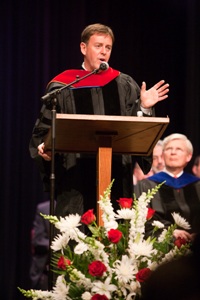
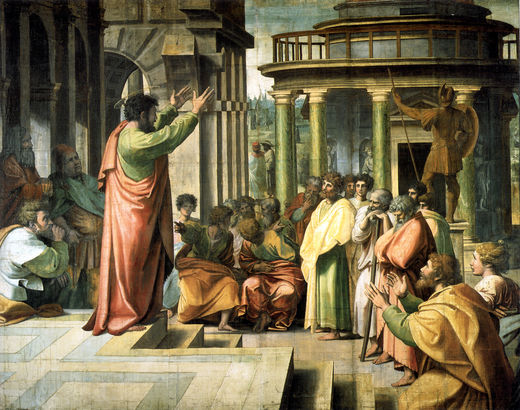
  • It gives glory to God alone. Since expository preaching begins with the text of Scripture, it starts with God and is in itself an act of worship.
  • It makes the preacher study God’s Word. The first heart God’s Word needs to reach is the preacher.
  • It helps the congregation. It enables the congregation to learn the Bible.
  • It demands treatment of the entire Bible. It prevents the preacher from avoiding difficult passages or from dwelling on only his favorite texts.
  • It provides a balanced diet. Exposition affirms the priority and sufficiency of a text. We serve our people best when we make clear that we are committed to teaching the Bible by teaching the Bible.
  • It eliminates Saturday night fever. It liberates the preacher from last minute preparation and it doesn’t leave the congregation wondering what the preacher will talk about on Sunday.

Adapted from the new edition of Preaching for God’s Glory by Alistair Begg.

HT/Crossway

What is Expository Preaching? pt. 5: Abusing the Bible in Preaching

Preaching is both an art and a science. There are some things that can be taught in a seminary and some things that must be given by God and developed by the preacher. With that said, there is some place for creativity in the sermon, although it must always be subservient to the biblical text and cannot drive the sermon.

When an expositor has done his homework (deriving the meaning of the text from grammatical, historical and contextual studies in the exegetical process) he will more easily be able to construct an exegetical outline of the text—one in which the biblical language and “dress” are still present and the main idea of the chosen text is firmly established. This “main idea” is not flexible—it is the idea that the original writer meant to convey when he wrote to his original audience.

This is important to get right before jumping ahead to a preaching outline and application. If this original meaning is not established and these important steps are skipped over, then anyone can make the Bible say anything that they want. But Scripture is clear that this is not the way one is to treat the biblical text:

 Knowing this first of all, that no prophecy of Scripture comes from someone’s own interpretation. For no prophecy was ever produced by the will of man, but men spoke from God as they were carried along by the Holy Spirit. (2Pet 1:20-21)

Do your best to present yourself to God as one approved, a worker who has no need to be ashamed, rightly handling the word of truth. (2Tim 2:15)

The Apostle Peter knew that he would soon be dying for the faith (2Pet 1:14) and that there were some claiming to have extra-special experiences and secret teachings that, in their opinion, should override the Apostles’ teaching (2Pet 1:16). Peter had experienced the Transfiguration of Christ, a clear manifestation of heavenly glory, complete with the double Apostolic witness of James and John in the presence of Jesus (v. 18). This experience, Peter wrote, was not as valuable or reliable as the very Word of God revealed (v. 19).

And Paul, who is also facing his own martyrdom, wrote to his young protégé Timothy from a Roman prison (2Tim 4:6-7) is not concerned for his own life, but rather that Timothy is faithful to “preach the Word” faithfully (2Tim 4:1-2) and accurately.

Yet, some pastors handle to Word so loosely that they teach the sheep in their congregation to do the same—handling it haphazardly, with little regard for what God meant when he wrote his Word.

The following is an example of an example of such careless abuse of the Word of God from a pastor who should know better, but apparently does not. This excerpt is from a local church’s website describing the senior pastor’s “revelation” from God including “God’s own words.”

One night, God ministered to Steve from Isaiah 54:2–4. Steve read it like this, with God speaking His words right into his heart.

“Enlarge the place of your tent”: It’s time to move to a bigger place so that I may do a bigger work.

“And let them stretch out the curtains”: Steve, I will have other people come by your side to co-labor.

“Do not spare; lengthen your cords”: Strengthen your leadership!

“And strengthen your stakes”: Steve, I am going to do a deeper work.

“For you shall expand to the right and to the left”: The church shall reach out to the right and left of the Los Angeles 110 freeway.

“Do not fear, for you will not be ashamed!”

The property the church began looking at would fulfill all that God had promised to Steve. [1]

Notice that in its original context, the Scriptures are addressed to God’s people, specifically future Israel. If a person were to stop and look at the Isa. 54:1, the prophet Isaiah calls Israel “barren one” and verse 7 says that for a brief moment, the Lord had deserted her.  Would this pastor and church say that they had been barren and deserted by God previously, but now they were turning from their wicked rebellion and returning to God so that he would bless them? I do not think so, but even if they would say that this was true, it was not written to them for a private interpretation such as was given by this pastor, complete with references to the 110 freeway. Such fanciful interpretations are reckless.

This is why the whole sermon must be driven by the text and not the other way around where the pastor comes to the text with his own point of view and finds a text to fit his own preconceived ideas. To do so is to rape the biblical text.

[1] Bold emphasis mine. Quote taken from http://www.ccsouthbay.org/pastor-steve/. Accessed 4/19/11.

What is Expository Preaching? pt. 4

The Expository Sermon-Its Proclamation

Long gone are the days when any person could go into any Christian church and the furniture all looked about the same. There were pews, and there was a pulpit in the front. Today, that isn’t as common. Some pews have been replaced by couches in the round or movie theater seating, while the pulpit has been removed from many churches altogether and replaced by a speaker on a bar stool.

But furniture is not the real issue, but an outward sign that something drastic has changed in the way that the leaders of the evangelical church have begun to think about communicating the message of the Kingdom. Even in many churches where there is a physical piece of furniture called a pulpit, there is no true preaching going on behind it.

When a man who is called by God stands in the pulpit to declare the very Word of God, there should be a sense of awe and even holy fear. He must speak God’s Words and he dare not mess up the message.  How many men in many of today’s pulpit show a disdain for the Word of God? They show it in their lack of study time. They show it in their flippancy about the holy things of God. They show their disdain when they substitute the meat of the Word with cheap fillers of drama, story upon story, personal anecdotes and heart-tugging emotional pleas. They show it when they cut the preaching of the Word down to bite-size 20-minute sermonettes.

The true servant of God must proclaim the Word—he is a herald (kerruso in Greek refers to the one who announced the coming of a king and his royal proclamations). He is not called upon by the King of Kings to manufacture the message. He is not called to “fix it up” or make it more palatable for his audience. He does not need to pick and choose the choicest passages that meet the felt needs of the flock, as if the Chief Shepherd did not already know the needs of His own. This calling to preach the Word is an awesome (in the old sense of awesome) task and is to be shunned by anyone who does not have a healthy fear of God. Jeremiah, a prophet who once felt that he could no longer continue with his assigned message also knew that he could not hold it in:

For whenever I speak, I cry out,

I shout, “Violence and destruction!”

For the word of the LORD has become for me

A reproach and derision all day long.

If I say, “I will not mention him,

Or speak any more in his name,”

There is in my heart as it were a burning fire

Shut up in my bones,

And I am weary with holding it in,

And I cannot.  (Jer. 20:8-9)

Since the Word of God is to be the foundation of every sermon, the Bible must reign supreme in the preaching. The sermon needs to be thoroughly biblical. If the preacher deviates from the Bible and the proper interpretation of the text, he can make it say whatever he wants it to.

Next time we will look at how the Bible should drive the outline, the sermon body and even the preaching of the sermon.

What is Expository Preaching? pt. 3

Previously we examined the foundation of an expository sermon, that it is driven by the biblical text and that the proper understanding of the Bible is derived from proper hermeneutics or rules of interpretation. We also saw the crucial role that the ancient languages of Hebrew and Greek play in a correct understanding of the Bible. Today we will look at the importance of taking the time to place the Bible in its proper historical context.

Historical Setting and Context

Another helpful and necessary step in the preparation of an expository sermon includes research into the historical setting and context of the section to be preached. Preaching within the context is extremely important for the proper interpretation of the text. Many errors in biblical interpretation stem from ignoring the hermeneutical principle of studying a text in its natural context. The saying, “A text without a context is a pretext” is true. By preaching through books of the Bible, whether verse by verse or paragraph by paragraph, the expositor can avoid the errors that can occur from not studying the context of the passage.

Of course, even by preaching expositionally through the Bible, the study of background and context is still necessary, but by preaching through a book verse by verse over a longer period of time the expositor does not need to re-study the context of each new paragraph as he would if he were to correctly preach a sermon from various texts—such as a topical sermon would require.  That is not to say that such study of multiple texts would be impossible, but more often than not, topical sermons are most guilty of preaching “proof texts” that have no connection to the actual context in its original setting.

Along with studying the context, the faithful pastor who seeks to preach expositionally needs to make sure to study the historical setting of the book that he is preaching from. We cannot forget that the times in which the writers of the Old Testament and New Testament lived were very different from our own day. There are great differences in culture, geography, customs and languages. For proper interpretation to occur, the expositor must understand as much as he can about the mindset of the original intended audience whom the writer was addressing. Likewise, he needs to understand the place and time and situation of the human author who was writing. Certain historical insights and information not only assist the interpretation of the text, but in the preaching of that text this background information helps the Bible to come alive to our modern ears and reminds us that the Bible is placed in historical reality and mythical fairy tales.

In Nehemiah 8, one of the clearest examples in the Old testament of the exposition of God’s Word, Ezra the scribe “read from the book, from the Law of God, translating to give the sense so that they [the people] understood the reading” (Neh 8:8). In this example, the people’s culture, mindset and language had changed from the time of the writing of the Pentateuch and it was the job of Ezra, as it is the job of the modern-day expositor, to make the Word of God clear and to help the people to understand God’s intended meaning.

Some pastors will say that there is no need to study in such depth. After all, they reason, the disciples were mostly unlearned fishermen and none of them went to seminary. Yes, that is true to a point. But Paul was highly educated, as was Ezra and others. And every one of the biblical writers had something that none of us have–a first hand knowledge of the culture, language, geography, customs, idioms and nuances that surrounded them. They didn’t need to study those things because they were immersed in them and we are not. We come to the biblical text with a great disadvantage that almost nobody in the first century had.

We must remember that the Bible is God’s very words to us. They are not to be bent and molded to shape our intuitions, impressions and private interpretations. God’s Word is not to be used as a starting point for our favorite topics or a little inspiration for our creativity to be put on display. Neither is expository preaching a place to ramble on aimlessly with little insights and applications here and there like so many spiritual bread crumbs marking the way. God designed his Word with impeccable logic and form–pastors need to do the hard work of finding God’s intended meaning and deliver that to the Church. If they can’t, they either need to seek out further training, or if they won’t they need to get out of the ministry. The work of the Kingdom is too important.

Next we will look at some of the elements that mark out true expository preaching from false so-called expository preaching.

What is Expository Preaching? pt. 2

Yesterday we looked at the fact that in expository preaching the text drives the sermon, not the imagination or inclinations of the preacher. Most people have heard a preacher jump on his hobby-horse and use the biblical text to serve his own purposes. That is not expository preaching. As Luther said, “The pulpit is the throne for the Word of God.” So, how does a pastor guard against imposing his thoughts onto the biblical text?  Today’s post addresses the issues of hermeneutics, exegesis, original languages, grammar, word studies and syntax.


Hermeneutics and Exegesis


Bernard Ramm in his classic work Protestant Hermeneutics defined hermeneutics in the following way:

As a theological discipline, hermeneutics is the science of the correct interpretation of the Bible. It is a special application of the general science of linguistics and meaning. It seeks to formulate those particular rules that pertain to the special factors connected with the Bible. It stands in the same relationship to exegesis that a rulebook stands to a game. The rulebook is written in terms of reflection, analysis, and experience. The game is played by concrete actualization of the rules. The rules are not the game, and the game is meaningless without the rules. Hermeneutics proper is not exegesis, but exegesis is applied hermeneutics. [1]

Thus Ramm properly distinguishes between hermeneutics and exegesis. For those who are expositional preachers, their understanding of the text must be governed by a set of guidelines that allows the text to speak for itself without the interpreter being allowed to impose his own personal biases upon the text.

Although some would argue that this is impossible for any honest exegete to do [2], it is a task that can be done by the power of the Holy Spirit. The need to suppress these prejudices is why there is a need for the hermeneutical method. If the interpreter is allowed to import his own pre-understandings, as Osborne calls them, one must ask which pre-understandings are allowable and which are not? This begs the question, cannot the same omnipotent God who infallibly and inerrantly transmitted His Word to mankind also enlist the Holy Spirit to suppress our prejudices and assumptions and expose His understanding over our own ideas? I believe that He can and does. To assume anything less is to leave the hermeneutical process in a constant state of instability.

Use of Languages

Although the great Reformer Martin Luther strove to bring the biblical text into the common language of his people, it would not be accurate to say that Luther denied the need for the study of the Scriptures in the original languages. When asked whether the Bible translated into German was good enough for the man in the pulpit, Luther replied,

Without [the original] languages we could not have received the gospel. Languages are the scabbard that contains the sword of the Spirit; they are the [case] which contains the priceless jewels of antique thought; they are the vessel that holds the wine; and as the gospel says, they are the baskets in which the loaves and fishes are kept to feed the multitude. [3]

Although it is possible to study and preach expositionally without a familiarity and working knowledge of the biblical languages, the expositor will always be dependent upon the resources of those who do know the languages, grammar and syntax of the languages. The student of the Bible will be one more step removed from the biblical audience and will have that much more difficulty properly interpreting the Scriptures and unearthing the treasures of the Bible that can only be mined from one who is able to work in the original languages.

Grammatical/ Lexical/ Syntactical Studies

Because the biblical expositor believes that “not the smallest letter or stroke shall pass from the Law until all is accomplished” (Matt 5:18), he must not only deal with the text to get the gist of what the Author is saying, but he must delve deeper into the text to look below the surface. Grammatical and lexical studies allow the exegete to get a better grasp of the way that words are arranged in the original languages as well as the specific words that were chosen by the human authors. Also involved in these types of studies are words studies as well as looking at how the individual words relate to one another, and where word structures and order occur elsewhere in the Bible.

Next we will look at the important of historical settings and context in expository preaching.


[1] Bernard Ramm, Protestant Biblical Interpretation: A Textbook of Hermeneutics, 3rd ed. (Grand Rapids, MI: Baker Book House, 1970), 11.

[2] For instance, Grant R. Osborne, The Hermeneutical Spiral: A Comprehensive Introduction to Biblical Interpretation (Downers Grove, IL: InterVarsity Press, 1991), 412, and John R. W. Stott, Between Two Worlds (Grand Rapids: Eerdmans, 1982), 185.

[3] W. Carlos Martin, The Life and Times of Martin Luther (New York:American Tract Society, 1866), 474-75 as quoted in John Piper, The Legacy of Sovereign Joy (Wheaton: Crossway Books, 2000), 97.