Five Necessities for Declaring the Gospel with Clarity and Power

“And I, when I came to you, brothers, did not come proclaiming to you the testimony of God with lofty speech or wisdom. For I decided to know nothing among you except Jesus Christ and him crucified. And I was with you in weakness and in fear and much trembling, and my speech and my message were not in plausible words of wisdom, but in demonstration of the Spirit and of power, so that your faith might not rest in the wisdom of men but in the power of God.” ‭‭1 Corinthians‬ ‭2:1-5‬ ‭ESV‬‬

Along with Bible reading, many Christians have set for themselves a goal to share Christ with someone in 2019. For some, the prospect of sharing Christ with someone fills them with anxiety. This is true even though many of understand that we heard about Christ from another Christian ourselves and how thankful we are that someone loved us enough to step out of their comfort zone in order to explain the life-giving gospel of Jesus Christ to us.

Who will we share Christ with this year? Perhaps for you sharing Christ is a scary thing. You might believe that you would mess up the message so bad that it would harm rather than help the mission of Christ if you tried.

Some of you have been on evangelism teams in the past or you were once faithful to preach the gospel on a regular basis, but you have slowed down and maybe you rarely go out evangelizing any more. I want to encourage you and stir you up once again to get out there and share the gospel.

To help you have confidence to share your faith I would like to give you five principles, or five marks of a clear gospel message that will glorify God when you share His plan of salvation.

1. God is glorified when the gospel is shared with simplicity (v.1)

“And I, when I came to you, brothers, did not come proclaiming to you the testimony of God with lofty speech or wisdom.” ‭‭1 Corinthians‬ ‭2:1‬ ‭ESV‬‬

Please notice what Paul did not say here. He did not say that he came with superiority of speech, or as the ESV says, “lofty speech.” Here Paul was thinking of highly technical language that the philosophers used. Now, if you speak on a regular basis with philosophers, then use that language because it communicates best to them. Paul was concerned that the Corinthians had continued to be enamored with the so-called scholarly rhetoric that was used by the false teachers.

If you run with mechanics, bus drivers and waiters, then when you proclaim the gospel, speak the language of the people. Avoid using religious language and “Christian-ese”. Don’t say things like, “Have you been washed in the blood of the Lamb?” If you do, I won’t come and bail you out of jail when they call the police! Most people today in America have no context to know what statements like that mean. We need to explain the gospel to people and assume they know very little of the Bible or of the gospel message. Terms like sin, redemption, atonement and even the cross all need to be explained more fully to the average person today.

Paul also said that he didn’t come to Corinth “with wisdom.” This is the world’s brand of wisdom, not God’s wisdom. You do not need to argue philosophy or know everything about everything. The gospel is powerful in and of itself. The gospel isn’t about what you know, but about who you know. Armed with the gospel you can know that you have the wisdom of God, even if the person you are speaking with is a genius about earthly things. The gospel is deep enough for a lifetime of study and yet shallow enough for a child to come to faith.

Pastor Chuck Swindoll tells of a little sign he has on his desk that reads: IDIOSYNCRATICALLY ECCENTRIC PHRASEOLOGY IS THE PROMULGATOR OF TERRIBLE OBFUSCATION. On the back was the translation: “BIG WORDS CAUSE CONFUSION.”

When the message can’t be understood and is muddled or confused, God is not glorified.

2. God is glorified when the gospel is shared with authority (v. 1)

“And I, when I came to you, brothers, did not come proclaiming to you the testimony of God with lofty speech or wisdom.” ‭‭1 Corinthians‬ ‭2:1‬ ‭ESV‬‬

Notice that Paul calls his message “the testimony of God,” it is the witness of God Himself. By using the Bible you are speaking with the authority of its Divine Author.

The unbeliever knows in his heart (even if he or she denies it) that God exists and that he has suppressed this knowledge (Rom. 1:18-19, “For the wrath of God is revealed from heaven against all ungodliness and unrighteousness of men, who by their unrighteousness suppress the truth. For what can be known about God is plain to them, because God has shown it to them.”) and he needs to repent (Acts 17:30-31, “The times of ignorance God overlooked, but now he commands all people everywhere to repent, because he has fixed a day on which he will judge the world in righteousness by a man whom he has appointed; and of this he has given assurance to all by raising him from the dead.””).

As Christian witnesses to the cross, we are to speak with the authority of God himself who has sent each of us out as his ambassadors and ministers! Second Corinthians 5:17-21 says, ““Therefore, if anyone is in Christ, he is a new creation. The old has passed away; behold, the new has come. All this is from God, who through Christ reconciled us to himself and gave us the ministry of reconciliation; that is, in Christ God was reconciling the world to himself, not counting their trespasses against them, and entrusting to us the message of reconciliation. Therefore, we are ambassadors for Christ, God making his appeal through us. We implore you on behalf of Christ, be reconciled to God. For our sake he made him to be sin who knew no sin, so that in him we might become the righteousness of God.”

We do not come in our own power or our own name. We come as children of God and witnesses of the gospel. We come seeking to see our fellow man reconciled to God by the proclamation of the message of reconciliation in Christ Jesus.

3. God is glorified when the gospel is shared with intensity (v. 2)

“For I decided to know nothing among you except Jesus Christ and him crucified.” ‭‭1 Corinthians‬ ‭2:2‬ ‭ESV‬‬

Notice here that Paul says that his focus is upon Jesus Christ and the cross alone. Of course Paul spoke about all sorts of issues, but in his initial conversations with the Corinthians, when he shared the gospel with them, he was all about Jesus Christ on the cross and nothing else.

For us. We need to remember that if salvation is not the goal, then we are wasting our time. Paul could have spoken intelligently in regards to a number of subjects but his focus was on presenting the gospel. He was an evangelistic laser-beam. A laser beam is merely light, but focused with such intensity that its beam can cut through rock and steel. We need to preach with accuracy as well as intensity so that our message has power.

When we go off on bunny trails and move away from the central gospel message to look at lesser issues, God is not glorified. I know some Christians who are easily distracted into side issues when they are sharing Christ–the worship of the Virgin Mary, the factual nature of Jonah and the big fish that swallowed him, the issues surrounding creation versus evolution, cultural issues such as crime, homosexuality and more.

Now I don’t mean that we shouldn’t think deeply about these issues nor that the Bible doesn’t give answers. But we need to make sure that we don’t lose sight of our goal–reconciliation and redemption! We need to be like hounds of heaven who won’t get off the trail and will seek out the soul that needs to be saved. Otherwise we will find that we will be constantly frustrated in never ending wrangling about words that will never change the heart until this first issue is dealt with. The unbeliever must come to submit to the Kingship of Christ. It will take the gospel of Jesus Christ to do that!

4. God is glorified when the gospel is shared with gravity (v. 3)

“And I was with you in weakness and in fear and much trembling,” 1 Corinthians‬ ‭2:3‬ ‭ESV‬‬

When we talk about gravity, we mean a type of seriousness or a weightiness. We are all business. We are caught up in a mission and we didn’t come to mess around. Paul’s attitude to the work of evangelism was one of soberness. He knew that he was a tool on the hands of God.

In 1 Corinthians 3:6-7 Paul wrote, “I planted, Apollos watered, but God gave the growth. So neither he who plants nor he who waters is anything, but only God who gives the growth.” Paul didn’t overestimate his importance in the process, BUT he also didn’t underestimate his part as the means by which God brought sinners to faith in Christ. Paul was no hyper-Calvinist. He understood that he needed to take his role with all seriousness and couldn’t throw it off as something that God would accomplish without the means of men preaching the gospel and calling sinners to faith.

That is a sobering truth. He knew that he was sharing a message of eternity in heaven or hell. Puritan pastor Richard Baxter famously said, “I preach as never sure to preach again, and as a dying man to dying men.” Christian, you are dying, but you have hope! The person who needs Christ that you need to speak to also is dying, but they have no hope and without Christ will slide into a Christ-less eternity!

Every disciples of Jesus Christ needs to know that he or she will one day give an account for his or her talents. In Matthew 25:14-30 Jesus spoke about the parable of the talents that are not to be buried, but invested for our Master. There is no greater treasure that we have been entrusted with than the gospel of Jesus Christ. What are you doing with that treasure? When we share the message half-heartedly, or worse, don’t share it at all, then God is not glorified.

5. God is glorified when the gospel is shared with dependency (v. 4)

“and my speech and my message were not in plausible words of wisdom, but in demonstration of the Spirit and of power,” 1 Corinthians‬ ‭2:4‬ ‭ESV‬‬

Clearly, Paul depended upon the Holy Spirit. He knew that without the empowering of the Holy Spirit he was weak for the task. Jesus told His disciples that they would receive power when the Holy Spirit came upon them (Acts 1:8). This power isn’t for showy church services, it isn’t for putting your special spirituality on display for everyone to see, and it surely isn’t for your personal satisfaction or to make you wealthy and famous. Your empowerment by the Spirit was given for the preaching of the gospel to the world.

Someone put together a little power to ask a very serious question:

Where is God’s Power?

A city full of churches

Great preachers, lettered men

Grand music, choirs and organs;

If all these fail what then?

Good workers, eager, earnest

Who labor hour by hour;

But where oh where, my brother,

Is God’s almighty power?

When we do anything in our own power, particularly when we preach the gospel, God is not glorified.

Are you sharing the gospel? We need the message to go out. We need to begin once again hitting the streets with the saving message of Jesus Christ and Him crucified. If you aren’t doing that, you need to be going about sharing the gospel message.

Additionally, God has not called us to just share the gospel, but to do so with an empowered passion that is laser-beam accurate.

The message is clear. It has power to save. What will you do with it? Go into the world and share the gospel.
Pastor Like Paul, part 6

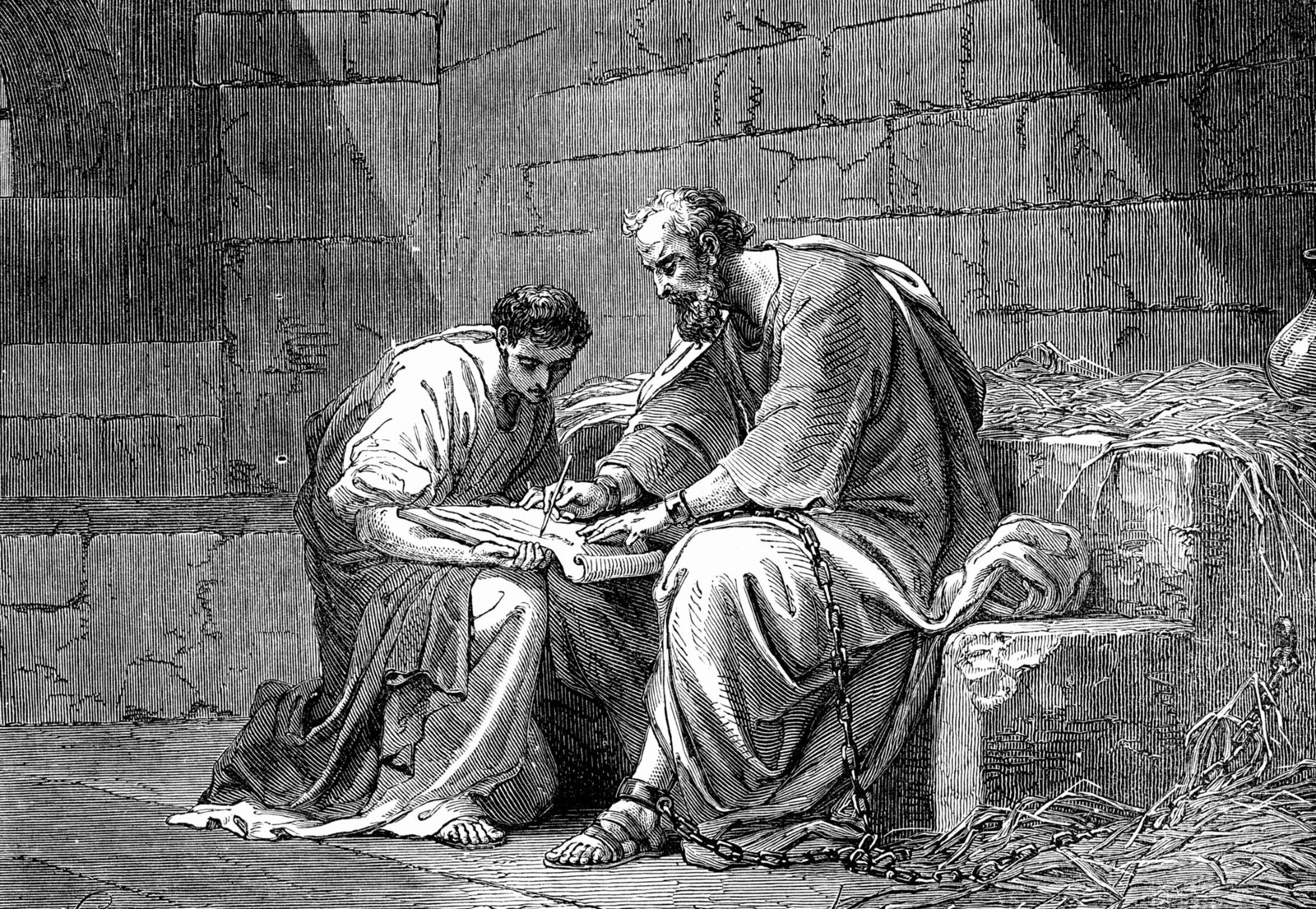
Paul in prison.jpg

You, however, have followed my teaching, my conduct, my aim in life, my faith, my patience, my love, my steadfastness, my persecutions and sufferings that happened to me at Antioch, at Iconium, and at Lystra—which persecutions I endured; yet from them all the Lord rescued me. Indeed, all who desire to live a godly life in Christ Jesus will be persecuted,” (2 Timothy 3:10–12, ESV)

In this “Pastor Like Paul”series we looked so far at 6 ways we need to follow (or strive to be) a godly Christian leader:

  1. Follow the Same Doctrine
  2. Follow the Same Conduct
  3. Follow the Same Purpose
  4. Follow the Same Faithfulness
  5. Follow the Same Patience
  6. Follow with the Same Love

At verse 11, Paul builds upon this list with a capstone of leadership–being willing to follow Jesus in our suffering. From his prison, Paul reminds Timothy that he has followed Christ, and that Timothy and all those who would follow Jesus should also be willing to suffer as well.

But doesn’t that make Christians “lemmings?” Lemmings are small rodents that have been said to follow one another off a cliff to their deaths in some sort of weird instinct when their populations get too large. It has become a figure of speech to call people “lemmings” who thoughtlessly follow the crowd.

Interestingly, the idea of the lemmings jumping off cliffs as they follow one another is based upon a fraud. Encyclopedia Britannica reports, “For the 1958 Disney nature film White Wilderness, filmmakers eager for dramatic footage staged a lemming death plunge, pushing dozens of lemmings off a cliff while cameras were rolling. The images—shocking at the time for what they seemed to show about the cruelty of nature and shocking now for what they actually show about the cruelty of humans—convinced several generations of moviegoers that these little rodents do, in fact, possess a bizarre instinct to destroy themselves.”[1]

Why do I bring up lemmings? Because we are still talking about following the leader, and 2 Timothy 3:11-12 speak about following our leaders, both Jesus and the Apostle Paul into the very real possibility of persecution and suffering.

But just like lemmings don’t do this, neither do Christians unthinkingly thrust themselves to their deaths. We love life! But we know that this life is temporary, and that if we must risk this life to remain faithful to Christ, then the exchange is worth it.

For this post and the next in this series, we will see the need to faithfully follow Christ as Paul followed Christ, even to death if necessary. We will see this first, through the specific examples of Paul, and then through the universal principles of Scripture for all of us.

  1. The Specific Examples of Paul (v. 11)

my persecutions and sufferings that happened to me at Antioch, at Iconium, and at Lystra—which persecutions I endured; yet from them all the Lord rescued me.” (2 Timothy 3:11, ESV)

My persecutions which you saw…

It is interesting that the Apostle Paul didn’t give an exhaustive list of all the places where he had suffered persecution, nor had he given the most recent places. Instead, it appears that Paul mentioned Antioch, Iconium and Lystra because these would have been the places where Timothy first encountered the severe persecution that Paul suffered for the faith as a young boy just setting out with Paul. Timothy may have been an eyewitness to the dramatic account described in Lystra, the city he was from. He may have heard stories told of how Paul had preached to boldly and survived a brutal stoning, walking back into Lystra after being left for dead (Acts 14:20). These early accounts would have been vivid reminders that persecution was not a rare thing that happened only to a few, but that it is normal for most Christians, and that Timothy should expect it.

My persecutions which I endured…

The word for “endure” means to bear up under a burden. Paul’s body was undoubtedly covered in scars and deformities from the many hardships and persecutions he had endured for the sake of Christ.

But there was no way that the Lord would ever give Paul more of a burden than he would give him the ability to endure it. Paul’s body was a record book of his faithfulness to proclaim the gospel everywhere he went. He bore up under the burden gladly because he understood the message of the cross is life to those who would believe.

We are afflicted in every way, but not crushed; perplexed, but not driven to despair; persecuted, but not forsaken; struck down, but not destroyed;” (2 Corinthians 4:8–9, ESV)

My persecutions which the Lord rescued me from…

Paul’s survival was attributed to the Lord alone. He didn’t give glory to God for delivering him sometimes, or even mostof the time, but “from them allthe Lord rescued me.”

This word “from” at the end of v. 11 in the ESV, is translated “out of” in the NASB and KJV. But there can be confusion when we use the words “out of” or “from” because we can understand this idea in two ways. We might mean that God rescues his children from ever having to be involved in persecution or suffering.

But we might also mean that God rescues his children when they are in the midst of persecutions and suffering. In other words, they are experiencing it, and yet God will continue to be with them and they shall be saved, but not yet.

When we look at Paul’s life, we recognize that he had both experiences, where he was delivered unharmed by his persecutors, and those where he barely made it out alive after surviving painfully through an ordeal.

Paul is imprisoned, and he does not expect that he will be released. In fact, in 2Timothy 4:6-8, Paul wrote, “For I am already being poured out as a drink offering, and the time of my departure has come. I have fought the good fight, I have finished the race, I have kept the faith. Henceforth there is laid up for me the crown of righteousness, which the Lord, the righteous judge, will award to me on that day, and not only to me but also to all who have loved his appearing.” (2 Timothy 4:6–8, ESV)

In verse 6, Paul clearly believes that he is going to be put to death, which he was. But v. 7 shows that he still has confidence in the Lord, that the Lord will carry him across the finish line of the race of faith. And then in v. 8 he envisions the awards ceremony where the crowns are given to the competitors, and Paul full expects that he and all those who trust in Christ will receive the reward of eternal life.

In those three verses we can understand what Paul was teaching Timothy in 2 Timothy 3:11, that whether it is out of the persecution or even through the persecution, the Lord will deliver him from the suffering he has faced.

Now we might read this and come to the conclusion that these things were true for the Apostle Paul, but that they may not be true for you and me. But there was a reason that Paul was telling Timothy these things. There was divine purpose in this letter.

Gordon Fee “insists that it was the Apostle’s intention to underscore that Timothy had known from his earliest days that persecution was a part of faith in Christ and that he should therefore not lose heart in his current sufferings.”[2]

Remember that Paul has mentioned the pattern from v. 10 that Timothy had followed, and Paul was commending him for this, and encouraging him to keep on going in this same direction. It is no different when we come to the matter of persecution and suffering. Timothy was to follow Paul’s example as well.

To aid him in doing this, Paul laid out three universal truths that state work together with Paul’s personal examples to show that Paul was not the exception. We will see that in tomorrow’s post.

[1]https://www.britannica.com/story/do-lemmings-really-commit-mass-suicide

[2]Kitchen, John, The Pastoral Epistles for Pastors, 408.

Christ’s Intense Love in the Storms of Life

Jesus Lover of My Soul— Charles Wesley (1740)

Jesus, lover of my soul, let me to Thy bosom fly,

While the nearer waters roll, while the tempest still is high.

Hide me, O my Savior, hide, till the storm of life is past;

Safe into the haven guide; O receive my soul at last.


Other refuge have I none, hangs my helpless soul on Thee;

Leave, ah! leave me not alone, still support and comfort me.

All my trust on Thee is stayed, all my help from Thee I bring;

Cover my defenseless head with the shadow of Thy wing.


Wilt Thou not regard my call? Wilt Thou not accept my prayer?

Lo! I sink, I faint, I fall—Lo! on Thee I cast my care;

Reach me out Thy gracious hand! While I of Thy strength receive,

Hoping against hope I stand, dying, and behold, I live.


Thou, O Christ, art all I want, more than all in Thee I find;

Raise the fallen, cheer the faint, heal the sick, and lead the blind.

Just and holy is Thy Name, I am all unrighteousness;

False and full of sin I am; Thou art full of truth and grace.


Plenteous grace with Thee is found, grace to cover all my sin;

Let the healing streams abound; make and keep me pure within.

Thou of life the fountain art, freely let me take of Thee;

Spring Thou up within my heart; rise to all eternity.

Pastor Like Paul, part 3

“You, however, have followed my teaching, my conduct, my aim in life, my faith, my patience, my love, my steadfastness,”–2 Timothy‬ ‭3:10‬ ‭ESV‬‬

We have been learning what it means to follow a good leader, and how to be a good leader ourselves. We are doing this by reading Paul’s last letter to his spiritual child, Timothy, who was a pastor in Ephesus.

The Christian faith depends upon not only faithful discipleship, but on faithful disciples who continue in the pattern they have received. In their last two posts in this series we looked at 3 ways we need to follow the good Christian leader:

  1. Follow the Same Doctrine

  2. Follow the Same Conduct

  3. Follow the Same Purpose

You can read part 1 here, and part 2 here.

4. Follow with the Same Faithfulness

Faith Defined

The Greek word pistos refers not just to the content of our faith, but it also can be rendered “faithfulness.”

Faith, in general, means to believe in something, to have confidence and trust in something or someone, but Hebrews 11:1 defines it more accurately. It says, “Now faith is the assurance of things hoped for, the conviction of things not seen.” (Hebrews 11:1, ESV)

Faith Lived Out

It is important to note that this definition of faith comes at the head of a whole chapter of earthly struggles that God’s people overcame in the strength of the Lord. Hebrews 11 shows us that biblical faith is not a painless faith, it is not an easy faith. To believe is only part of it. But faith runs deep and it trust God even in the hardest and darkest times.

Think about what Paul is going through at the time he penned these words to Timothy. He is facing certain death and his life up to this point has been hard. Read with me 2 Cor 6:4-10 to remember what Paul suffered for Christ: “but as servants of God we commend ourselves in every way: by great endurance, in afflictions, hardships, calamities, beatings, imprisonments, riots, labors, sleepless nights, hunger; by purity, knowledge, patience, kindness, the Holy Spirit, genuine love; by truthful speech, and the power of God; with the weapons of righteousness for the right hand and for the left; through honor and dishonor, through slander and praise. We are treated as impostors, and yet are true; as unknown, and yet well known; as dying, and behold, we live; as punished, and yet not killed; as sorrowful, yet always rejoicing; as poor, yet making many rich; as having nothing, yet possessing everything.” (2 Corinthians 6:4–10, ESV)

Do you see how faith looks when it is lived out? Paul wants Timothy to have this sort of faith. Surely he had seen the suffering and hatred he faced. Paul’s teaching, conduct and aim in life had led to this sort of treatment for him, and it would surely lead to this in Timothy’s life as well. And will have this response if we follow the model Christ laid out for us as well.

Timothy seemed to have struggled with wavering faith that resulted in fear and shame at times.

  • “for God gave us a spirit not of fear but of power and love and self-control. Therefore do not be ashamed of the testimony about our Lord, nor of me his prisoner, but share in suffering for the gospel by the power of God,” (2 Timothy 1:7–8, ESV)
  • which is why I suffer as I do. But I am not ashamed, for I know whom I have believed, and I am convinced that he is able to guard until that day what has been entrusted to me.” (2 Timothy 1:12, ESV)
  • “May the Lord grant mercy to the household of Onesiphorus, for he often refreshed me and was not ashamed of my chains,” (2 Timothy 1:16, ESV)
  • “Do your best to present yourself to God as one approved, a worker who has no need to be ashamed, rightly handling the word of truth.” (2 Timothy 2:15, ESV)

Timothy needed to learn that “the promises of God are true and reliable.” We need that lesson too.

Here is a fountain filled with blood: use it, saint, use it.

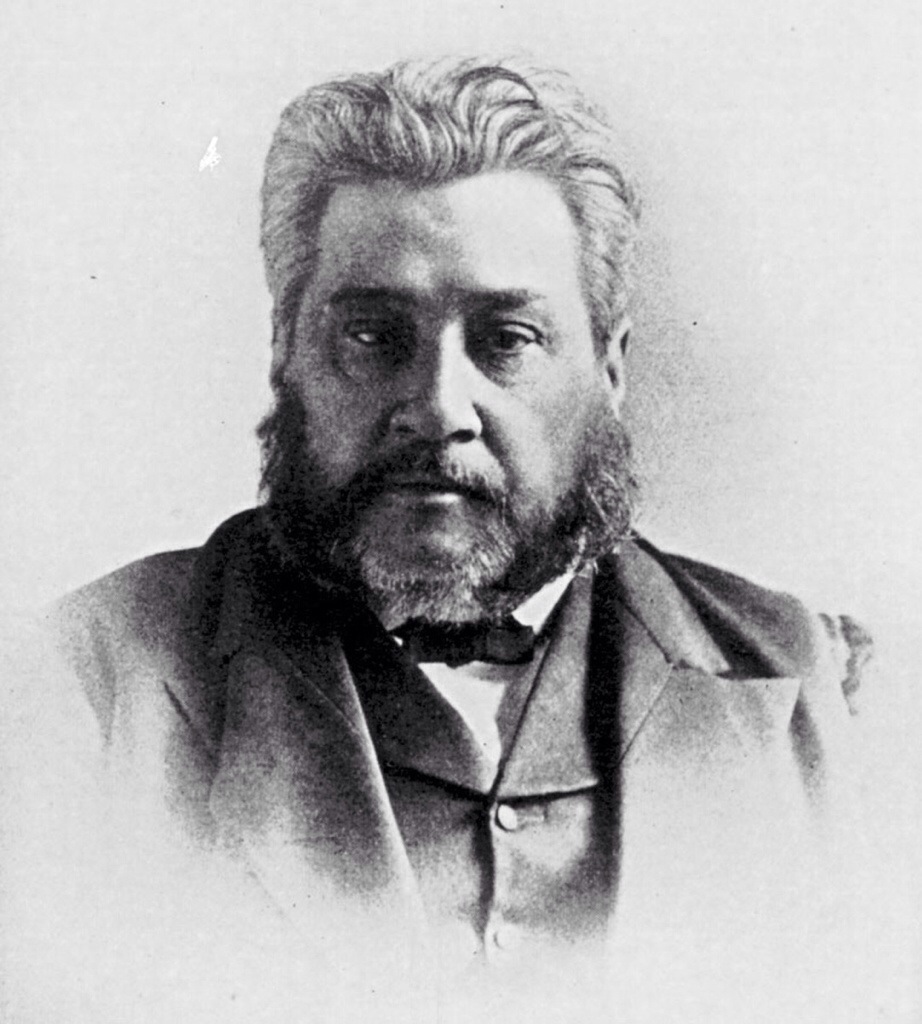
C. H. Spurgeon.jpg

“A very present help.” — Psalm 46:1

Covenant blessings are not meant to be looked at only, but to be appropriated. Even our Lord Jesus is given to us for our present use. Believer, thou dost not make use of Christ as thou oughtest to do. When thou art in trouble, why dost thou not tell him all thy grief? Has he not a sympathizing heart, and can he not comfort and relieve thee? No, thou art going about to all thy friends, save thy best Friend, and telling thy tale everywhere except into the bosom of thy Lord. Art thou burdened with this day’s sins? Here is a fountain filled with blood: use it, saint, use it. Has a sense of guilt returned upon thee? The pardoning grace of Jesus may be proved again and again. Come to him at once for cleansing. Dost thou deplore thy weakness? He is thy strength: why not lean upon him? Dost thou feel naked? Come hither, soul; put on the robe of Jesus’ righteousness. Stand not looking at it, but wear it. Strip off thine own righteousness, and thine own fears too: put on the fair white linen, for it was meant to wear. Dost thou feel thyself sick? Pull the night-bell of prayer, and call up the Beloved Physician! He will give the cordial that will revive thee. Thou art poor, but then thou hast “a kinsman, a mighty man of wealth.” What! wilt thou not go to him, and ask him to give thee of his abundance, when he has given thee this promise, that thou shalt be joint heir with him, and has made over all that he is and all that he has to be thine? There is nothing Christ dislikes more than for his people to make a show-thing of him, and not to use him. He loves to be employed by us. The more burdens we put on his shoulders, the more precious will he be to us.

“Let us be simple with him, then,

Not backward, stiff, or cold,

As though our Bethlehem could be

What Sinai was of old.”

Morning and Evening, May 3, Evening