
For part 1 of this post, see here.
The first two attributes of God-ordained and blessed marriage are related and are best understood together. Marriage marked by a relationship that is both heterosexual and monogamous demonstrates the glorious design of God in creation. In Genesis 2:18, when the Lord saw that it was not good for man to be alone, he created for Adam from his side a solitary woman (Gen 1:22). At this point of creation, God potentially could have made another male, several males, several females, or an animal that would have been an alternative to this single woman that He chose to create as the perfect mate for Adam. But in the Lord’s infinite wisdom He made a woman from the side of the first man. By defining this attribute of marriage for humanity the Lord ruled out the possibilities of adultery, homosexuality, polygamy, polyamory and bestiality. One man and one woman were all that God made in the Garden when he declared that it was “very good” at the close of the seventh day of creation (Gen. 1:31).
The boundaries of marriage restricted to a couple that are both heterosexual and monogamous are not simply one option among many. Neither is this simply a construct agreed upon by society in the past that has become outdated and impractical in our modern era. Because God established these parameters in the beginning with the first man and woman, they are binding upon all humanity for all time. John MacArthur writes, “From the very first marriage, that of Adam and Eve, God has joined together every husband and wife. Marriage is first of all God’s institution and God’s doing, regardless of how men may corrupt it or deny or disregard His part in it. Whether it is between Christians or between atheists or idolaters, whether it is arranged by parents or by the mutual desire and consent of the bride and bridegroom, marriage is above all the handiwork of God…”[1]The pattern for marriage was established in the first marriage. Thus it excludes all illicit relationships outside of this pattern, including adultery, homosexuality, polygamy and polyamory. Every corruption of the divine order for marriage is willful and open rebellion against the Creator. As Paul address the church in Rome, a church that undoubtedly saw similar desecration of marriage, he wrote: “Therefore God gave them up in the lusts of their hearts to impurity, to the dishonoring of their bodies among themselves, because they exchanged the truth about God for a lie and worshiped and served the creature rather than the Creator, who is blessed forever! Amen”[2](Rom 1:24-25, ESV).
The third attribute of God-glorifying marriage is implied in what has been said above regarding Eve being made for Adam. Marriage was designed by God for the lifetime of each of the marriage partners. The Bible is explicit regarding God’s desire for the commitment of marriage and speaks against such sins as polygamy, polyamory, adultery, divorce and fornication. Each of these sins strikes at the heart of God’s intention for marriage between one man and one woman for life. Although the practices of polygamy, concubinage and divorce were tolerated to a certain extent because of the hardness of man’s heart, the Lord Jesus stressed that “from the beginning it was not so” (Matt 19:8). Such sins as sexual immorality, including prostitution, fornication and adultery have always been an abomination to the Lord (Ex 20:14; Lev 20:10, 14; Matt 15:19; 1Cor 6:18; 1Thes 4:3).
The subject of divorce is a particularly difficult issue that needs to be understood in light of God’s intentions for marriage. Whereas there is no debate among fundamental Bible churches regarding the sinfulness and reprehensible nature of sexual immorality, polygamy, adultery, or homosexuality, there are different views regarding divorce and what is allowable. These differences exist among Bible believing brethren not in spite of, but becauseof our commitment to the authority of the Word. Simplistic answers do not help as we seek to minister and guide hurting families that have struggled in any of these areas of sin, including divorce.
Two biblical facts regarding divorce are agreed upon by all—God hates divorce (Mal 2:16) and divorce was never His intention for marriage (Mk 10:11-12) because it is the destruction of the one flesh union that was created in the marriage covenant (Gen 2:24). Where disagreement occurs among well-intentioned brethren is regarding the question of whether there is anyallowance for divorce. But even among those who believe that divorce is sometimesallowable, such divorces are restricted to two possible reasons: sexual immorality and abandonment by an unbelieving spouse (Matt 5:32; 1Cor 7:15) and is not allowable for just any cause (Matt 19:3).
An additional issue regarding divorce must also reconcile the biblical texts regarding remarriage and whether it is allowable or not (cp. Matt 5:32; Mk 10:11-12; 2Cor 6:14). These matters regarding divorce are not simple because individual situations vary and wisdom in the application of Scripture is necessary. Whatever a person or church concludes about divorce and remarriage, it must be done with a thorough commitment to scriptural truth along with grace in understanding that there are other views that must be recognized with respect and charity.
Seeking to Remain Biblical in Our Changing World
All Christians committed to the inerrant infallible Word understand that these matters are of immense importance to our world as we seek to minister to those who repent and turn to Christ as their only hope. Christ calls His Church to faithfulness to His Word while navigating the new challenges to marriage that we are encountering in our ever changing world. Our commitment to the Scripture’s standard must always remain as unchanging as the Word itself, and we must resist every effort to capitulate to the culture for the sake of expediency or to gain the esteem of the world. This will take wisdom, added care, grace and patience, but it is our responsibility if we intend on ministering to those in our hurting world without compromise.
With Christians not only teaching what the Bible says about marriage, but also living it out before a watching world, Christ will be glorified as we paint a picture of His love for the Church and our submission to Him (Eph 5:22-33). This will be a powerful testimony added to our loving care for those that are in need of the message of gospel.
[1]John MacArthur. The Divorce Dilemma, Day One Publications, Leominster, England, (2009), p. 39.
[2]The Holy Bible: English Standard Version (Wheaton: Standard Bible Society, 2016), Ro 1:24–25.

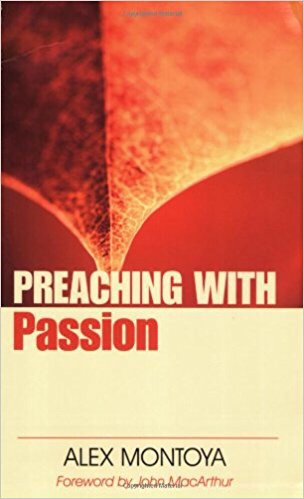 There have been times in my ministry when an icy chill has come over my heart, when my soul no longer weeps, when my sermons no longer connect, and when the act of preaching becomes a drudgery. I know that I have then lost compassion for people. That is when I retreat to a small taco stand in the barrio of East Los Angeles, to a place where real people live. I order a cup of coffee and sit with my back against the wall. Then I watch, I observe, I read, and I listen intently for the heart cry.
 “There is only one thing I know of that crushes me to the ground and humiliates me to the dust, and this is to look at the Son of God, and especially contemplate the cross. ‘When I survey the wondrous cross on which the Prince of Glory died, my richest gain I count but loss and pour contempt on all my pride.’ Nothing else can do it. When I see that I am a sinner…that nothing but the Son of God on the cross can save me, I’m humbled to the dust….Nothing but the cross can give us this spirit of humility.” -D.Martyn Lloyd-Jones
 Always Reforming