Mighty Men of God

David's three mighty men

David’s Mighty Men

“And David became greater and greater, for the LORD of hosts was with him.” (1 Chronicles 11:9)

The vast majority of the first nine chapters of First Chronicles is a genealogy, and most people simply breeze over the names and relations listed there. And after a description of Saul’s and Jonathan’s deaths and David’s ascension to the throne, another list of names is given. Whereas the first lists were genealogies, this list is very different.

This coming weekend is Memorial Day in the United States, a holiday which is normally celebrated with picnics and barbecues, a long way from the true purpose this holiday. Memorial Day was originally set aside as a day to remember or memorialize the men and women who have fought to defend our country in the armed services. The Vietnam Veterans Memorial Wall in Washington D.C. currently has 58,272 names of those who died or remain missing in the Vietnam War.

So what’s my point? My point is that lists of names mean something. And not only to their family and loved ones. This becomes incredibly clear in 1Chronicles 11:10-12:40 where the names of King David’s mighty men are given along with some of their accomplishments. These were great men of war and courage. Some fought against unthinkable odds and everyone fought with great courage and faithfulness to the king.

Here are a few thoughts I had about these men:

  • Like David, the mighty men were only successful because the Lord had given them success and they knew it. The beginning of a great fall begins with pride!
  • Their faithfulness to King David was a faithfulness to the Lord who had placed David upon the throne. Mighty men recognize God’s leaders and do all they can to support him.
  • The mighty men had different ranks based upon their abilities, performance and successes. There is “the three,” “the thirty” and the those who were very great, but “did not attain to the three” or “the thirty.” Everyone isn’t equal. Performance, skill and effort matter. In a day when everyone gets a participation ribbon, this shows that mighty men strive and push themselves to be their best in the service of the Lord.
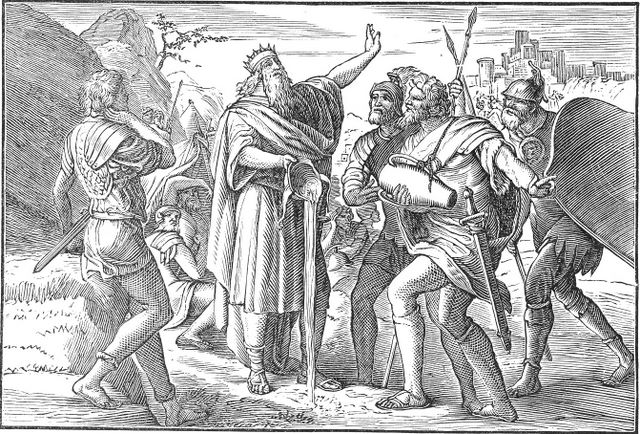
  •  The mighty men loved their king and were willing to go above and beyond to serve and please him, even risking their lives to give him water from his hometown well (1Chron 11:15-19). This devotion was matched by David unwillingness to indulge himself with this sort of sacrifice. There was mutual love, respect and loyalty between the king and his mighty men.
  • The mighty men had a great kinship and loving respect for one another built around their devotion to the Lord and his king. They were united in purpose and vision, each doing his own part for the common cause.

The virtues of honor, devotion, courage, selfless service and sacrifice are not exclusive to the military. These are the virtues that members of the Church should uphold as well. Our King is Jesus and our goal is clearly given in the Great Commission. May the Lord be pleased to raise up mighty men (and women!) from within our own churches to his glory and honor!


Choosing to Pursue God in Our Daily Choices

making choices

If a believer is to survive in a world of constant distraction, he must make honest and discerning choices about the use of his time. He must be willing to part with anything that clutters his mind to the point that he can no longer silently commune with the Lord. He must consciously and practically obey that biblical admonition to “lay aside every weight, and the sin which doth so easily beset us, and let us run with patience the race that is set before us, looking unto Jesus” (Heb. 12: 1–2a).“—David W. Saxon, God’s Battle Plan for the Mind: The Puritan Practice of Biblical Meditation

God’s Purpose for Our Lives

Banksy in Boston: F̶O̶L̶L̶O̶W̶ ̶Y̶O̶U̶R̶ ̶D̶R̶E̶A̶M̶S̶ CANCELLED, Essex St, Chinatown, Boston//embedr.flickr.com/assets/client-code.js

The Lord will fulfill his purpose for me; your steadfast love, O Lord, endures forever. Do not forsake the work of your hands. (Psalm 138:8, ESV)

Sometimes many in the Christian Church are worried about God’s will and purposes for their lives. The aboce verse reminds us that even though our own future may be unclear, “the LORD will fulfill his purpose for me…” This is a reference to the intimate nature of God’s love for his people. God is “high and lifted up,” yet he is also “Immanuel, God with us.”

Yet, some still worry that perhaps God’s will includes elements that are distasteful and painful or that his will is not in alignment with what we might think is in our best interests.  The second line of verse 8 (“your steadfast love, O Lord, endures forever”) directs our attention to the covenantal love and goodness of our God and Savior. Because of this, even when his will does include pain and suffering or seems, from our point of view, to lead where we do not want to go, we are assured that he will never “forsake the work of [his] hands.” The Lord’s ways are always the best. Leave your future in his stronger and wiser hands.

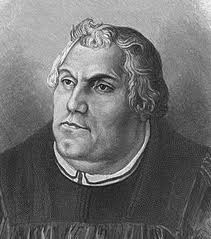
Just Do Better…Tell that to Martin Luther!

Martin Luther.jpg

Is salvation merely a message of “do better?” Is Christianity simply a moralistic religion that teaches that all we need to do is obey God? That is what the self-righteous Pharisees thought, and it is what many people in churches think. To them, Christianity is a list of rules that can be kept–albeit with a lot of sacrifice. But is that what Jesus taught?

In Romans 1:17, the Apostle Paul wrote, “For in it the righteousness of God is revealed from faith for faith, as it is written, “The righteous shall live by faith.”” (Romans 1:17, ESV). This text traumatized Martin Luther before his conversion to Christ. Here was a man that sincerely wanted salvation. He had dedicated his life to holy living in a monastic community where he sacrificed on a daily basis. Yet his soul was tortured. Here are Luther’s own words, written a year before his death on March 5, 1545 following a long life of joyful blessing in true salvation through Jesus Christ.

I had indeed been captivated with an extraordinary ardor for understanding Paul in the Epistle to the Romans. But up till then it was … a single word in Chapter 1 [:17], “In it the righteousness of God is revealed,” that had stood in my way. For I hated that word “righteousness of God,” which according to the use and custom of all the teachers, I had been taught to understand philosophically regarding the formal or active righteousness, as they called it, with which God is righteous and punishes the unrighteous sinner.

Though I lived as a monk without reproach, I felt that I was a sinner before God with an extremely disturbed conscience. I could not believe that he was placated by my satisfaction. I did not love, yes, I hated the righteous God who punishes sinners, and secretly, if not blasphemously, certainly murmuring greatly, I was angry with God, and said, “As if, indeed, it is not enough, that miserable sinners, eternally lost through original sin, are crushed by every kind of calamity by the law of the decalogue, without having God add pain to pain by the gospel and also by the gospel threatening us with his righteous wrath!” Thus I raged with a fierce and troubled conscience. Nevertheless, I beat importunately upon Paul at that place, most ardently desiring to know what St. Paul wanted.

At last, by the mercy of God, meditating day and night, I gave heed to the context of the words, namely, “In it the righteousness of God is revealed, as it is written, ‘He who through faith is righteous shall live.’ ” There I began to understand [that] the righteousness of God is that by which the righteous lives by a gift of God, namely by faith. And this is the meaning: the righteousness of God is revealed by the gospel, namely, the passive righteousness with which [the] merciful God justifies us by faith, as it is written, “He who through faith is righteous shall live.” Here I felt that I was altogether born again and had entered paradise itself through open gates. Here a totally other face of the entire Scripture showed itself to me.… And I extolled my sweetest word with a love as great as the hatred with which I had before hated the word “righteousness of God.” Thus that place in Paul was for me truly the gate to paradise. [Emphasis added]

The “gates of paradise” were opened up to Luther because he no longer depended upon his own law-keeping to satisfy the perfect demands of God. He saw salvation as a gracious act of God alone. Christ was perfectly righteous, fulfilling the whole law in our place. He died in our place and we are justified because of his perfect life and substitutionary death.

The hamster wheel of self-righteous deeds done in order to save ourselves is endless and endlessly disappointing. But the worst thing is that it does not end in heaven, but hell. The one who rejects the perfect finished work of Christ on the cross in favor of his or her imperfect works should expect nothing more, and will get nothing less.

Gospel Preaching Leads to Glorifying God

20140806-092312-33792716.jpg

“Great art Thou, O Lord, and greatly to be praised; great is Thy power, and Thy wisdom infinite. And Thee would man praise; man, but a particle of Thy creation; man, that bears about him his mortality, the witness of his sin, the witness that Thou resistest the proud: yet would man praise Thee; he, but a particle of Thy creation. Thou awakest us to delight in Thy praise; for Thou madest us for Thyself, and our heart is restless, until it repose in Thee. Grant me, Lord, to know and understand which is first, to call on Thee or to praise Thee? and, again, to know Thee or to call on Thee? for who can call on Thee, not knowing Thee? for he that knoweth Thee not, may call on Thee as other than Thou art. Or, is it rather, that we call on Thee that we may know Thee? but how shall they call on Him in whom they have not believed? or how shall they believe without a preacher? and they that seek the Lord shall praise Him: for they that seek shall find Him, and they that find shall praise Him. I will seek Thee, Lord, by calling on Thee; and will call on Thee, believing in Thee; for to us hast Thou been preached. My faith, Lord, shall call on Thee, which Thou hast given me, wherewith Thou hast inspired me, through the Incarnation of Thy Son, through the ministry of the Preacher.”

—Augustine, Confessions