Here is a fountain filled with blood: use it, saint, use it.

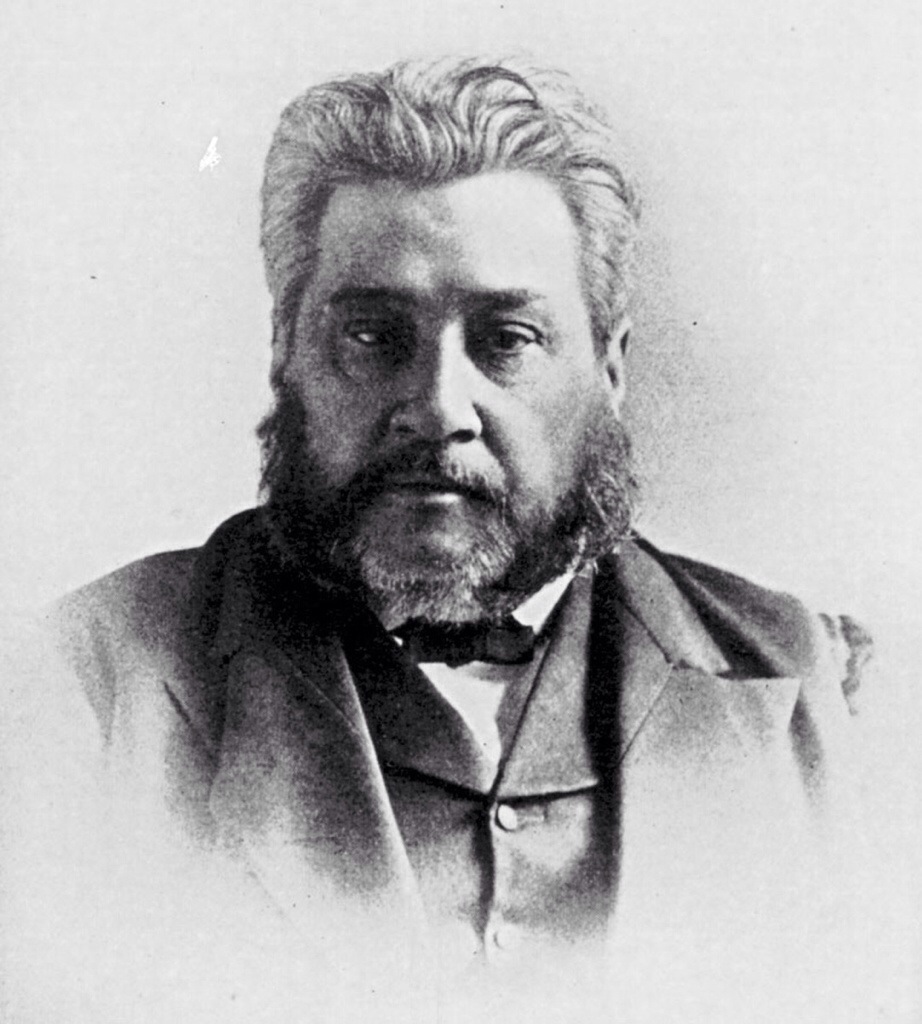
C. H. Spurgeon.jpg

“A very present help.” — Psalm 46:1

Covenant blessings are not meant to be looked at only, but to be appropriated. Even our Lord Jesus is given to us for our present use. Believer, thou dost not make use of Christ as thou oughtest to do. When thou art in trouble, why dost thou not tell him all thy grief? Has he not a sympathizing heart, and can he not comfort and relieve thee? No, thou art going about to all thy friends, save thy best Friend, and telling thy tale everywhere except into the bosom of thy Lord. Art thou burdened with this day’s sins? Here is a fountain filled with blood: use it, saint, use it. Has a sense of guilt returned upon thee? The pardoning grace of Jesus may be proved again and again. Come to him at once for cleansing. Dost thou deplore thy weakness? He is thy strength: why not lean upon him? Dost thou feel naked? Come hither, soul; put on the robe of Jesus’ righteousness. Stand not looking at it, but wear it. Strip off thine own righteousness, and thine own fears too: put on the fair white linen, for it was meant to wear. Dost thou feel thyself sick? Pull the night-bell of prayer, and call up the Beloved Physician! He will give the cordial that will revive thee. Thou art poor, but then thou hast “a kinsman, a mighty man of wealth.” What! wilt thou not go to him, and ask him to give thee of his abundance, when he has given thee this promise, that thou shalt be joint heir with him, and has made over all that he is and all that he has to be thine? There is nothing Christ dislikes more than for his people to make a show-thing of him, and not to use him. He loves to be employed by us. The more burdens we put on his shoulders, the more precious will he be to us.

“Let us be simple with him, then,

Not backward, stiff, or cold,

As though our Bethlehem could be

What Sinai was of old.”

Morning and Evening, May 3, Evening

Time Doesn’t Heal All Wounds

toxic

In Psalm 32 David confessed that he had stubbornly hidden his sin with Bathsheba and his murder of Uriah, her husband and how it had made him physically miserable. He described it this way in vv. 3-4, “For when I kept silent, my bones wasted away through my groaning all day long. For day and night your hand was heavy upon me; my strength was dried up as by the heat of summer. Selah” (Psalm 32:3–4, ESV)

You see, time doesn’t heal all wounds, it just allows gangrene to set in and the poison to spread until it enters the blood stream and kills the heart.

Let me ask you, do you think you are somehow different? If you don’t deal with your anger it will turn to hatred and bitterness and it will corrode your heart.

Ephesians 4:26 says, “Be angry and do not sin; do not let the sun go down on your anger,” (Ephesians 4:26, ESV).

If you are a blood bought Christian, then you are a new creation in Christ Jesus. You have the Holy Spirit, and so you can call out to God and ask him to help you to forgive, and for him to put to death that sinful hatred and anger in your heart.

James 4:1-2 says, “What causes quarrels and what causes fights among you? Is it not this, that your passions are at war within you? You desire and do not have, so you murder. You covet and cannot obtain, so you fight and quarrel. You do not have, because you do not ask.” (James 4:1–2, ESV).

Sometimes Christians read the “murder” part as hyperbole, as exaggeration about anger. Some read what James wrote and think that they will never let their anger go that far. But we are talking about an anger that is out of control, it begins small and then grows and becomes a monster that wages war.

John MacArthur said about this sort of growing hatred:

“Just think about something like hate; if you want to find out what hate does to people, go back to Genesis 4 and find out about Cain and see what hate did to Cain. If that isn’t a good enough lesson, go to Esau and watch hate drive a man through his whole lifetime. If that doesn’t satisfy you, go to the sons of Jacob and find out what hate did to those people, hate toward Joseph and the results of it. If that doesn’t do it, go find a man named Saul and see what it did to him. He hated David, and it drove him to the place where he killed himself. If that isn’t convincing enough, find Absalom and see what hate did to him in 2 Samuel 13. If that doesn’t convince you, read the book of Esther and find out how hatred drove a man named Haman to be hanged of his own gallows.”

Anger that is not dealt with quickly is a toxin in our heart and it poisons us until we repent and confess it. Shoving it down deeper isn’t an answer. David said in Ps 32:1-2, “Blessed is the one whose transgression is forgiven, whose sin is covered. Blessed is the man against whom the Lord counts no iniquity, and in whose spirit there is no deceit.” (Psalm 32:1–2, ESV)

If you struggle with bitterness and anger, take it to the Lord in prayer. As him to reveal to you how it has grown in your heart so you can see where all of its roots have led—in your speech, your attitude, your conduct, your worship, your relationships. Let the Lord show you so that you can be done with it completely and you can have that blessing David wrote about.

If you’d like the watch the full length sermon video on this subject, you can see it here: Facebook video link

[1]https://www.gty.org/library/sermons-library/1794/paul-before-festus-part-1

Help for our darkest seasons

despair“In our darkest seasons nothing has kept us from desperation but the promise of the Lord: yea, at times nothing has stood between us and self-destruction save faith in the eternal word of God. When worn with pain until the brain has become dazed and the reason well-nigh extinguished, a sweet text has whispered to us its heart-cheering assurance, and our poor struggling mind has reposed upon the bosom of God. That which was our delight in prosperity has been our light in adversity; that which in the day kept us from presuming has in the night kept us from perishing.”[1]

[1]Charles Spurgeon,Psalm 119:92; Treasury of David, 5:316

Tranquility is Found in God’s Sovereignty

stormCharles Spurgeon observed, “Because the Lord has bid the universe abide, therefore it stands, and all its laws continue to operate with precision and power. Because the might of God is ever present to maintain them, therefore do all things continue. The word which spake all things into existence has supported them till now, and still supports them both in being and in well-being. God’s ordinance is the reason for the continued existence of creation.”[1]

Why does the earth remain as it has? Because of the ordinance of God for it to remain. The King has decreed that the sun rise every morning, and so it has been since he gave that order. He has called for the weather to continue its cycles of wind, rain and snow, just as the seasons continue in their order—all because of the King’s commands.

We shouldn’t be surprised. Just as an earthly king’s decrees are obeyed by his human subjects, so too must the heavenly bodies and all of creation obey the Lord God—because as Psalm 119:91 says, “By your appointment they stand this day, for all things are your servants.” (Psalm 119:91, ESV). Our security is not in ourselves, but in Almighty God who stands above creation and in sovereign power over everything.

[1]Charles Spurgeon, Psalm 119:91, Treasury of David, 5:316.

Book Review: God’s Battle Plan for the Mind

Godsbattleplan

Review: God’s Battle Plan for the Mind: The Puritan Practice of Biblical Meditation, David W. Saxton

Many areas of modern evangelicalism are devoid of deep thinking on biblical matters. It isn’t uncommon to hear Christians speak of the need to set aside doctrinal differences in order to foster a sense of unity. Although I am all for biblical unity, there can be little unity when there is no consensus on biblical truth. And it is this very issue that begins to show our need for a massive return to biblical meditation upon the Word of God and doctrine.

Saxton’s book takes twelve short chapters to uncover the largely lost discipline of biblical meditation in hopes that this much-needed excercise will be brought back as a mainstream practice in the Church.

In chapter 2, entitled “Unbiblical Forms of Meditation,” Saxton wisely warns of the counterfeits that masquerade as the genuine article. Roman Catholic spirituality, mysticism and contemplative prayer are especially important because of the current emphases that have promoted these practices and their accompanying works through the Spiritual Formation movement. Along with these the author briefly examines TM (transcendental meditation), yoga and Far Eastern religious ideas of meditation before moving on in chapter 3 with a short study not the biblical idea of meditation.

Saxton shows that he is very familiar with the Puritan’s wisdom on this subject, and he demonstrates their warm practices and wisdom throughout the book. One of the highlights of reading this book is all of the thoughtful quotes from the Puritans that are included within which serve to allow them to teach us the how and what of biblical meditation.

If I were to mention any negatives about this excellent book it would be just two. First, the chapter which defined what biblical meditation is (ch. 3) was a bit anemic in regards to the amount of biblical evidence and study given to it. I understand that this book was about the Puritan’s practice, but I was hoping for more than a very glossed over treatment of the biblical texts. Second, I found that this book read more like a compendium of Puritan wisdom with the author weaving it all together with a few sentences and phrases. When Saxton does find his voice, it is clear that he has absorbed much of the language and phrasing of the Puritans himself and so writes in an engaging manner that made me wish he had done so throughout. The final concluding chapter was closest to this idea and it was to me the most enjoyable as far as readability and smoothness.

Overall this book is a blessing to the Church and I pray that it will not only be read by many, but that it will become a practical handbook that engages more believers in the regular practice of biblical meditation.

[God’s Battle Plan for the Mind: The Puritan Practice of Biblical Meditation, David W. Saxton (Reformation Heritage Books, 2015)]