How important are original languages for preaching? Martin Luther’s answer.

“We will not long preserve the gospel without the languages. The languages are the sheath in which this sword of the Spirit [Eph. 6: 17] is contained; they are the casket in which this jewel is enshrined; they are the vessel in which this wine is held; they are the larder in which this food is stored; and . . . they are the baskets in which are kept these loaves and fishes and fragments. If through our neglect we let the languages go (which God forbid!), we shall . . . lose the gospel.” —Quoted in Greek for Life: Strategies for Learning, Maintaining and Reviving New Testament Greek, Kindle loc. 243.

Do you treat your church like a rental car?

rental car

“People treat rental cars much differently than cars they own, and people treat a church they “just rent” much differently than one where they “own the mission.” Pastors and church leaders aim for “buy-in” and “involvement,” but what they really long for is ownership. When we turn the pages of Scripture, we are forced to deal with a God who demands utter and absolute commitment to His ways and His cause. We are desperate for this radical ownership to be the mark of our local churches. As our church members embrace the beauty of mutual oneness and ownership in the local body, they move from “renting” or “borrowing” the mission they hear the preachers preaching and internalize the mission as their own.”

Designed to Lead: The Church and Leadership Development, Eric Geiger and Kevin Peck, Kindle loc. 1837.

Appeal to the Heart in Your Preaching

“It is my firm conviction that those sermons are most likely to convert men that really appeal to their hearts, not those that are fired over their heads, or that are aimed only at their intellects. I am sorry to say that I know some preachers who will never do much good in the world; they are good men, they have plenty of ability, they can speak well, and they have a good deal of shrewdness; but, somehow or other, there is a very sad omission in their nature, for to anyone who knows them, it is quite evident that they have not any heart. I know one or two men who are as dry as leather.”-Spurgeon, The Soul Winner, 100–101.

Fuzzy Thinking Produces Confusing Sermons

Wutt?

“The great failure of much preaching is fuzzy thinking. The preacher is not quite clear about his subject and the ideas that express it. His language is imprecise. The progression of his thought meanders in search of a line of direction. The basis for this vague and uncertain communication in an expository sermon is a failure to identify the text writer’s central idea and how he expresses it. If the preacher is unsure of his thoughts, the audience will be even more unsure of what he is saying. The key to clear thinking is the careful use of precise language…

Becoming a skilled word crafter calls for the capacity for critical thinking. By critical thinking we mean analyzing thoughts, sorting out ideas, distinguishing one concept from another, evaluating arguments, and making judgments about the best way to express ideas. It requires levels of precision and craftsmanship not necessary to casual thinking. You want to find the words that exactly express the idea. You want to distinguish it from ideas that are similar but not quite the same, such as various words for preaching: proclaim, declare, exhort, bear witness. It is this kind of thinking that is so needed among preachers today.” – Wayne McDill, 12 Essential Skills for Great Preaching, 75.

Preaching with a Tender, Compassionate Heart

There have been times in my ministry when an icy chill has come over my heart, when my soul no longer weeps, when my sermons no longer connect, and when the act of preaching becomes a drudgery. I know that I have then lost compassion for people. That is when I retreat to a small taco stand in the barrio of East Los Angeles, to a place where real people live. I order a cup of coffee and sit with my back against the wall. Then I watch, I observe, I read, and I listen intently for the heart cry.

A group of gang-bangers come in for a snack-one in four will die before the age of eighteen; two of the others will end up in prison. All are doomed to a hard life. A young mother comes in with her brood of youngsters. It is obvious that they are poor. They share drinks. They live in poverty; some will never see a forest or snow. An old drunk staggers in, begging for a meal. He is quickly thrown out. That was somebody’s baby boy. A mother at one time cradled that man and nursed him. The poor specimen of humanity has children. His wife is somewhere out there. They have long since disowned him, but they have not forgotten him. He is still somebody’s daddy. For all I know, he could have been my own.

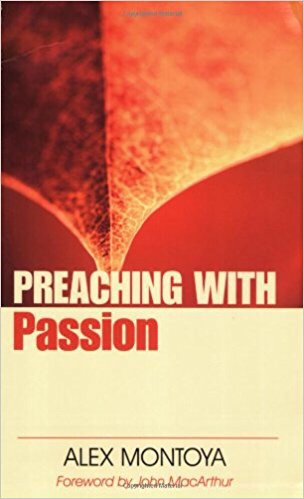
I look, I listen until I hear their cries, until their souls cry out to me, “Please help, I’m perishing!” until the tears pour forth from my melted heart! I am in love with humanity once again. Now I am fit to ascend the pulpit, to weep with those who weep, to laugh with those who laugh, and to bring a living Word-Christ-to a needy people. Now I can preach with passion, for now I have compassion.— Dr. Alex Montoya, Preaching with Passion