That is what you must do with your sermons, make them red-hot; never mind if men do say you are too enthusiastic, or even too fanatical, give them red-hot shot, there is nothing else half as good for the purpose you have in view. We do not go out snow-balling on Sundays, we go fire-balling; we ought to hurl grenades into the enemy’s ranks.—C.H. Spurgeon, The Soul Winner: How to Lead Sinners to the Saviour; Fleming H. Revel edition, 69.
quotation
Despising Heaven for Earth
Choosing to Pursue God in Our Daily Choices

“If a believer is to survive in a world of constant distraction, he must make honest and discerning choices about the use of his time. He must be willing to part with anything that clutters his mind to the point that he can no longer silently commune with the Lord. He must consciously and practically obey that biblical admonition to “lay aside every weight, and the sin which doth so easily beset us, and let us run with patience the race that is set before us, looking unto Jesus” (Heb. 12: 1–2a).“—David W. Saxon, God’s Battle Plan for the Mind: The Puritan Practice of Biblical Meditation
Just Do Better…Tell that to Martin Luther!
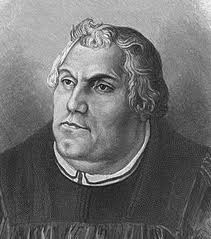
Is salvation merely a message of “do better?” Is Christianity simply a moralistic religion that teaches that all we need to do is obey God? That is what the self-righteous Pharisees thought, and it is what many people in churches think. To them, Christianity is a list of rules that can be kept–albeit with a lot of sacrifice. But is that what Jesus taught?
In Romans 1:17, the Apostle Paul wrote, “For in it the righteousness of God is revealed from faith for faith, as it is written, “The righteous shall live by faith.”” (Romans 1:17, ESV). This text traumatized Martin Luther before his conversion to Christ. Here was a man that sincerely wanted salvation. He had dedicated his life to holy living in a monastic community where he sacrificed on a daily basis. Yet his soul was tortured. Here are Luther’s own words, written a year before his death on March 5, 1545 following a long life of joyful blessing in true salvation through Jesus Christ.
I had indeed been captivated with an extraordinary ardor for understanding Paul in the Epistle to the Romans. But up till then it was … a single word in Chapter 1 [:17], “In it the righteousness of God is revealed,” that had stood in my way. For I hated that word “righteousness of God,” which according to the use and custom of all the teachers, I had been taught to understand philosophically regarding the formal or active righteousness, as they called it, with which God is righteous and punishes the unrighteous sinner.
Though I lived as a monk without reproach, I felt that I was a sinner before God with an extremely disturbed conscience. I could not believe that he was placated by my satisfaction. I did not love, yes, I hated the righteous God who punishes sinners, and secretly, if not blasphemously, certainly murmuring greatly, I was angry with God, and said, “As if, indeed, it is not enough, that miserable sinners, eternally lost through original sin, are crushed by every kind of calamity by the law of the decalogue, without having God add pain to pain by the gospel and also by the gospel threatening us with his righteous wrath!” Thus I raged with a fierce and troubled conscience. Nevertheless, I beat importunately upon Paul at that place, most ardently desiring to know what St. Paul wanted.
At last, by the mercy of God, meditating day and night, I gave heed to the context of the words, namely, “In it the righteousness of God is revealed, as it is written, ‘He who through faith is righteous shall live.’ ” There I began to understand [that] the righteousness of God is that by which the righteous lives by a gift of God, namely by faith. And this is the meaning: the righteousness of God is revealed by the gospel, namely, the passive righteousness with which [the] merciful God justifies us by faith, as it is written, “He who through faith is righteous shall live.” Here I felt that I was altogether born again and had entered paradise itself through open gates. Here a totally other face of the entire Scripture showed itself to me.… And I extolled my sweetest word with a love as great as the hatred with which I had before hated the word “righteousness of God.” Thus that place in Paul was for me truly the gate to paradise. [Emphasis added]
The “gates of paradise” were opened up to Luther because he no longer depended upon his own law-keeping to satisfy the perfect demands of God. He saw salvation as a gracious act of God alone. Christ was perfectly righteous, fulfilling the whole law in our place. He died in our place and we are justified because of his perfect life and substitutionary death.
The hamster wheel of self-righteous deeds done in order to save ourselves is endless and endlessly disappointing. But the worst thing is that it does not end in heaven, but hell. The one who rejects the perfect finished work of Christ on the cross in favor of his or her imperfect works should expect nothing more, and will get nothing less.
The Power for Church Planting
“For I am not ashamed of the gospel, for it is the power of God for salvation to everyone who believes, to the Jew first and also to the Greek.” Rom 1:16 ESV
It would seem that some people who are all for church planting are unaware of Romans 1:16, so I have reproduced it here for the benefit of those who think that a church is best planted by human invention.
What do I mean by ‘human invention?’ How about slick marketing programs that blanket the city? Or freebies, raffles, and give-aways that are meant to be a spiritual bait-and-switch? There are surveys meant to find out what unbelieving pagans want in a church so that a church can be tailored for them, and there are those ‘church planters’ who blanket Christian radio, Christian bookstores and encourage their core team to invite their friends over to their cool, new church that is so much better than the one they’re in now. There are other so-called church planting and church growth gimmicks I could mention, but I think that you probably know of one or two places like this.
Then there is Holy Spirit power that converts a soul from being a prisoner of darkness into a light-reflecting child of the Kingdom. Those churches that seek to grow from regenerating the souls of men are true church plants, and those who plant churches by the power of the gospel do so in the methodology that gives all glory to God and cannot be conjured up by Madison Avenue methods.
Listen to this great quote from Tim Keller:
“The first ministry watershed or goal was to become a church that had a spiritual renewal dynamic in the heart of our ministry. Was the gospel going to be a power, so that sleepy and nominal Christians woke up, and so that really secular non-believers who lived and worked in the professional worlds of Manhattan got converted? And could this become a real dynamic so conversions happened systemically, not just “one off” here and there?” (Redeemer Church Planting Manual, p. 15).
To all my brothers out there who are holding forth the truth in faithfulness, keep it up. For those growing weary of doing good, email me and I’ll join you in prayer so that you won’t be tempted to give in to powerless quick fixes that yield a crowd, but not gospel growth.
 Always Reforming