Our Great Resurrection Hope (part 2)

On this Good Friday, we have a wonderful opportunity to meditate not only upon the death of Christ, but upon the hope of his resurrection. Yesterday I posted the first of Four Assurances that Jesus’ Resurrection Gives Those Who are Followers of Jesus Christ: Christ’s Resurrection Guarantees the Christian’s Resurrection. You can read that post here: https://always-reforming.com/?p=1859

Christ’s Resurrection Reverses the Curse of Humanity (1 Corinthians 15:21-22)

For as by a man came death, by a man has come also the resurrection of the dead. For as in Adam all die, so also in Christ shall all be made alive.” (1 Corinthians 15:21–22, ESV)

In these next two verses, Paul reviews for the church what they already knew, but needed to connect to the resurrection of Jesus. Paul addressed the reality that all people die, and that is why there is a need for resurrection.

Paul lays down two parallel ideas—first, that death came to all of humanity through a single man, Adam, in the Garden of Eden, when he disobeyed God.

Then, secondly, resurrection of the dead has come to humanity through another single person, Jesus Christ, who on the cross obeyed God by dying in the sinner’s place.

Verse 21 gives a profound truth that the world we live in simply cannot grasp as it should. We find that people in general think that they are good people, maybe a little flawed, but good at heart. Nothing serious. Of course, there are a few bad apples that mess things up for the world. But most people are good.

But in the Garden, there was one law given by God. Don’t eat the fruit. That was it. One law. And Adam and Eve broke it. One law. And what was the penalty? Death. A broken relationship with God and death.

Now look at verse 22. It gives more detail regarding verse 21. It uses names here. “As in Adam all die.” Paul is assuming we all know this. Why did my grandparents die, even though they were super sweet people? Because Adam sinned, and all his children sin and the penalty of sin is death.

So, what does that say about my sweet grandparents? They were sinners. And no matter how good you think you are, you will show that you are a sinner in God’s eyes because all sinners die. Death isn’t natural. God didn’t make men to die. He made them to be immortal. Sin brought death. All sinners die.

We all associate with the first man, Adam, who represents us as the human race. He is our head, or leader.

But the second part is true as well. Verse 22 says, “so also in Christ shall all be made alive!”

Here, Christ is described as being a representative just like Adam is. Adam represents the human race. Jesus represents his followers, those who forsake everything and follow Christ. Those who place their every hope and trust in him. Those who are truly children of God and have attached themselves to Christ. Is that you? If it is, then this speaks to you!

Paul is speaking here of the reversal of the curse of sin and death that was brought upon the human race by Adam’s disobedience.

In Romans 5:12 Paul wrote, “Therefore, just as sin came into the world through one man, and death through sin, and so death spread to all men because all sinned—” (Romans 5:12, ESV) 

And in 1Corinthians 1:18, Paul wrote, “For the word of the cross is folly to those who are perishing, but to us who are being saved it is the power of God.

Those who don’t trust in Jesus Christ for salvation see the death of Christ as foolish, and we as Christians are foolish too. But these are the ones that are perishing in their sins. 

Have you ever gotten yourself in a jam that you simply couldn’t fix? That’s what the human race did when Adam disobeyed God and sinned. It reminds me of when we have gone fishing when my girls were much younger. Sometimes they would get their fishing line all tangled up and the reel looked like a bird’s nest of fishing line. Sometimes they tried to fix it, but soon realized it was too tangled, so they’d give it to me or my wife. Sometimes it was so bad all we could do was cut the line and start over.

Some people approach their tangled up sin-filled lives like that. They pridefully say its not that bad, and they try too “fix” it themselves. Sometimes they take it to others who claim to be experts for help. But these “experts” have a mess in their own sin. Some take their sin-filled lives to Jesus Christ. He alone can fix it. 

On the outside it looks like we are all the same. We are all heading toward death—both Christian and unbeliever. But there is a difference. The Christians identifies himself with Christ, and in doing so he joins Christ in the resurrection that will come one day.

But the unbeliever is still identified with Adam. In Adam all die. We are all in Adam and so we all feel the effects of the curse of death. But in Christ those who identify with Christ in faith shall be made alive because Christ’s Resurrection Reverses the Curse of Humanity.
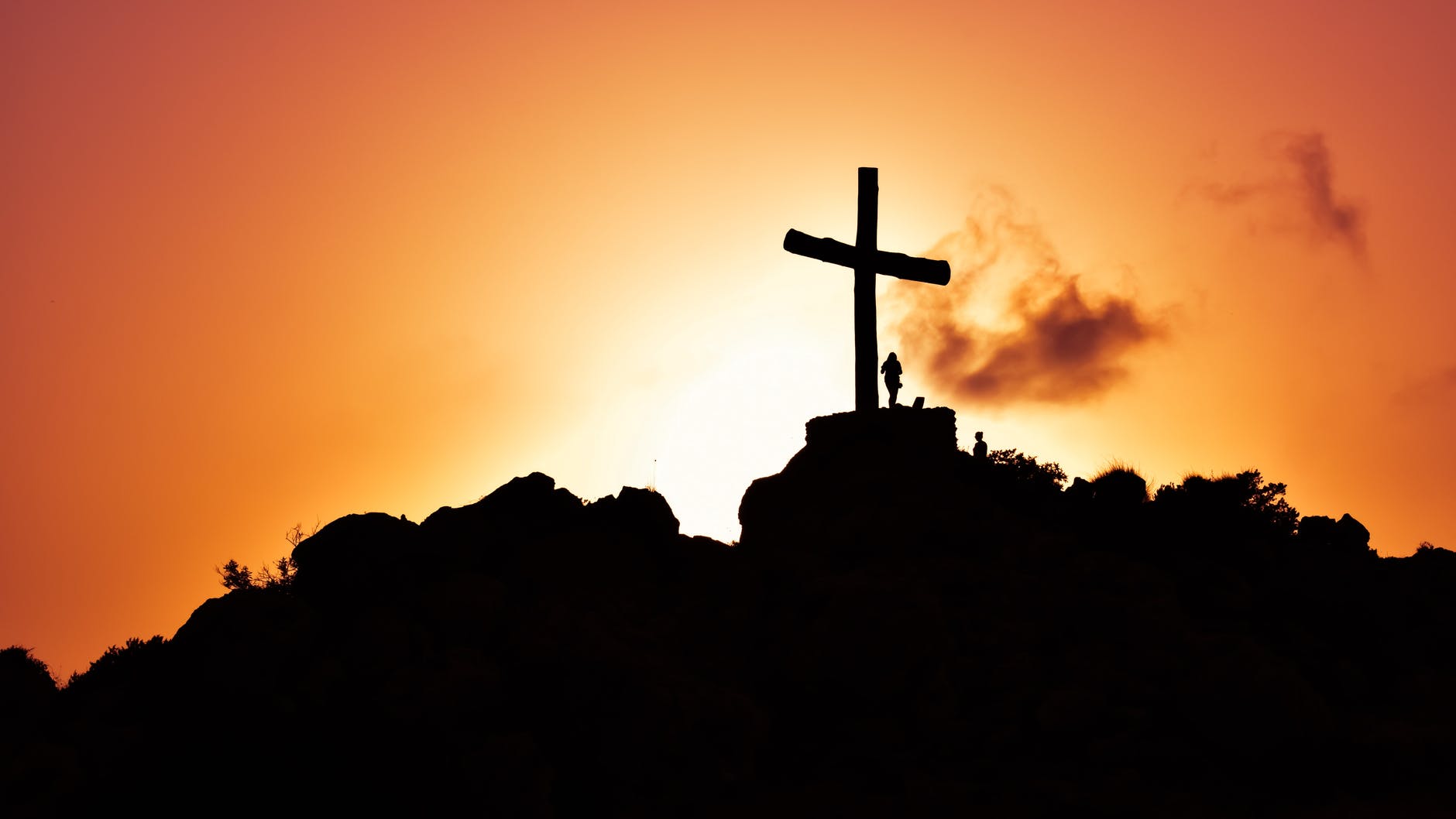
Our Great Resurrection Hope (part 1)

Today is “April Fool’s Day” which I think might be just an American sort of thing. I don’t know. It’s not even actually a holiday here, but is an unofficial day for playing pranks on one another. Some Christians have connected “April Fool’s Day” with atheism, a reflection of Psalm 14:1; and 53:1 that says, “The fool says in his heart, “There is no God.” It is interesting that April Fool’s Day comes a day before Good Friday, the day which Christ was crucified. For millions of Christians, the crucifixion and empty tomb are reminders of our great hope beyond this life and this world But what about the atheist and the one who does not believe in Jesus Christ? Where is the world supposed to find hope?

A little over a month before he died, the famous atheist Jean-Paul Sartre declared that he so strongly resisted feelings of despair that he would say to himself, “I know I shall die in hope.” Then in profound sadness, he would add, “But hope needs a foundation.”[1]

Where do you find your hope? The Apostle Paul has written to the church where some have lost hope because they had been wrongly taught that there is no resurrection; that a person dies and is no more. Some people believe that today.

Look with me to 1 Corinthians 15:19. It says, “If in Christ we have hope in this life only, we are of all people most to be pitied.” (1 Corinthians 15:19, ESV) 

As followers and disciples of Jesus Christ, we believe that Jesus Christ is our great resurrection hope. If Jesus has not risen from the dead, we might as well all just wait to die. There is nothing left but despair and our feeble attempts to make our time left on this earth as pleasant as possible.

But Christ has risen. There is more to hope for than all this world can offer! On this Maundy Thursday leading to Resurrection Sunday, I’d like to share Four Assurances that Jesus’ Resurrection Gives Those Who are Followers of Jesus Christ. Here is the first one:

Christ’s Resurrection Guarantees the Christian’s Resurrection (v. 20)

But in fact Christ has been raised from the dead, the firstfruits of those who have fallen asleep.

(1 Corinthians 15:20, ESV)

The evidence is overwhelming which shows that Christ rose from the dead (1 Cor 15:3-8). In these verses we read that Jesus was seen by over 500 eyewitnesses, and some of them were still alive when the Apostle Paul wrote his letter to the Corinthian Church, about 20 years after Jesus’ crucifixion.

Along with this, Christ’s death and resurrection fulfilled dozens of Old Testament prophecies and Jesus himself told his disciples several times that he would rise from the dead after his death upon a cross.

And in verse 20, Paul is telling the church that Christ has not only risen from the dead, but that he is the first-fruits of those who have “fallen asleep,” a euphemism for Christian’s who have died already.

What is a “first-fruit” and why does this guarantee the Christian hope?

In the Old Testament laws, the Jewish people were commanded by God that at the end of their farming seasons, as they were getting ready to reap their harvests, the people of God were commanded to bring an offering to God called the “first-fruit.”

This offering was from every type of blessing they had received, and it included grain, produce, oil, wine, bread and dough, even the first born of animals.  Now, what I want you to understand is that these “first-fruit” offerings were just that—they were the first of the fruit of the land, given as an offering of thanksgiving to the One who had given them everything. It was also an offering given in faith that he would bring in the rest of the harvest that had not been completely ripened or been brought into the harvest. This offering was the way in which the Lord told his people that they were promised that there was more of the same to come.

The Apostle Paul used this imagery to describe Jesus’ resurrection as the first-fruit, the promise that there is more to come! Jesus, the Son of Man, died and rose again, the first of many who will one day rise again just as he did.

In Romans 11:16 Paul used this idea of first-fruits as well. He wrote, “If the dough offered as firstfruits is holy, so is the whole lump, and if the root is holy, so are the branches.” (Romans 11:16, ESV) 

Paul is saying that when a Jewish person offered up a lump of dough, the larger batch that it was taken from was made holy because of the connection between the two. Think about that for a second!

What Paul is saying in 1Corinthians 15:20 is that our status as Christians is changed by what happens to the first-fruit of Christ’s resurrection. Whatever he undergoes, we will also undergo. 

As one commentary says, “…in the specific case of the resurrection their resurrection is not merely parallel or similar to Christ’s but is preauthorized, promised, guaranteed, and initiated by it.[2]

I once was at a bridal shower, and it reminded me of the engagement ring that our friend gave to his fiancé. I don’t know how much that young man spent on the ring, but it represents a promise of good things to come. 

The engagement ring is a promise not only that the groom will come for his bride, but that as he has spent much in providing the ring, he has much more to give. The ring represents love, and promise, and that more is to follow. It is not all, it is only a foretaste.

The first-fruits are like that. But it is a promise from God, who never breaks his promises, ever.

Christ’s Resurrection Guarantees the Christian’s Resurrection! We aren’t just hoping against hope. Christ’s resurrection is the first stage of a resurrection that will include the raising up and glorifying of all of Christ’s followers!


[1] https://bible.org/illustration/famous-athiest

[2] Roy E. Ciampa and Brian S. Rosner, The First Letter to the Corinthians, The Pillar New Testament Commentary (Grand Rapids, MI; Cambridge, U.K.: William B. Eerdmans Publishing Company, 2010), 762.

The Lord’s Provision for Ministry (part 4)

I remember once getting a missionary newsletter in the mail from a pastor in a foreign country that clearly was stretching the truth. In baptist circles, they might say he was speaking “evangelastically.” This missionary wrote glowingly of the tens of thousands that had come to salvation, and about the thousands that he had baptized as a result. Then, a little harder to find, he mentioned that his church had added new members–but only a tiny handful. His whole congregation was about two dozen people.

Now I don’t begrudge the hard work of evangelism. The spiritual soil in some places is harder than others. My issue is when a person claims that thousands of souls are saved but the church has only two dozen people. Where did the rest go? Something isn’t right. In the decision-driven mindset, this may work, but when I read my Bible I don’t see these things. But I guess when you are writing home to supporters, the fear of man drives you to report big numbers to show you are doing your job. It’s a shame because God doesn’t expect men to convert souls. That’s His prerogative.

In my previous posts in this series, I have laid out the many ways that God provides for his ministers. You can read those posts here: The Lord’s Provision for Ministry (part 1) and The Lord’s Provision for Ministry (part 2) and Part 3: https://always-reforming.com/?p=1834. In these posts, I am showing that the Lord provides in six ways. Here is the fifth way:

He Gives Us Souls Converted

“Then he left there and went to the house of a man named Titius Justus, a worshiper of God, whose house was next to the synagogue. Crispus, the leader of the synagogue, believed in the Lord with all his household, and many of the Corinthians when they heard were believing and being baptized.” (Acts 18:7-8, NASB95)

Outside of the synagogue the Lord brought the gospel of salvation to some important people that would affect the ministry in Corinth. Verse 7 mentions Titius Justus, a man with a Roman name, but who had become a convert to Judaism. God had saved him through the gospel that Paul preached. Since Paul had anathematized the synagogue, a meeting place would be needed. How blessed that the Lord saved the guy who lived right next door!

Furthermore, verse 8 tells us of the salvation of a man named Crispus who was saved along with his whole family. This man was a ruler of the synagogue, meaning that he had responsibilities in the synagogue and would have been thought of as important and highly regarded by all Jews in the city. His salvation would have been a huge blow to the Jews in Corinth. And then the end of verse 8 mentions that many others were saved and baptized in the city. The church had begun!

Growing up my mom had a vegetable garden in our backyard. I remember one year she let me and my brother plant watermelon seeds. We were responsible for weeding, watering and doing all the yardwork, a job we did nearly every weekend. It wasn’t normally very fun. But harvesting the fruit of our labors was always a joy! It made the hard work worth it all. Farmers know this truth well, and Paul used this image for those who serve God.

In 1 Corinthians 3:6-9, Paul wrote this to the church he planted there some years later: “I planted, Apollos watered, but God was causing the growth. So then neither the one who plants nor the one who waters is anything, but God who causes the growth. Now he who plants and he who waters are one; but each will receive his own reward according to his own labor. For we are God’s fellow workers; you are God’s field, God’s building.” (1 Corinthians 3:6-9, NASB95) 

Just like God makes watermelon seeds grow into watermelons, it is God alone who brings people to salvation. But like the farmer, we labor with him. Have you ever had the privilege of leading a sinner to God’s throne of grace, resulting in their salvation? There is nothing better! God provides this blessing to those who are faithful to share his gospel message faithfully. 

Fearing God the Father

“Praise the Lord!
Blessed is the man who fears the Lord,
who greatly delights in his commandments!”
(Psalm 112:1, ESV)

There used to be a time when people would speak in reverential tones of certain men and women as “God fearing.” This person was known for living a life that was pleasing to God, and was utterly trustworthy and faithful. You would not find a God-fearing man or woman in the company of certain people, or involved in sinful activities and conversation.

God-fearing people were thought of this way because society in general knew what the Bible said. They knew what God expected of men, but they knew that most people only paid lip-service to what the Bible said. But a God-fearing man or woman was different.

Easton’s Bible Dictionary defines the fear of the Lord like this: “It is a fear conjoined with love and hope, and is therefore not slavish dread, but rather filial [fatherly] reverence.”

We notice here a mixture of fear and love, and it is connected to a fatherly love which is co-mingled with respect. Charles Bridges defined fear of the Lord in a similar manner. He wrote, “[The fear of the Lord is] that affectionate reverence, by which the child of God bends himself humbly and carefully to his Father’s law.”[1]

Bridges, like Easton’s definition, uses the Father and child imagery to help define the fear of the Lord, writing of the child of God and his heavenly Father. This image of God as Father is replete throughout the Bible.

Fear the Father as Creator

In Deut. 32:6 it says, “Do you thus repay the Lord, you foolish and senseless people? Is not he your father, who created you, who made you and established you?” (ESV). Just as a father provides, protects, and leads his family, so too the Lord had done the same for Israel. But shockingly, Moses’ words reveal that Israel was acting like an ungrateful and rebellious child that has no fear of breaking his rules nor of disrespecting him before the watching world.

The prophet Isaiah also testified against this lack of the fear of the Lord in Israel at a much later time. In Isaiah 1:2 the prophet brought the Word of the Lord saying, “Hear, O heavens, and give ear, O earth; for the Lord has spoken: “Children have I reared and brought up, but they have rebelled against me.” (ESV). Notice what the Lord says here—he has reared and brought them up. This reality should have brought him that fear we are looking at. They should have loved and respected him, but they did not.

In Isaiah 64:8,the prophet used the father metaphor alongside another picture of God as a Potter. In this passage, it says, “But now, O Lord, you are our Father; we are the clay, and you are our potter; we are all the work of your hand.” (ESV). This text looks forward to the coming Millennial Kingdom when the heart’s of God’s people shall turn and embrace the Messiah that they have rejected.

We see in these words the recognition that the Lord has made them and he is free to do with them as he sees fit. One day Israel will humble itself before the Lord in national contrition and joyful submission. God can do what he wants because he is not only Father, but he is Potter, who has made the clay into whatever he sees fit.

Fearing the Father as Wisdom

Probably most familiar to us is this aspect of the fear of the Lord as the beginning of wisdom. Proverbs 1:7 says, “The fear of the Lord is the beginning of knowledge; fools despise wisdom and instruction” (ESV). When we consider the fear of the Lord as Father and Creator, we can better see why to reject the Lord and His commands is foolish. A child, who has little strength, wisdom, experience, power, and influence is foolish to put off the care and counsel of a father who gives these to his children.

When the Lord spoke to Job and began prodding him to answer his questions, like a child who quickly has learned that he is over his head, he simply put his hand over his mouth. This is wisdom, knowing that the Father knows best and that our finite minds cannot begin to grasp his infinite plans for us.

Fearing the Lord as Judge

This is very different from the idea of fearing the Lord as Father and Creator. It is the fear that comes when a wayward child has been disobedient and has turned aside from the father’s ways. It is also the fear that does not come from a child of God, but from the fool that despises the Lord and his commands. It is not a true and pure reverential fear mixed with love, for there is no such love in the rebellious creature. This fear is a craven, slavish fear that the disobedient slave has when he fears his master will discover that he has been stealing from him secretly. Except our Lord is not blind to those that have offended him.

An example of the wayward who fear the Lord is found in Ezra 10, where the people have come to understand their disobedience in intermarrying with the pagan nations around them, something God had expressly forbidden Israel from doing. In verses 1-4 we read that the fear of the Lord (“trembling” in v. 3) has led to repentance and obedience. But the wicked fear the Lord in a different way, a way which is fearful of judgment to a point, but will not lead to any true changes in their lives.

Belshazzar did not repent when he saw the hand of God writing on the wall. He trembled in fear, but did not turn from his sin (Dan 5:9). When Paul preached the gospel before Felix, the Acts 24:25 says he was “alarmed” about the coming judgment, but he did not repent. And when James speaks about the demons believing and shuddering, we do not say that they have repented of their wickedness (James 2:19)!

Proverbs 28:1 says, “The wicked flee when no one pursues, but the righteous are bold as a lion” (ESV). The wicked flee from a judgment that will one day overcome them. They cannot escape the Lord’s righteous judgment. But the righteous do not flee the Lord even though we fear him. He fears him with reverence as our Father and Creator.

Fear and love meet in the fear of the Lord. He is our Father, Creator, and God. These should endear him to us and motivate our hearts toward worship. If they don’t, if we need manipulation, fear of judgment or punishment, we are not children, but slaves. Children don’t have that sort of fear of a righteous Father. They love him, respect him and desire to please him.

[1] Quoted by Bruce Waltke in NICOT, Proverbs 1-15, p. 101.

Don’t Cover Your Cracks with Plaster

A few nights ago I awoke with the aches and pains of a sickness I have been fighting for a few days. Unable to sleep, I started to reflect upon all the friends and loved ones that are struggling with pain and suffering to a much greater degree. I thought about those who are facing a crumbling marriage, the loss of a spouse, the onset of a disease that will take their life. I lay in the dark and considered the deep comfort that we have in Christ.

The Christian life is not an easy one, and may even be fraught with greater struggles because of our commitment to follow Christ whatever the cost. But there is no accounting for the presence of Christ in the midst of these struggles.

Dear brothers and sisters in Christ, the world is watching. Please do not show them a perfect, polished life free of any pain or sorrow. Such a life does not exist in this broken world. Show them that you too are cracked and flawed, just as they are. Show them that you too struggle with weaknesses and doubts. And then show them that our God sent his Son for us, to bring us safely to his promised land. He gives his Spirit so that as we sit in pain and doubt we will know his supernatural presence and find comfort.

As you listen to the song below, remember that we must sometimes fight for faith to know the joy of the Lord—and in the end, Jesus will be victorious. Like Job, we may not always understand, but we trust.