Three Lessons from a Sack Lunch

But Jesus said, “They need not go away; you give them something to eat.”” (Matthew 14:16, ESV)

I think that the strangest and most puzzling parts of the Bible sometimes yield the best gems when we take the time to ponder their meaning. Take for instance the above passage, where Jesus insists that the disciples feed the crowd of 5,000 men even though he knew that they couldn’t do it, and knowing that he would feed them himself a few moments later.

Why would Jesus say this? Why would he put such a gigantic responsibility upon the disciples to do what they couldn’t do? I think could be three possible reasons, and with each reason a lesson for us:

1. He wanted his disciples to learn compassion for the people, as he had.

Two verses easier Jesus is described as feeling compassion for the large crowds gathered. His healing ministry was an outgrowth of this compassion. Although it may be that the disciples had compassion, large crowds and the consuming needs of this crowds can begin to gnaw at the best of people. The needs were overwhelming and yet, Jesus continuously had compassion for the sea of humanity and their needs.

Whether it is Los Angeles, Chicago, Mumbai, Caracas, Tokyo, or Melbourne, the megacities of our world are teeming with hurting people. Sometimes Christians avoid the cities because the needs are so great, but Jesus felt compassion because the needs are great. And the needs are greater than the need for only bread and fish. They are lost and need the gospel.

2. He wanted the disciples to learn to come to him for the needs of others.

Of course the disciples didn’t have enough food to deed an estimated 20,000 people! That’s about the capacity of Madison Square Garden in New York City! But the disciples needed to learn that the five little barley loaves and two small fishes were not their only resources. Their greatest resource was looking them in the eyes and telling them to do the impossible. But they could not see beyond their small abilities.

So many pastors and churches are like those disciples. The city is so big. The sin is so great. The hearts are too hard. The church is too small and weak. We do not have enough resources and our power is weak. YES!! In ourselves we do not have enough. But we are not by ourselves. We must learn to go to our heavenly Father with our needs and ask of him on behalf of the communities we serve. He wants us to ask! He does not expect us to serve the needs of the world in our own strength.

3. He wanted them to see the power he would demonstrate once they came the end of their own meager resources.

There is no biblical record of the reaction the disciples had when they saw the crowd eat their fill. Nothing is said about what the twelve thought as they picked up twelve baskets of leftovers. We can only guess, and it isn’t a wild stretch to say that they must have been awestruck. What sort of power, compassion, and love had they just observed? They would need this memory to carry them after the ascension to remind them that no matter how meager their own strength and resources would be, Jesus Christ was enough.

The Western Church can have a hard time realizing that without Jesus we can do nothing. We think that our programs, buildings, crusades, media, and education almost guarantee our success. And when these don’t seem to do the trick, we quickly switch to something that will work. That’s the American entrepreneurial spirit at work–which has taken our country far, but has no place in the Church.

It is only when we sense our weakness and need for Christ in everything we do that we will see and benefit from his empowering and grace. And when that happens, we will be certain to stand in awe as the disciples knowing that there was nothing we contributed to the things we are witnessing. All glory will go to God alone, and that’s the way it should be.

Don’t Cover Your Cracks with Plaster

A few nights ago I awoke with the aches and pains of a sickness I have been fighting for a few days. Unable to sleep, I started to reflect upon all the friends and loved ones that are struggling with pain and suffering to a much greater degree. I thought about those who are facing a crumbling marriage, the loss of a spouse, the onset of a disease that will take their life. I lay in the dark and considered the deep comfort that we have in Christ.

The Christian life is not an easy one, and may even be fraught with greater struggles because of our commitment to follow Christ whatever the cost. But there is no accounting for the presence of Christ in the midst of these struggles.

Dear brothers and sisters in Christ, the world is watching. Please do not show them a perfect, polished life free of any pain or sorrow. Such a life does not exist in this broken world. Show them that you too are cracked and flawed, just as they are. Show them that you too struggle with weaknesses and doubts. And then show them that our God sent his Son for us, to bring us safely to his promised land. He gives his Spirit so that as we sit in pain and doubt we will know his supernatural presence and find comfort.

As you listen to the song below, remember that we must sometimes fight for faith to know the joy of the Lord—and in the end, Jesus will be victorious. Like Job, we may not always understand, but we trust.

Moralism is a False Gospel (weekend repost)

Is salvation merely a message of “do better?” Is Christianity simply a moralistic religion that teaches that all we need to do is obey God? That is what the self-righteous Pharisees thought, and it is what many people in churches think. To them, Christianity is a list of rules that can be kept–albeit with a lot of sacrifice. Don’t think so? How many times have you heard someone say their wayward son or daughter “just needs to get back to church?” Is that all they need? Is that what Jesus taught?

Read the complete post here: Moralism is a False Gospel

A Tool to Sharpen Your Preaching (weekend repost)

If we want to improve in any skill, we must practice. This axiom is also true for preaching. If you don’t get many opportunities to preach, them you won’t be able to grow as an expositor. But there is an additional tool beyond practice that is also needed. As a matter of fact, it goes hand in hand with practice. It’s feedback. We need help with seeing our blindspots and our weaknesses in our sermons and delivery. One good place to get helpful feedback is from our church–those people that love us and want us to grow in our skills.

Read the full post and see the sermon evaluation form here: A Tool To Sharpen Your Preaching

Moralism is a False Gospel

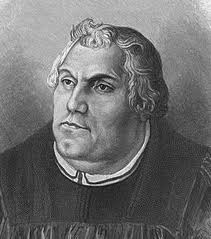
Martin Luther.jpg

Is salvation merely a message of “do better?” Is Christianity simply a moralistic religion that teaches that all we need to do is obey God? That is what the self-righteous Pharisees thought, and it is what many people in churches think. To them, Christianity is a list of rules that can be kept–albeit with a lot of sacrifice. Don’t think so? How many times have you heard someone say their wayward son or daughter “just needs to get back to church?” Is that all they need? Is that what Jesus taught?

In Romans 1:17, the Apostle Paul wrote, “For in it the righteousness of God is revealed from faith for faith, as it is written, “The righteous shall live by faith.”” (Romans 1:17, ESV). This text traumatized Martin Luther before his conversion to Christ. Here was a man that sincerely wanted salvation. He had dedicated his life to holy living in a monastic community where he sacrificed on a daily basis. Yet his soul was tortured. Here are Luther’s own words, written a year before his death on March 5, 1545 following a long life of joyful blessing in true salvation through Jesus Christ.

I had indeed been captivated with an extraordinary ardor for understanding Paul in the Epistle to the Romans. But up till then it was … a single word in Chapter 1 [:17], “In it the righteousness of God is revealed,” that had stood in my way. For I hated that word “righteousness of God,” which according to the use and custom of all the teachers, I had been taught to understand philosophically regarding the formal or active righteousness, as they called it, with which God is righteous and punishes the unrighteous sinner.

Though I lived as a monk without reproach, I felt that I was a sinner before God with an extremely disturbed conscience. I could not believe that he was placated by my satisfaction. I did not love, yes, I hated the righteous God who punishes sinners, and secretly, if not blasphemously, certainly murmuring greatly, I was angry with God, and said, “As if, indeed, it is not enough, that miserable sinners, eternally lost through original sin, are crushed by every kind of calamity by the law of the decalogue, without having God add pain to pain by the gospel and also by the gospel threatening us with his righteous wrath!” Thus I raged with a fierce and troubled conscience. Nevertheless, I beat importunately upon Paul at that place, most ardently desiring to know what St. Paul wanted.

At last, by the mercy of God, meditating day and night, I gave heed to the context of the words, namely, “In it the righteousness of God is revealed, as it is written, ‘He who through faith is righteous shall live.’ ” There I began to understand [that] the righteousness of God is that by which the righteous lives by a gift of God, namely by faith. And this is the meaning: the righteousness of God is revealed by the gospel, namely, the passive righteousness with which [the] merciful God justifies us by faith, as it is written, “He who through faith is righteous shall live.” Here I felt that I was altogether born again and had entered paradise itself through open gates. Here a totally other face of the entire Scripture showed itself to me.… And I extolled my sweetest word with a love as great as the hatred with which I had before hated the word “righteousness of God.” Thus that place in Paul was for me truly the gate to paradise. [Emphasis added]

The “gates of paradise” were opened up to Luther because he no longer depended upon his own law-keeping to satisfy the perfect demands of God. He saw salvation as a gracious act of God alone. Christ was perfectly righteous, fulfilling the whole law in our place. He died in our place and we are justified because of his perfect life and substitutionary death.

The hamster wheel of self-righteous deeds done in order to save ourselves is endless and endlessly disappointing. But the worst thing is that it does not end in heaven, but hell. The one who rejects the perfect finished work of Christ on the cross in favor of his or her imperfect works should expect nothing more, and will get nothing less.

Don’t point people to hell with “do better” sermons. Don’t say that your lost neighbor needs to be invited to church when you need they need to be regenerated by Christ. Don’t confuse fruits of righteousness with earning points with God so he will somehow love and favor you more.

Christ alone is enough. Faith in him alone saves. This is all “marvelous, infinite, matchless grace.”