Is salvation merely a message of “do better?” Is Christianity simply a moralistic religion that teaches that all we need to do is obey God? That is what the self-righteous Pharisees thought, and it is what many people in churches think. To them, Christianity is a list of rules that can be kept–albeit with a lot of sacrifice. Don’t think so? How many times have you heard someone say their wayward son or daughter “just needs to get back to church?” Is that all they need? Is that what Jesus taught?
Is salvation merely a message of “do better?” Is Christianity simply a moralistic religion that teaches that all we need to do is obey God? That is what the self-righteous Pharisees thought, and it is what many people in churches think. To them, Christianity is a list of rules that can be kept–albeit with a lot of sacrifice. Don’t think so? How many times have you heard someone say their wayward son or daughter “just needs to get back to church?” Is that all they need? Is that what Jesus taught?
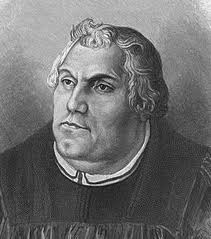
In Romans 1:17, the Apostle Paul wrote, “For in it the righteousness of God is revealed from faith for faith, as it is written, “The righteous shall live by faith.”” (Romans 1:17, ESV). This text traumatized Martin Luther before his conversion to Christ. Here was a man that sincerely wanted salvation. He had dedicated his life to holy living in a monastic community where he sacrificed on a daily basis. Yet his soul was tortured. Here are Luther’s own words, written a year before his death on March 5, 1545 following a long life of joyful blessing in true salvation through Jesus Christ.
I had indeed been captivated with an extraordinary ardor for understanding Paul in the Epistle to the Romans. But up till then it was … a single word in Chapter 1 [:17], “In it the righteousness of God is revealed,” that had stood in my way. For I hated that word “righteousness of God,” which according to the use and custom of all the teachers, I had been taught to understand philosophically regarding the formal or active righteousness, as they called it, with which God is righteous and punishes the unrighteous sinner.
Though I lived as a monk without reproach, I felt that I was a sinner before God with an extremely disturbed conscience. I could not believe that he was placated by my satisfaction. I did not love, yes, I hated the righteous God who punishes sinners, and secretly, if not blasphemously, certainly murmuring greatly, I was angry with God, and said, “As if, indeed, it is not enough, that miserable sinners, eternally lost through original sin, are crushed by every kind of calamity by the law of the decalogue, without having God add pain to pain by the gospel and also by the gospel threatening us with his righteous wrath!” Thus I raged with a fierce and troubled conscience. Nevertheless, I beat importunately upon Paul at that place, most ardently desiring to know what St. Paul wanted.
At last, by the mercy of God, meditating day and night, I gave heed to the context of the words, namely, “In it the righteousness of God is revealed, as it is written, ‘He who through faith is righteous shall live.’ ” There I began to understand [that] the righteousness of God is that by which the righteous lives by a gift of God, namely by faith. And this is the meaning: the righteousness of God is revealed by the gospel, namely, the passive righteousness with which [the] merciful God justifies us by faith, as it is written, “He who through faith is righteous shall live.” Here I felt that I was altogether born again and had entered paradise itself through open gates. Here a totally other face of the entire Scripture showed itself to me.… And I extolled my sweetest word with a love as great as the hatred with which I had before hated the word “righteousness of God.” Thus that place in Paul was for me truly the gate to paradise. [Emphasis added]
The “gates of paradise” were opened up to Luther because he no longer depended upon his own law-keeping to satisfy the perfect demands of God. He saw salvation as a gracious act of God alone. Christ was perfectly righteous, fulfilling the whole law in our place. He died in our place and we are justified because of his perfect life and substitutionary death.
The hamster wheel of self-righteous deeds done in order to save ourselves is endless and endlessly disappointing. But the worst thing is that it does not end in heaven, but hell. The one who rejects the perfect finished work of Christ on the cross in favor of his or her imperfect works should expect nothing more, and will get nothing less.
Don’t point people to hell with “do better” sermons. Don’t say that your lost neighbor needs to be invited to church when you need they need to be regenerated by Christ. Don’t confuse fruits of righteousness with earning points with God so he will somehow love and favor you more.
Christ alone is enough. Faith in him alone saves. This is all “marvelous, infinite, matchless grace.”
If we are honest, we would have to admit that many churches in the U.S. are not growing from conversions but from transfers from other churches. I’ll admit that there are some valid reasons for a Christian to leave one church to attend another, but the Great Commission isn’t about shuffling believers from one church to another. There are many things a church can do to bolster its outreach, but one that is consistently missed in the vast majority of churches today is evangelistic visitation. What is that you ask? Keep reading and I’ll explain.
Every Saturday for many years there were at least two people from Grace Baptist Church that would go out to share the gospel with our community—myself and one of our deacons named Everett. Some Saturdays there were others that would join us, but many times it was just the two of us. Everett and I shared Christ with gang members, homeless people in the park, people in half-way houses, and everyday people that look like you and me.
We had dogs chase us, people scream at us, a couple of doors slammed in our faces, and even a few people that I am convinced were demon possessed. Although we visited door to door in order to hopefully share Christ with our neighbors, we found that this method wasn’t too successful. Instead we found that evangelistic visitation was far more productive.
Whenever a person visited our church, they would receive a bulletin and a small visitor’s card that we asked them to fill out as a record of their visit. These cards were placed in the offering plate when the offering was received. When the deacons counted the offering, they would take out these cards and give them to me for follow up.
In my discussions with many pastors and church leaders, many churches don’t do anything to record visitors anymore. I’m not sure why, but they don’t seem to even collect a card to record visitors. In my many visits to different churches, most didn’t request a card to be filled out, and of those that I have filled out, only one has ever done something with it.
On Tuesday when I came into the office, I would send out a welcome letter thanking the visitor for coming. If they wrote the name of who invited them on their visitor card, I would include that as well. Sometimes I would call the friend of our visitor and ask them some questions to find out more about what brought them to our church.
But my follow up didn’t stop there. On the following Saturday, Everett and I would take that card and drive over to the visitor’s house to pay them a visit. Yes, you read that right! We actually showed up at their front door! When we did this, we followed a few rules that worked for us:
1. We only visited on Saturdays from 10am-12pm. This is because before 10 some people were sleeping in and after noon they would be leaving for the day. Three day holidays were almost worthless as far as visiting goes.
2. We took a church flyer or business card with us to leave if they didn’t answer the door. We wanted our visitor to know we came by and missed them. A quick note on a church invite flyer or the back of my business card was slipped in the door jamb for the visitor to find when they returned home.
3. We didn’t call to make an appointment. We found that when we made arrangements we would often find nobody home. It was better to surprise our visitors. Even so, the vast majority were happy to see us.
4. We thanked them for their visit and asked if they had any questions about what they heard. Their visit showed us that they had some interest in church and the Bible. Our conversation helped us determine if the visitors were Christians or needed to hear the gospel.
5. We made sure to express that we were there because we had an important message that we wanted them to hear. We assumed God had sent us as His messengers and we were not ashamed, but bold ambassadors for Christ.
6. We invited them to come back Sunday (the next day). Many people were shocked that the man that preached the sermon had taken the time to personally visit them. This impression made them more open to come back, and it showed them in a tangible way that we truly cared for them.
Having successfully visited our visitor, we usually asked them if we could pray for them and if they had any special prayer needs. The visit often ended with smiles, laughs, and a new relationship begun. Of all the people that returned a second time, many were those that had been visited by someone in our church.
When you think about what connected you to your church, what sticks out the most? What were the things that turned you off about visiting a new church?
“You all remember, therefore I need not tell you again, the story that we had about the doctor at one of our hospitals, a year or two ago. He healed a dog’s broken leg and the grateful animal brought other dogs to have their broken legs healed. That was a good dog. Some of you are not half as good as that dog! You believe that Christ is blessing you, yet you never try to bring others to Him to be saved! That must not be the case any longer. We must excel that dog in our love for our species and it must be our intense desire that if Christ has healed us, He should heal our wife, our children, our friends, our neighbors; and we should never rest until others are brought to Him!”
–Charles Spurgeon
Brothers and sisters, may it never be said of us that we are not half as good as that dog!
According to a 2013 Barna report, 73% of Born Again Christians believe that they have a personal responsibility to share their faith with others, but only 52% of those polled said they had actually shared their faith with someone else in the past year. (Link)
Do you share Christ with others? What encouragement can you give to those who don’t?
If you are among those who rarely evangelize, why not? What is the biggest reason that you don’t share Christ?



 Always Reforming