Without God’s Word, a church has no hope as it prepares to meet this God who is to judge the living and the dead. It has no way to know the gospel in a saving way (Rom. 10:14–17; 1 Cor. 1:21). It has no way to grow in Christ. Without the Word of God, a preacher, especially a young preacher with little history, has no true authority. He might be able to woo them with the devices of the flesh just like any comedian or rock star. But without the Word he will have no true spiritual trust from his people. Why would a church entrust its spiritual good to a know-nothing twenty-nine-year-old? Why would an older man who has been a Christian for twenty years, raised a family, and had a career care what this twenty-nine-year-old says about marriage or children or money or taking up your cross and following Jesus? But if that twenty-nine-year-old can simply open the pages of the Bible and explain what God himself says, then the church has something with which to work. Then the authority rests not in the preacher or his personal wisdom and experience but in the authority of God himself who has breathed his Word. –McKinley, Mike. Church Planting Is for Wimps: How God Uses Messed-up People to Plant Ordinary Churches That Do Extraordinary Things (9Marks) (Kindle Locations 604-613). Crossway.
gospel
The “Good” versus “the Good News”

“The heart of most religions is good advice, good techniques, good programs, good ideas, and good support systems. . . . But the heart of Christianity is Good News. It comes not as a task for us to fulfill, a mission for us to accomplish, a game plan for us to follow with the help of life coaches, but as a report that someone else has already fulfilled, accomplished, followed, and achieved everything for us. Good advice may help us in daily direction; the Good News concerning Jesus Christ saves us from sin’s guilt and tyranny over our lives and the fear of death. It’s Good News because it does not depend on us. It is about God and his faithfulness to his own purposes and promises.”—Michael Horton, The Gospel-Driven Life (Grand Rapids, MI: Baker, 2009), 20.
7 Lessons Learned While in the Darkness of Despair (Psalm 88)

In light of all the comments made in regard to Robin Williams’ death, I thought this post might be helpful. Depression is a serious matter that so many people struggle with, but it is an affliction that some Christians see as a weakness of faith and unbecoming for a person who claims Christ as Savior. But throughout Church history, there have been those who have struggled with an internal darkness that comes upon them. Whether we call it melancholy, depression, or some other name, the Word of God gives hope even in the midst of the dark nights of affliction. Tim Challies wrote about the struggle that hymn writer William Cowper (pronounced “Cooper”) faced his whole life, even after coming to Christ.
William Cowper was born in 1731 in Berkhamsted, England. His mother died when he was only 6 years old, leaving him to be raised by his father. The mental pain Cowper struggled with was primarily depression…. He had four major battles with it through his life, leading him to attempt suicide on several occasions. He was never successful, however, and God would preserve his life until death by dropsy in 1800, aged 69. Cowper apparently became a believer in 1764 while in residence at St. Albans Insane Asylum. He happened upon a Bible on a bench in the garden, and God used John 11 and Romans 3:25 to open his eyes to the goodness of Jesus and the sufficiency of his atoning work…. Throughout the rest of his life he remained convinced of God’s sovereignty and goodness, even if at times he had great difficulty believing he himself was a beneficiary of them. Cowper’s hymn writing came as a result of his friendship with John Newton. They became friends in 1767 when Cowper moved to Olney, England to be under Newton’s ministry.[1]
With Cowper and others in mind, I would like to briefly point out 7 lessons that we can learn while in the darkness of despair so that we can help others who are struggling, or so that we might find comfort and relief from our great God and Savior.
- Scripture does not deny the reality of a “darkness of the soul” (Ps. 88; Job 1)
- The mere existence of Psalm 88 (among others) and the book of Job, as well as other parts of Scripture demonstrates for us that there is such a thing as “spiritual depression” (to use D. Martyn Lloyd-Jones’ preferred term).
- By denying this reality, we become like Job’s worthless counselors for those who are in the most need of spiritual healing and care. Not only that, but we may also be guilty of speaking against many godly people who suffered while maintaining their righteous stand before God. It is one thing when a person suffers for their sinful choices, but what about those who suffer for no apparent cause of their own? Do not all those suffering, sinner or saint, require the grace of God to be applied to their souls?
- Finally, when we deny this reality, we not only deny the truth of Scripture but also experience. We hurt those who are truly suffering and need us to minister to them, not lecture them to some sort of Stoic idea that is foreign to Christianity. Godly people really do suffer!
2. God does not always give answers for our suffering (Ps 88; Job)
- We live in an age where a problem is introduced and resolved in the span of a 30 minute sit-com on TV. And there is a tragic perversion of Christianity that exists and is thriving that teaches that God doesn’t want you to be unhappy, but rather he wants to bless you with all the material possessions you desire. Many readers might reject this theology, but struggle dealing with how to deal with a godly person who sees no end in their suffering. But we cannot demand or even expect that God will either remove suffering in this life or even give an answer to the question “why?” But life is not like a movie or sit-com and Scripture accurately portrays real life.
- As Derek Kidner has written,“The happy ending of most psalms of this kind seems to be a bonus, not a due; its withholding is not a proof of either God’s displeasure or his defeat.” [2]
- Sometimes suffering is hard and long, and it may not end with a healing, comfort, or even any apparent reason why the suffering has occurred.
3. God needs to be our anchor and life-line in the darkness or we shall have no hope (v. 1)
- Verse 1 is the only positive line in the whole psalm. It frames the whole because it is a starkly honest conversation between the psalmist and his God. But what if the psalmist had no understanding of God or no relationship with him? What if the psalmist’s god was not the One true and living God? How could he account for his suffering?
- Was it because his god was too weak? Incompetent? Evil? Unloving? All of these would make some sense and would have caused the psalmist to either seek his own aid or allow the darkness to swallow him up in death. But the reality of God’s existence and his goodness of character cause him to seek him and plead with him for help. There is hope to be found in our God and His Son Jesus Christ.
4. Even in despair, prayer tethers us to the Lord, so do not allow the darkness to silence you (vv. 1-2, 9, 13)
- “This author, like Job, does not give up. He completes his prayer, still in the dark and totally unrewarded. The taunt, ‘Does Job fear God for naught?’, is answered yet again.” Kidner, 350.
- Night and day impassioned cries come from the heart of the psalmist. He knows God hears, but he cannot understand why he has not answered his prayer. But the lack of understanding and answers to his prayers do not stop him from praying. The prayers are not long, sterile, liturgical prayers either. They are passionate pleadings mixed with heart-felt questions. The psalmist does not understand, and so he asks and argues his case before God. His prayers are wrestling with the One whom he seeks a blessing from. He will not let go until he is either dead or God has heard his prayers and answered by lifting the darkness.
5. The grave is silent, but God attends to the living (vv. 3-5, 10-12)
- “Am I dead?”, asked the psalmist. He asked this because he felt that God was treating him like someone who is in the grave, long lost and forgotten. But he was not dead, and as a man still in the land of the living he would still be able to praise the Lord for his steadfast love, faithfulness and righteousness. And as one among the living, the Lord could still act in working wonders that would remove the pain and suffering that would lead the psalmist to further praise and glory. At death there is no praise from the dead. But we must keep pleading and praying and trusting until our last breath.
6. Hard providences point to our Sovereign God’s Mysterious Ways (vv. 6-8, 16-18; Isa 55:8-9)
- C.T. Studd wrote, “A man is not known by his effervescence but by the amount of real suffering he can stand” [3]. Many Christians would like to protect the honor of the Lord by denying that God is sovereign in all things, including the suffering of men. But the psalmist knows his God and he knows that God is sovereign not only in the good, but also the bad, including suffering.
- Job 2:9-10 speaks about this idea. It says, “Then his wife said to him, “Do you still hold fast your integrity? Curse God and die.” But he said to her, “You speak as one of the foolish women would speak. Shall we receive good from God, and shall we not receive evil?” In all this Job did not sin with his lips.” Just because we do not understand why God does not stop our suffering or why he doesn’t bring relief does not mean that there is no reason.
- Isa 55:8-9 says, “For my thoughts are not your thoughts, neither are your ways my ways, declares the Lord. For as the heavens are higher than the earth, so are my ways higher than your ways and my thoughts than your thoughts.”
7. Behind a frowning providence hides the smile of God (vv. 14-15; Matt 27:46; 2Cor 6:10)
- In the end, God is good and knows what is best. And that includes our suffering and the darkest clouds of despair. After all, God the Father turned from His only begotten Son in the midst of the worst of his suffering for both Jesus’ glory and our good. But had we been standing there at the Place of the Skull, would we have believed that was true?
The [Cowper] hymn “God Moves in a Mysterious Way” is a combination of assertions about God’s goodness, sovereignty and wisdom along with commands to take courage and trust in him. Cowper’s use of the metaphors of storms, mines, smiles, and flowers illustrate this meaning in a timeless way. The hymn is a beautiful expression of the kind of faith that sustained Cowper through long periods of darkness and despair.!We cannot yet claim to know all the mysteries of God’s plan for William Cowper’s life. In time, as Cowper himself says, God will make plain his bright designs. But until then we can praise God for one of the fruits that is already evident—this hymn. Only he knows how many saints have had their faith sustained amidst storms and sorrows by these words. It reminds us that many of the greatest hymns grow out of life’s most difficult circumstances. [1]
William Cowper, 1774 “God Moves in a Mysterious Way”
God moves in a mysterious way His wonders to perform;
He plants His footsteps in the sea And rides upon the storm.Deep in unfathomable mines
Of never failing skill
He treasures up His bright designs And works His sov’reign will.
Ye fearful saints, fresh courage take; The clouds ye so much dread
He plants His footsteps in the sea And rides upon the storm.Deep in unfathomable mines
Of never failing skill
He treasures up His bright designs And works His sov’reign will.
Ye fearful saints, fresh courage take; The clouds ye so much dread
Are big with mercy and shall break
In blessings on your head.
Judge not the Lord by feeble sense, But trust Him for His grace;
Behind a frowning providence
He hides a smiling face.
His purposes will ripen fast, Unfolding every hour;
The bud may have a bitter taste, But sweet will be the flow’r.
Blind unbelief is sure to err
And scan His work in vain;
God is His own interpreter,
And He will make it plain.
Behind a frowning providence
He hides a smiling face.
His purposes will ripen fast, Unfolding every hour;
The bud may have a bitter taste, But sweet will be the flow’r.
Blind unbelief is sure to err
And scan His work in vain;
God is His own interpreter,
And He will make it plain.
[1] (Source: http://www.challies.com/articles/hymn-stories-god-moves-in-a- mysterious-way, Accessed 4/2/14)
[2] Derek Kidner, TOTC, Psalms 73-150, 350.
[3] Quoted by Steven J. Lawson, HOTC, Psalms 76-150, 70.
Rest in Jesus Christ
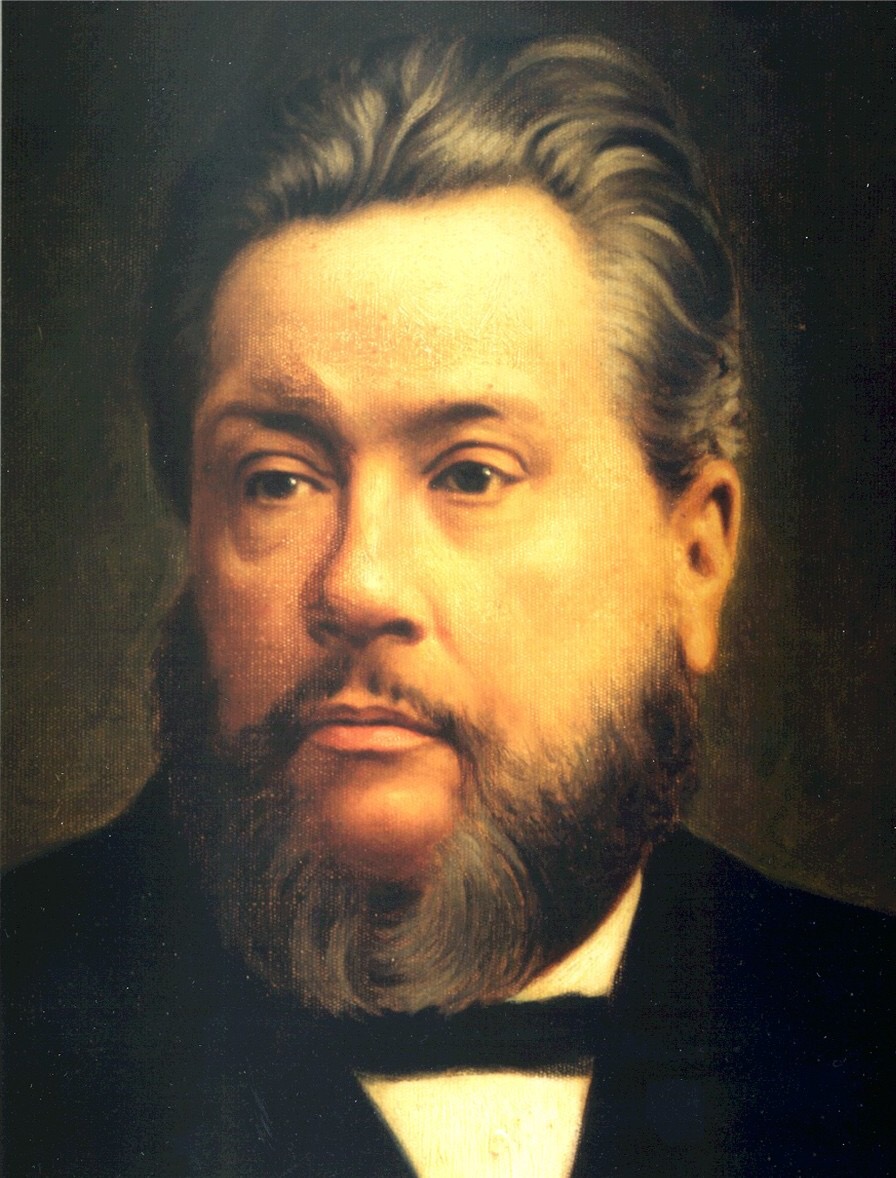
“My people shall dwell in quiet resting places.”
— Isaiah 32:18
Peace and rest belong not to the unregenerate, they are the peculiar possession of the Lord’s people, and of them only. The God of Peace gives perfect peace to those whose hearts are stayed upon him. When man was unfallen, his God gave him the flowery bowers of Eden as his quiet resting places; alas! how soon sin blighted the fair abode of innocence. In the day of universal wrath when the flood swept away a guilty race, the chosen family were quietly secured in the resting-place of the ark, which floated them from the old condemned world into the new earth of the rainbow and the covenant, herein typifying Jesus, the ark of our salvation.—Charles Spurgeon, Morning and Evening, Dec 9 Eve.
Preaching Christ from All of Scripture? TMS Lecture Series #1- Richard Mayhue

One of the more difficult issues that often comes up in preaching is how to properly preach the gospel in any given sermon. Obviously, there are texts which easily lend themselves to preaching the gospel, but how can we be faithful to stress the authorial intent of the Bible and still be faithful to preach Christ?
Thankfully, back in 2016 The Master’s Seminary held its annual Faculty Lecture Series on Christ-Centered Preaching. I would commend the whole series to you if you struggle with this issue, which many men do, but I want to take some time here to highlight each message and then when I have finished the sermon series I’d like to make some practical applicational comments for how we can preach Christ in our sermons in a way that is biblically faithful to the text.
The first message is from Dr. Richard L. Mayhue, the former dean of The Master’s Seminary from 1990 to 2014.
His message can be be heard here as audio or video.
In this message, Dr. Mayhue covers:
- An Overview of the Christ-Centered Preaching Movement
- An Overview of the Improper Practices of the Movement
- And Overview of Legitimate Christ-Centered Preaching
“It is exegetically fraudulent to try to extract from every biblical text some truth about Christ.”–Daniel Block
Dr. Mayhue briefly addresses the argument used to defend this preaching from texts such which seem at first glance to say that Christ can be found in the totality of the Old Testament, such as Luke 24:44; John 5:39; 1Cor 1:22-23; 1Cor 2:2; 2Cor 4:5. He also deals with the issue of hermeneutics and how coming to the text with a theological bias may allow for preaching Christ in every text, but it also abuses the authorial intent of the text. Likewise, Mayhue argues that a Christo-centric hermeneutic falls short of a full theocentric emphasis in Scripture and points to John Calvin himself as a good model of faithful, biblical exposition which does not fall into the same pitfalls as modern Christo-centric preachers.
Although this message clocks in at 52:31, it only begins to scratch the surface of the issues at hand and does not deal with a lot of the issues, nor does it help much in showing a young expositor how Christ can be preached in many texts other than those which are explicitly Messianic. That task is left for those that will follow.
 Always Reforming