Humble Submission to Christ the Lord

And Mary said, “Behold, I am the servant of the Lord; let it be to me according to your word.” And the angel departed from her.

Luke 1:38, ESV

This morning I read from the book of Jonah. I have been pondering the incarnation for the last several days and the wonder of Christ’s birth, and then I read Jonah. To put it lightly, Jonah had problems. Massive spiritual problems. I’ll come back to him in a bit.

All too often in Protestant churches, Mary, the mother of Jesus, has scorn heaped upon her because there are some who have taken this woman of God and have worshipped her. But that isn’t Mary’s fault! From my reading of the New Testament, Mary was a gracious and beautiful example of incredible faith that we should emulate–such as the passage I cite in Luke 1:38 above. Yes, Mary was a sinner, and she too needed a Savior. But look beyond this and see her humble submission as well.

I’ll let the scholars handle the age of Mary, but I think most agree that this woman was still very young. But her words, particularly in what has been called the Magnificat (Lk 1:46-55), show a spiritually mature child of God. She is not a scholar, nor of the priestly line. She is a simple, humble woman from a back-woods town who is preparing to marry a humble carpenter. That is why her words should stop us in our tracks: “Behold, I am the servant of the Lord; let it be to me according to your word.”

She is saying through the angel to the Lord God, “I am yours. Do with me whatever you see is right. I am nothing, you are everything. Whatever you want, I will submit to you wholly.” O, how we need more people of God with this heart! But she isn’t alone in the Bible.

In the Old Testament, we find Abram willing to leave everything he has ever known–land, family, language, comfort, safety, the familiar, the safe. He leaves it all because he is following his God (Gen 12:1-4). Again, the spirit of Father Abraham is that the Lord is Sovereign. He commands, and we joyfully follow; even into the unknown darkness. Later, when he has received his son Isaac after many years of waiting, Abraham is asked to sacrifice this beloved gift (Gen 22:1-19). There is no argument, or pleading with God to reconsider what he is asking. Genesis 22:3 simply says that Abraham rose early in the morning and set out to obey his Master.

I saw this same commitment to humble submission when I recently re-read the book of Hosea. In Hosea 1:2-3 it says:

When the Lord first spoke through Hosea, the Lord said to Hosea, “Go, take to yourself a wife of whoredom and have children of whoredom, for the land commits great whoredom by forsaking the Lord.” So he went and took Gomer, the daughter of Diblaim, and she conceived and bore him a son.” 

(Hosea 1:2–3, ESV)

We can understand the purpose of God in doing this because the Bible is clear about the reason for this request–to be a shockingly visible illustration of the way that Israel was toward the Lord God. But that didn’t make Hosea’s obedience and heartbreak any easier. The shame he endured as God’s man must have been unbearable at times as his unfaithful wife continued to bear children fathered by other men. Yet, Hosea continued to faithfully and humbly submit to all that the Lord asked of his servant.

That brings us back to Jonah.

Mary endured shame, scorn and great pain in order to bring the Savior into the world. Abram left everything and was willing to sacrifice his most beloved son. Hosea walked his entire life in the darkness of a broken relationship for the cause of illustrating the enduring love of God in the face of rebellious and idolatrous Israel.

And Jonah…he sulked and ran and was enraged because he wanted to be the master of his life. Jonah wouldn’t rejoice at the repentance of the lost. He wouldn’t rejoice at his salvation from the fish’s belly and a new opportunity to be used by God. He wouldn’t even enjoy life, but would rather be struck dead because he was such an angry little man.

John Paton

I recently read the biography of the great missionary to the Pacific, John Paton. In Paton’s day, the church had taken on the attitude of Jonah. They loved their comfort and ease. They didn’t like it when men and women of God wanted to take the gospel to the world because they didn’t want their comfort to be unsettled. Some were bribed with money to stay. Some were belittled and treated with contempt–being told that God would’t use them because they were ungifted. Some said that the primitive people would never be able to appreciate the fine education they had earned, so why waste it? Others were so fearful of the dangers of cannibalism and disease that they forbid anyone from going to these people. Serve Jesus in England, where it is safe. You can serve Jesus here. WE need him too!

But Paton, and a few others accepted the call and braved the hardship and ridicule heaped on them back home and face the dangers in the Pacific. They humbly submitted their lives to the Sovereign they loved more than life itself. Most died, but the Lord raised up many more servants until the Pacific was won for Christ.

But the Jonah spirit is alive and well in many hearts and churches today. I take comfort in the fact that there are also still in Christ’s church Mary’s and Abraham’s and Hosea’s among us. Those who will submit to the Lord their God with joy and humility. If that is you, don’t allow the Jonah spirit in the church to dissuade you. See the joy in the hardship. Know that the Lord is greater than any hardship you may endure. As Luther wrote,”Let goods and kindred go, this mortal life also; the body they may kill, God’s truth abideth still. His kingdom is forever!” 

And if you see too much of Jonah in your own heart, then Jonah’s message to Ninevah is God’s message to you too. Repent. This life isn’t for you. It isn’t about you. It’s about Jesus. Humble yourself before the mighty hand of God, and he will lift you up (1Pet 5:6).

Help for New Expositors – Don’t Photobomb Jesus

photobombIsn’t it interesting that there are no physical descriptions in the Bible of what the Apostles or Jesus looked like. This is hard to believe in our self-driven culture where the Instagram selfie perfectly captures the ethos of our day.
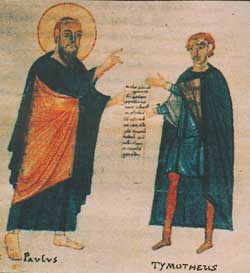
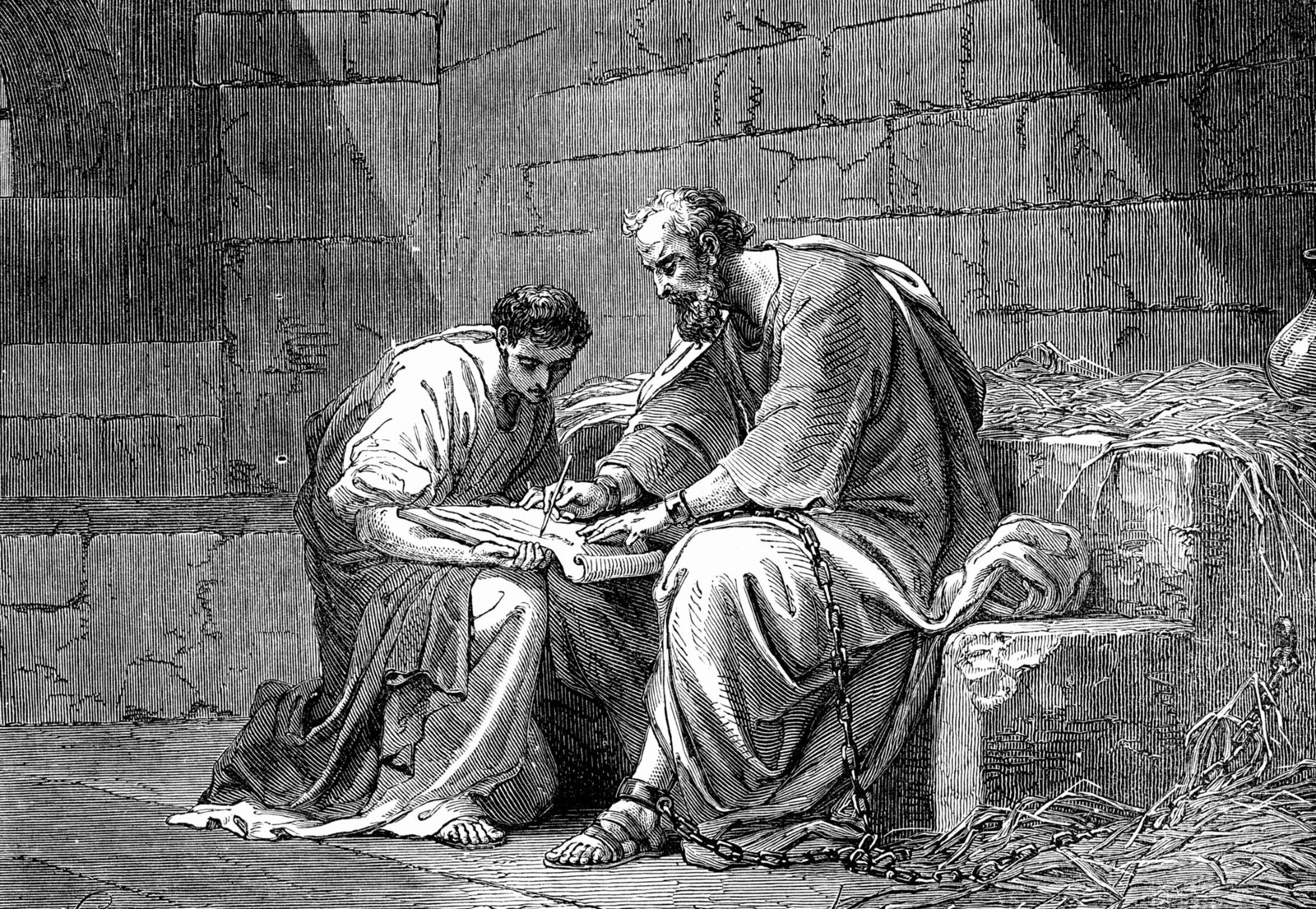
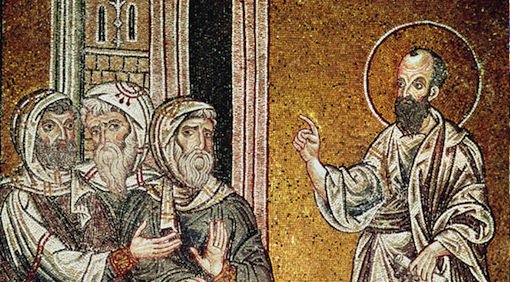
There is one extra-biblical description of Apostle Paul found in The Acts of Thecla, where it says that Onesiphorus described Paul as “a man short in stature, with a bald head, bowed legs, in good condition, eyebrows that met, a fairly large nose, and full of grace. At times he seemed human, at other times he looked like an angel.”[1] It appears that Paul had a face for radio!

In our world, “image is everything” and yet, for those who stand before the world to proclaim the Word of God, we are simply called to be a faithful, unwavering voice of truth in a dry, wilderness of error and darkness (Mark 1:3; Amos 8:11).

When this is the case, we shouldn’t worry about being impressive or even whether anybody notices us. We shouldn’t be jockeying for prominence among the evangelical superstars or trying to be seen so we can move up the ladder of fame. This is exactly the opposite of what Jesus expects of his servants. Mark 10:42-45 shines brightly against the growing evil of popular Christianity and its longing for attention. It hurts to read Jesus’ words and think about how much modern evangelical Christianity ignores these words:

And Jesus called them to him and said to them, “You know that those who are considered rulers of the Gentiles lord it over them, and their great ones exercise authority over them. But it shall not be so among you. But whoever would be great among you must be your servant, and whoever would be first among you must be slave of all.” (Mark 10:42–44, ESV, emphasis mine)

It is when we open our mouths, when we speak the Word of God that people should be amazed–not at us, but at our great and awesome God. If we draw attention, let it be to our Lord and Savior. If we thunder and rail, let it be against sin as we call men to holiness. If we speak with great authority and power, let it be from the Scriptures alone and not ourselves. And when we leave a room where we have preached the mighty deeds of our God, and people stand back and say, “What a mighty God! O, how I want to know Him more!” may we be content to slide out of the room and rejoice that our God chose to use us, sinners saved by grace, to bring more people into His presence. SDG

[1] The Acts of Thecla 3. Translation by Bart D. Ehrman in Lost Scriptures: Books That Did Not Make It into the New Testament (Oxford: Oxford University Press, 2003), 114.


Who Will Be the Leaders of the Church in 10 years?

“Knowing that fighting the good fight requires a multitude of leaders and realizing that leaders sometimes become casualties, Christian leaders must intentionally reproduce themselves and multiply. Some leaders are casualties by divine appointment, and unfortunately some are casualties by carelessness. But eventually all of us will be called home. Who will be there to take our place?…The church as the family of God must be committed to the reproduction and multiplication of leadership. One of the reasons the church falters in the next generation is because we do not pass on the legacy of Christian leadership and fail to disciple effective leaders who can take the church and its mission forward to extend the kingdom of God to the next level in the next generation.”—Harry L. Reeder III and Rod Gregg, The Leadership Dynamic

Pastor Like Paul, part 6

Paul in prison.jpg

You, however, have followed my teaching, my conduct, my aim in life, my faith, my patience, my love, my steadfastness, my persecutions and sufferings that happened to me at Antioch, at Iconium, and at Lystra—which persecutions I endured; yet from them all the Lord rescued me. Indeed, all who desire to live a godly life in Christ Jesus will be persecuted,” (2 Timothy 3:10–12, ESV)

In this “Pastor Like Paul”series we looked so far at 6 ways we need to follow (or strive to be) a godly Christian leader:

  1. Follow the Same Doctrine
  2. Follow the Same Conduct
  3. Follow the Same Purpose
  4. Follow the Same Faithfulness
  5. Follow the Same Patience
  6. Follow with the Same Love

At verse 11, Paul builds upon this list with a capstone of leadership–being willing to follow Jesus in our suffering. From his prison, Paul reminds Timothy that he has followed Christ, and that Timothy and all those who would follow Jesus should also be willing to suffer as well.

But doesn’t that make Christians “lemmings?” Lemmings are small rodents that have been said to follow one another off a cliff to their deaths in some sort of weird instinct when their populations get too large. It has become a figure of speech to call people “lemmings” who thoughtlessly follow the crowd.

Interestingly, the idea of the lemmings jumping off cliffs as they follow one another is based upon a fraud. Encyclopedia Britannica reports, “For the 1958 Disney nature film White Wilderness, filmmakers eager for dramatic footage staged a lemming death plunge, pushing dozens of lemmings off a cliff while cameras were rolling. The images—shocking at the time for what they seemed to show about the cruelty of nature and shocking now for what they actually show about the cruelty of humans—convinced several generations of moviegoers that these little rodents do, in fact, possess a bizarre instinct to destroy themselves.”[1]

Why do I bring up lemmings? Because we are still talking about following the leader, and 2 Timothy 3:11-12 speak about following our leaders, both Jesus and the Apostle Paul into the very real possibility of persecution and suffering.

But just like lemmings don’t do this, neither do Christians unthinkingly thrust themselves to their deaths. We love life! But we know that this life is temporary, and that if we must risk this life to remain faithful to Christ, then the exchange is worth it.

For this post and the next in this series, we will see the need to faithfully follow Christ as Paul followed Christ, even to death if necessary. We will see this first, through the specific examples of Paul, and then through the universal principles of Scripture for all of us.

  1. The Specific Examples of Paul (v. 11)

my persecutions and sufferings that happened to me at Antioch, at Iconium, and at Lystra—which persecutions I endured; yet from them all the Lord rescued me.” (2 Timothy 3:11, ESV)

My persecutions which you saw…

It is interesting that the Apostle Paul didn’t give an exhaustive list of all the places where he had suffered persecution, nor had he given the most recent places. Instead, it appears that Paul mentioned Antioch, Iconium and Lystra because these would have been the places where Timothy first encountered the severe persecution that Paul suffered for the faith as a young boy just setting out with Paul. Timothy may have been an eyewitness to the dramatic account described in Lystra, the city he was from. He may have heard stories told of how Paul had preached to boldly and survived a brutal stoning, walking back into Lystra after being left for dead (Acts 14:20). These early accounts would have been vivid reminders that persecution was not a rare thing that happened only to a few, but that it is normal for most Christians, and that Timothy should expect it.

My persecutions which I endured…

The word for “endure” means to bear up under a burden. Paul’s body was undoubtedly covered in scars and deformities from the many hardships and persecutions he had endured for the sake of Christ.

But there was no way that the Lord would ever give Paul more of a burden than he would give him the ability to endure it. Paul’s body was a record book of his faithfulness to proclaim the gospel everywhere he went. He bore up under the burden gladly because he understood the message of the cross is life to those who would believe.

We are afflicted in every way, but not crushed; perplexed, but not driven to despair; persecuted, but not forsaken; struck down, but not destroyed;” (2 Corinthians 4:8–9, ESV)

My persecutions which the Lord rescued me from…

Paul’s survival was attributed to the Lord alone. He didn’t give glory to God for delivering him sometimes, or even mostof the time, but “from them allthe Lord rescued me.”

This word “from” at the end of v. 11 in the ESV, is translated “out of” in the NASB and KJV. But there can be confusion when we use the words “out of” or “from” because we can understand this idea in two ways. We might mean that God rescues his children from ever having to be involved in persecution or suffering.

But we might also mean that God rescues his children when they are in the midst of persecutions and suffering. In other words, they are experiencing it, and yet God will continue to be with them and they shall be saved, but not yet.

When we look at Paul’s life, we recognize that he had both experiences, where he was delivered unharmed by his persecutors, and those where he barely made it out alive after surviving painfully through an ordeal.

Paul is imprisoned, and he does not expect that he will be released. In fact, in 2Timothy 4:6-8, Paul wrote, “For I am already being poured out as a drink offering, and the time of my departure has come. I have fought the good fight, I have finished the race, I have kept the faith. Henceforth there is laid up for me the crown of righteousness, which the Lord, the righteous judge, will award to me on that day, and not only to me but also to all who have loved his appearing.” (2 Timothy 4:6–8, ESV)

In verse 6, Paul clearly believes that he is going to be put to death, which he was. But v. 7 shows that he still has confidence in the Lord, that the Lord will carry him across the finish line of the race of faith. And then in v. 8 he envisions the awards ceremony where the crowns are given to the competitors, and Paul full expects that he and all those who trust in Christ will receive the reward of eternal life.

In those three verses we can understand what Paul was teaching Timothy in 2 Timothy 3:11, that whether it is out of the persecution or even through the persecution, the Lord will deliver him from the suffering he has faced.

Now we might read this and come to the conclusion that these things were true for the Apostle Paul, but that they may not be true for you and me. But there was a reason that Paul was telling Timothy these things. There was divine purpose in this letter.

Gordon Fee “insists that it was the Apostle’s intention to underscore that Timothy had known from his earliest days that persecution was a part of faith in Christ and that he should therefore not lose heart in his current sufferings.”[2]

Remember that Paul has mentioned the pattern from v. 10 that Timothy had followed, and Paul was commending him for this, and encouraging him to keep on going in this same direction. It is no different when we come to the matter of persecution and suffering. Timothy was to follow Paul’s example as well.

To aid him in doing this, Paul laid out three universal truths that state work together with Paul’s personal examples to show that Paul was not the exception. We will see that in tomorrow’s post.

[1]https://www.britannica.com/story/do-lemmings-really-commit-mass-suicide

[2]Kitchen, John, The Pastoral Epistles for Pastors, 408.

Pastor Like Paul, part 5

close-to-corinth

“You, however, have followed my teaching, my conduct, my aim in life, my faith, my patience, my love, my steadfastness,”–2 Timothy‬ ‭3:10‬ ‭ESV‬‬

The Christian faith depends upon not only faithful discipleship, but on faithful disciples who continue in the pattern they have received. In their last four posts in this series we looked at 5 ways we need to follow (or strive to be) a godly Christian leader:

  1. Follow the Same Doctrine
  2. Follow the Same Conduct
  3. Follow the Same Purpose
  4. Follow the Same Faithfulness
  5. Follow the Same Patience

You can read part 1 here,  part 2 herepart 3 here and part 4 here. In this post we will look at “the greatest of these…”

6. Follow with the Same Love

The KJV uses the word “charity” here, which doesn’t mean what you give to less fortunate people, but a selfless act of love that is shown to others in the spirit of God’s love for us. This is that word Greek word for love known as agape.

The best way to define what Paul meant by follow his love, is to define his live by his own words and life. So, I compiled a list of ten features of love as described and modelled by Paul.

  1. Love is shown at the cross: “but God shows his love for us in that while we were still sinners, Christ died for us.” (Romans 5:8, ESV)
  2. Love includes patience: “Love is patient and kind; love does not envy or boast; it is not arrogant” (1 Corinthians 13:4, ESV); “with all humility and gentleness, with patience, bearing with one another in love,” (Ephesians 4:2, ESV)
  3. Love must be pursued: “Pursue love, and earnestly desire the spiritual gifts, especially that you may prophesy.” (1 Corinthians 14:1, ESV); “So flee youthful passions and pursue righteousness, faith, love, and peace, along with those who call on the Lord from a pure heart.” (2 Timothy 2:22, ESV)
  4. Love must be our motivation: “Let all that you do be done in love.” (1 Corinthians 16:14, ESV); “For the love of Christ controls us, because we have concluded this: that one has died for all, therefore all have died;” (2 Corinthians 5:14, ESV)
  5. Love confronts sin: “For I wrote to you out of much affliction and anguish of heart and with many tears, not to cause you pain but to let you know the abundant love that I have for you.” (2 Corinthians 2:4, ESV); “Rather, speaking the truth in love, we are to grow up in every way into him who is the head, into Christ,” (Ephesians 4:15, ESV)
  6. Love forgives: “So I beg you to reaffirm your love for him.” (2 Corinthians 2:8, ESV)
  7. Love sacrifices: “I will most gladly spend and be spent for your souls. If I love you more, am I to be loved less?” (2 Corinthians 12:15, ESV) ; “But we were gentle among you, like a nursing mother taking care of her own children. So, being affectionately desirous of you, we were ready to share with you not only the gospel of God but also our own selves, because you had become very dear to us.” (1 Thessalonians 2:7–8, ESV)
  8. Love discerns truth from error:And it is my prayer that your love may abound more and more, with knowledge and all discernment,” (Philippians 1:9, ESV)
  9. Love unifies Christians: “complete my joy by being of the same mind, having the same love, being in full accord and of one mind.” (Philippians 2:2, ESV) ; “And above all these put on love, which binds everything together in perfect harmony.” (Colossians 3:14, ESV)
  10. Love works hard in service:remembering before our God and Father your work of faith and labor of love and steadfastness of hope in our Lord Jesus Christ.” (1 Thessalonians 1:3, ESV)

That, my friends, helps us put the cookies on the lower shelf when we say, how can I show someone love, doesn’t it? Love is practical, painful and it must be pursued. Paul told Timothy, that he needed to continue to follow his example of loving in these ways, and so do we!

Brothers, we are leading others. The question is, where are we leading them? Are we leading them toward Christ, or away from him? Are we setting examples in our faithfulness, patience and love, or are we showing them instead an example of faithlessness, impatience and selfishness? If we fail we will not only feel remorse over wasted time, but we will also recreate our poor example in others, and worst yet, we will stand before the Lord and give an account for how we led others. May God help us to set the pace for those around us to follow Christ with their whole lives, just as we seek to do the same.